


As Sarawak prepares to expand its legislative assembly from 82 to 99 seats, constituency boundaries are about to be redrawn.
Is this a necessary expansion for a growing state, or a strategic move to tilt the playing field? This guide breaks down the legal mechanics and explains how the changes will affect voters.
1. Does Parliament decide whether Sarawak can increase its state seats?
No. The increase in state seats does not need the approval of Parliament or the Election Commission (EC).
The number of parliamentary seats is decided by Parliament. Parliament can amend Article 46 of the Federal Constitution with a two-thirds majority to increase or reduce the number of parliamentary seats allocated to a state or federal territory.
However, the number of state seats is decided by the respective state legislative assembly. A state assembly can amend the relevant provisions in the state constitution or the relevant state law, which may or may not require a two-thirds majority, to increase or reduce the number of state seats.
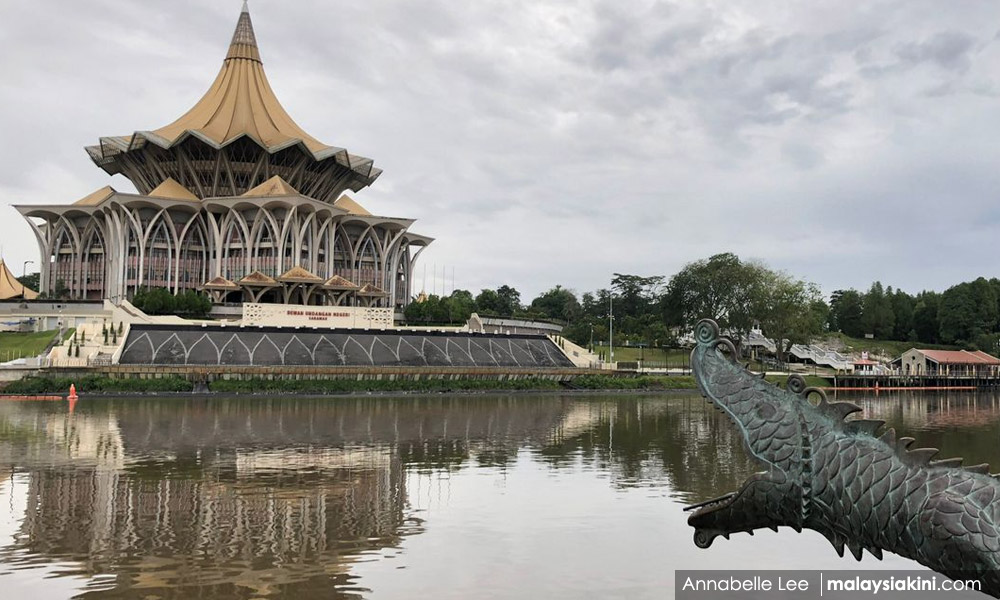
Sarawak passed the Dewan Undangan Negeri (Composition of Membership) Ordinance 2025 on July 7, 2025, which was gazetted on July 15, 2025 and has been in force since Aug 8, 2025.
Parliament has no say whatsoever about this, then and now.
The EC need not be consulted and has no veto power when Parliament or any state legislative assemblies want to change its amount of seats.
Conclusion: The increase in Sarawak’s state seats to 99 has been final since Aug 8, 2025.
2. What powers does Parliament have in the constituency delineation process, and which other actors have a say in the process?
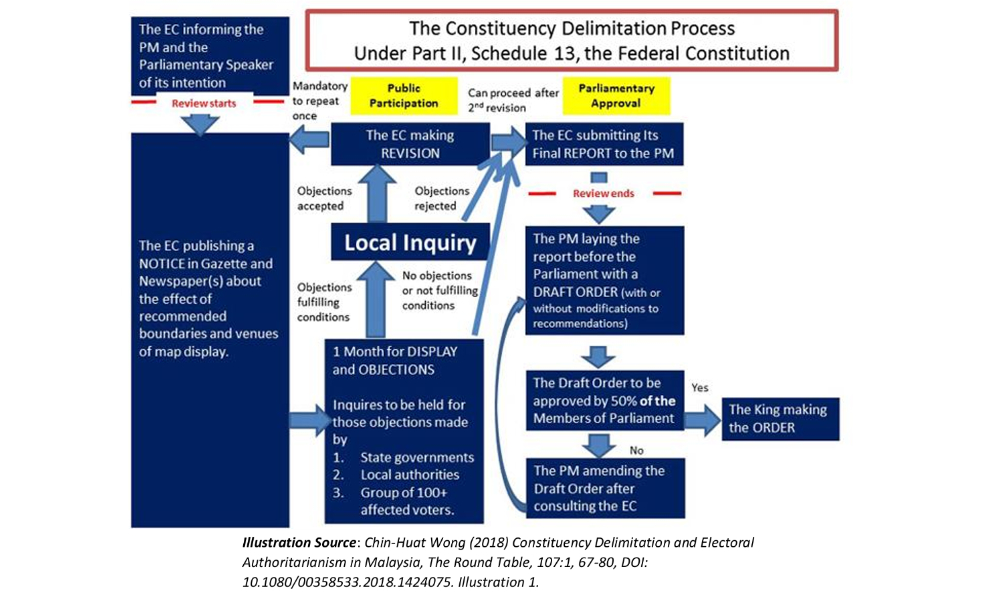
Parliament can only approve or disapprove the final proposal of electoral boundaries. To pass the proposal, it takes only one-half of the Dewan Rakyat (not a simple majority), i.e. 111 votes. It is the last of the four groups of actors in the process.
The proposal passed by the Dewan Rakyat would be presented to the Yang di-Pertuan Agong to come into effect at some specific date. [Sections 9-12, the Thirteenth Schedule of the Federal Constitution]
The first is the EC, which would prepare the initial proposal, subject it to two rounds of local enquiries, and present the final proposal to the prime minister. [Article 113 & the Thirteenth Schedule]
The second group is the potential objectors to the EC’s proposals who may present their objections against the electorate size, boundary, and even the name of a proposed (existing or newly carved out) constituency in the local inquiry stages. The potential objectors are state governments, local council authorities, and any group of 100 or more affected voters. [Sections 5 & 7, the Thirteenth Schedule]
The third actor is the prime minister, who, after receiving the final proposal by the EC, shall present the EC report as a draft order to the Dewan Rakyat, “with or without modifications”. This means the prime minister may “modify” the EC’s proposal (though this has never happened), and the Parliament can only approve or reject the original or modified EC proposal. [Sections 8-12, the Thirteenth Schedule]
No. This is indeed very abnormal in the world. Most countries would keep the total number of seats constant and transfer seats from states with shrinking electorates to states with growing electorates, a process called “reapportionment”.
For example, the USA House of Representatives first had 435 members in 1911, and the number has stayed 435 till today, even though the US population has tripled in 115 years. The expanding California has had its House seats increased from 23 in 1946 to 52 in 2026, while the shrinking New York has had its share dropped from 55 to 26 in the same period.
Cyclical seat increase is an institutional cover-up for the lack of reapportionment, which does not happen in Malaysia for three reasons.
First, elected politicians resist job cuts even when they don’t have the percentage of constituents to justify the need.
Second, the ruling Sarawak coalitions – then BN, now GPS - fear that reapportionment can cause infighting within component parties. This is illustrated by the suspected GPS plan to have the 17 new seats allocated to its component parties even before the delineation starts.

Third, because our Parliament and state legislatures do not have real powers in making laws and shaping policies, the main function of lawmakers is often to be an ATM in human form, and voters have incentives to want seat increases and resist reapportionment because every additional YB is one more claim for constituency allocation.
Normal democracies do not want their legislatures to cyclically expand with population/electorate growth because population growth does not result in more laws proportionately and has no need for more lawmakers. In fact, having more lawmakers only reduces the power of each lawmaker and helps the executive to control the Parliament or legislature.
And if the parliamentary sitting time does not extend correspondingly, having more elected representatives means less debating time for every lawmaker. You hire more people to do less.
4. Would the increase in state seats affect the boundaries of 31 parliamentary constituencies in Sarawak?
Yes, state constituencies are nested within parliamentary constituencies. When you redraw 82 state constituencies into 99, inevitably, the boundaries of the 31 existing parliamentary constituencies also change, even though no new parliamentary seats are created.
Hence, the delineation exercise must make sure the new boundaries for both parliamentary and state constituencies are fair and meaningful, meeting the requirements of sub-sections 2(c) and 2(d) of the Thirteenth Schedule of the Federal Constitution.
5. When can a new constituency delineation review start?
In practice, a new constituency delineation review starts in two ways. First, under Article 113(2) of the Federal Constitution, it is when the EC thinks that electoral boundaries need to be changed to meet the requirements of the Thirteenth Schedule.
It starts when the EC publishes the notice for its first proposed map, inviting public feedback for the enquiries. Before 1984, the EC was compelled to do a review between eight and 10 years after the completion of the last review, defined as the day the EC presented its final report to the prime minister. [Article 113(10)]

After 1984, the EC is prohibited from commencing a review before the eight-year interval, but is free to delay a new review indefinitely.
Second, under Article 113(3A), it is when the number of parliamentary or state seats changes. The clock started ticking for the Sarawak delineation exercise on Aug 8, when the seat increase was gazetted.
6. When must a constituency delineation review be completed?
A constituency delineation must be completed within two years after its commencement.
The two-year limit is necessary because if the review process drags on indefinitely, the electoral data used for the review would become obsolete.
For the reviews under Article 113(3A) due to a seat increase, it must be completed within two years after the seat increase comes into effect. Hence, for the current Sarawak delineation review, its end date should be Aug 7, 2027.
Curiously, seven months after its constitutionally mandated commencement, the EC has not published its first proposed map and invited the public for feedback.
7. What does the Federal Constitution say about the number of voters across constituencies? What is the “approximately equal” requirement?
Subsection 2(c) of the Thirteenth Schedule in the Federal Constitution stipulates this clearly, the number of electors within each constituency in a state ought to be approximately equal except that, having regard to the greater difficulty of reaching electors in the country districts and the other disadvantages facing rural constituencies, a measure of weightage for area ought to be given to such constituencies.
This made “approximately equal apportionment” a rule with only exceptions on area size.
The “approximately equal” requirement was explicitly spelt out with a quantifiable limit, “to the extent that in some cases a rural constituency may contain as little as one half of the electors of any urban constituency”, which means the maximum-to-minimum ratio cannot be larger than 2:1.
In other words, we can only stretch it to say “two is approximately equal to one”, but not any number larger than two. Mathematically, this means the number of voters for all constituencies must fall within the bounds of +/- 33.33 percent from the state average.
While the quantifiable bound had been removed after 1973, this does not mean that the EC can overstretch its meaning to interpret “any number is approximately equal to one”.
As of May 2025, Sarawak’s largest parliamentary constituency, P219 Miri, had 149,441 voters while its smallest, P207 Igan, had only 29,132, yielding a maximum-to-minimum ratio of 5:1.
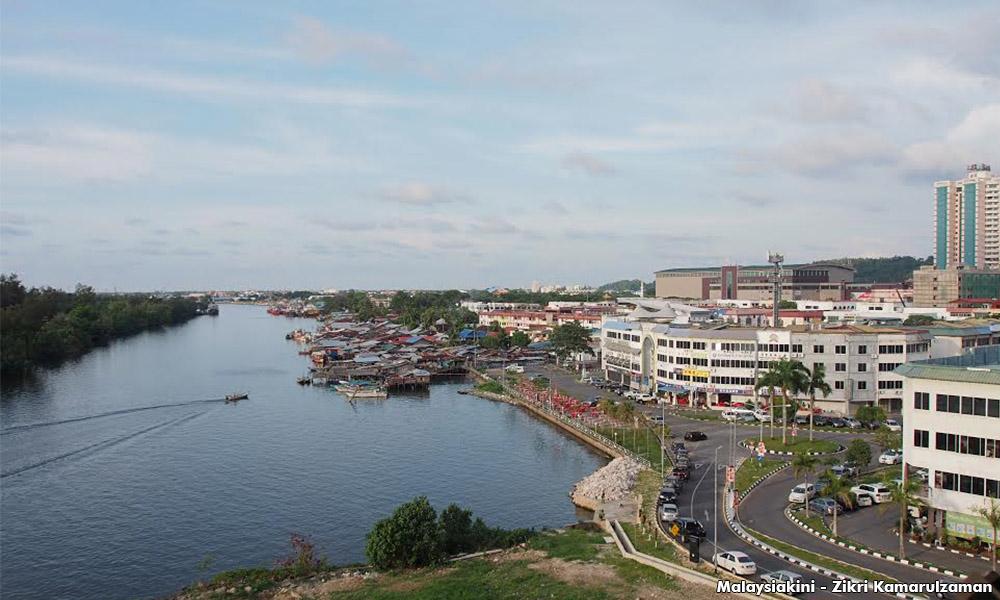
Likewise, the largest state constituency, N75 Senadin, had 73,430 voters or seven times the number of voters in the smallest constituency, N26 Gedong, which was 10,380. The malapportionment of constituencies is outrageous.
The EC is constitutionally bound to reduce the electorate size in constituencies like P219 Miri and N75 Senadin and increase the electorate size in P207 Igan and N26 Gedong. It has no liberty not to do so.
8. Are rural voters constitutionally guaranteed greater voting power than urban voters? What is the “weightage of area” requirement?
No. The “weightage of area” provided for in Subsection 2(c) of the Thirteenth Schedule is not a blanket cheque to over-represent all constituencies. It is explicitly conditional on first, large area size, and second, transportation difficulties.
Where area size is concerned, this “weightage of area” would justify over-representation for constituencies that span across large areas as it would technically be more difficult to travel across then.
These include P216 Hulu Rajang (about the size of Pahang), P220 Baram (larger than Perak), P214 Selangau (Kedah), P217 Bintulu (Selangor), P215 Kapit (Negeri Sembilan), P221 Limbang (two-thirds of Negeri Sembilan), N66 Murum (larger than Kedah), and Telang Usan (almost Kedah).
It cannot be the excuse to over-represent constituencies like Sarawak’s smallest parliamentary constituency of P207 Igan and its smallest state constituency of N26 Gedong.
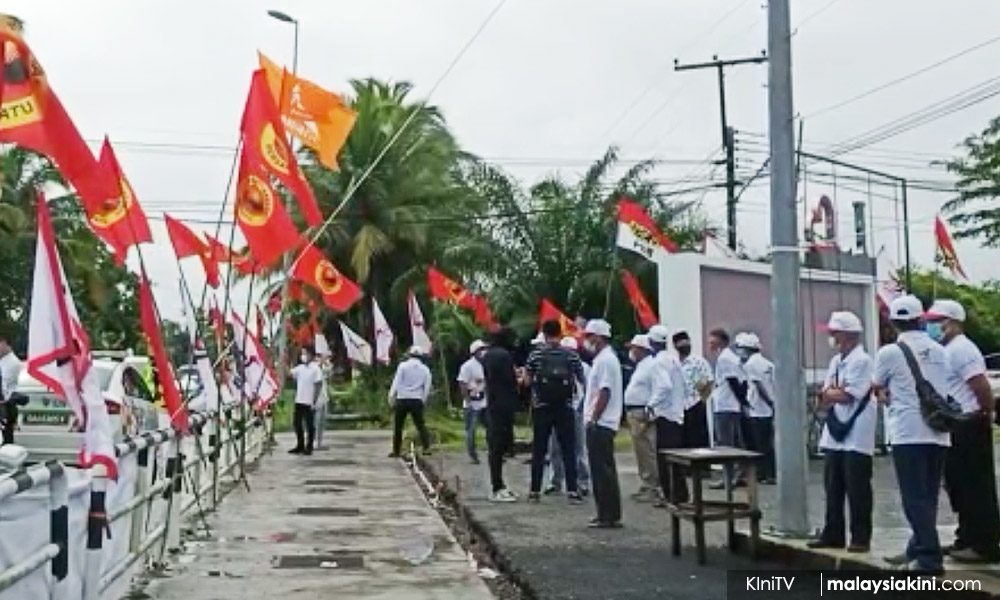
P207 Igan has an area of only one-third of Negeri Sembilan, yet other larger parliamentary constituencies like P216 Hulu Rajang (about the size of Pahang), P220 Baram (larger than Perak), P214 Selangau (Kedah), P217 Bintulu (Selangor), and P215 Kapit (Negeri Sembilan) have more voters than Igan.
N26 Gedong is an ever-clearer example of the EC’s misconduct in the 2015 constituency delineation review. Nearly half of Sarawak’s 82 state constituencies have both a larger area and a larger electorate than Gedong, whose main town is less than two hours by car from the Sarawak state legislature.
9. Does the Election Commission have a free hand in drawing constituency boundaries? What is the “local ties” requirement?
Subsection 2(d) of the Thirteenth Schedule requires the EC to minimise any confusion caused by changing boundaries and to protect "local ties" by keeping existing communities together.
This is a potential safeguard against gerrymandering, or the manipulation of constituency boundaries and electorate composition to enable easy victories for certain parties.
While local ties are not defined, the EC should avoid creating state constituencies that span across divisional, district, or local authority boundaries. Watch an explainer on gerrymandering here.
10. What can members of the public do in response to the proposals by the Election Commission? Does it matter?
As explained above, the only opportunity for members of the public to participate in the delineation review process is to form a group of 100 affected voters if they are not happy with the number of voters, the boundary, or even the name of the proposed constituencies.
There is no limit on groups of 100 or more affected voters from one affected constituency to submit their objection (termed “representation”) to the EC. The EC would have to call them in to present their case in an enquiry, and may modify their proposal as a response to the objections.
The EC must present their maps twice and organise local enquiries twice. A group of 100 or more affected voters can object to the second proposed map even if they have not objected to the first one.
While the EC had ignored many objections in the 2016-2018 delineation review exercises for the peninsula and Sabah, the sea of objections had put the EC under tremendous pressure, prevented its proposal from being rushed to the prime minister and Parliament, and possibly incurred some electoral cost to parties that benefit from malapportionment and gerrymandering.
Two civil society groups, Rose Sarawak and Tindak, are equipping concerned Sarawakians with the knowledge and skills to have a say in their electoral boundaries.
Members of the public can study alternative fair boundary proposals for the 99 state and 31 parliamentary seats here. - Mkini
PROJEK SAMA advocates for institutional reforms to advance political stability and accountability at a time when our nation steers through democratisation into the uncharted waters of hung parliaments and coalition governments.
The views expressed here are those of the author/contributor and do not necessarily represent the views of MMKtT.

No comments:
Post a Comment
Note: Only a member of this blog may post a comment.