


Environmental group Sahabat Alam Malaysia (SAM) has voiced grave concern over the government’s decision to renew the operating licence of Lynas Malaysia Sdn Bhd for another 10 years until March 2, 2036.
In a statement today, SAM secretary S Mageswari said conditions attached to the licence renewal appear to be a "smokescreen" to maintain the status quo while allowing the rare earth processing company to continue producing and accumulating radioactive waste.
Pointing to the government’s track record with Lynas since 2012, she expressed the group’s scepticism that radioactive waste produced under the company’s renewed licence will truly be neutralised or that future waste will be removed from the country once the existing permanent disposal facility (PDF) is full.
"The best and most effective option in the renewal of the Lynas licence ought to have been for all the radioactive wastes produced thus far and, in the future, to be sent back to Australia for management.
"Any other approach is simply irresponsible, as the burden is passed on to the government and the public to manage the Lynas radioactive waste for thousands, if not millions of years to come, given the long lifetime of radioactivity in thorium," she asserted.

On March 2, the Science, Technology, and Innovation Ministry said Lynas' licence renewal comes with stricter terms and a review every five years.
It said no more PDFs will be built for the disposal of water leach purification (WLP) residue that exceeds limits under the Atomic Energy Licensing Act 1984.
After the first five years, the production of radioactive residue must be halted completely, while any waste produced in the interim must be neutralised to reduce its radioactivity level.
It added that the licensing conditions also require Lynas to apply its successful research and development (R&D) work at an industrial and commercial scale, collaborate with local research institutions and industry, and contribute one percent of its annual gross sales revenue to R&D.
Speculative talks
However, Mageswari stressed that discussions around R&D are speculative in nature.
"All the talk of R&D is, at best, experimental, and the public has no knowledge of exactly what is going on, or if there has been any success at all that is capable of being reproduced at an industrial scale," she said.
Mageswari also pointed to conditions imposed between 2020 and 2023 requiring Lynas to ensure an overseas cracking and leaching plant was operational before July 2023.
After that, no new raw materials containing naturally occurring radioactive material were supposed to be imported into Malaysia, and no new WLP residue was to be produced domestically, she said.
In spite of that, she said there has been no indication that the transfer of this process overseas had taken place.
Instead, Mageswari accused the government of backtracking on earlier requirements for Lynas to return its waste to Australia, allowing the company to continue disposing of radioactive waste at a PDF in Gebeng, Pahang.
Although the government insisted that Lynas relocate the cracking and leaching facility at Gebeng out of Malaysia before July 2023, the condition was ultimately lifted after Lynas proposed to extract thorium from both the lanthanide raw feedstock and the WLP residue.
It was proposed that the extracted thorium could be sold as nuclear fuel, but this was criticised by experts as “speculative” as thorium-fuelled nuclear reactors are still at an experimental stage.
The company was still required to build a PDF to store radioactive waste and contribute to a R&D fund, as per the original terms the government gave when extending Lynas’ licence to 2026.
Affecting future generations
Mageswari warned that Putrajaya’s lifting the condition could leave future generations to deal with radioactive waste.
"It is time for the government to stop the charade and act responsibly to stop the further generation of radioactive wastes, at the expense of Malaysians.
"Enough time has been given for this, and it is time for all the WLP wastes to be sent back to Australia, as originally promised by Lynas to the government when it first came to this country," she added.
Last month, Science, Technology, and Innovation Minister Chang Lih Kang revealed that the government will eventually require Lynas to apply its thorium extraction technology to import “thorium-free” rare earth ore.
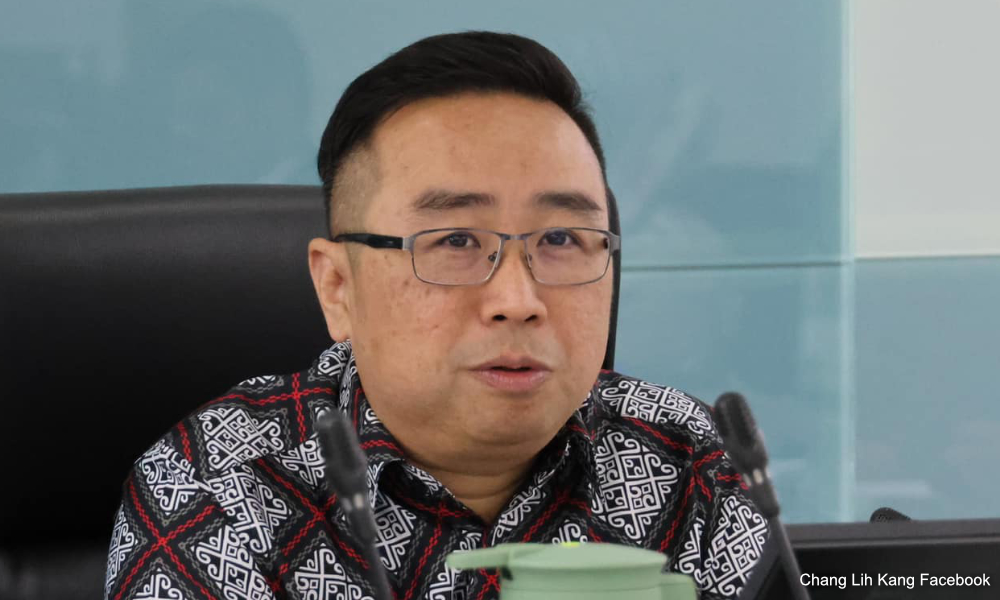
“Moving forward, we will require (Lynas) to complete the thorium extraction process in Australia before shipping it over,” he said.
Chang also said that his ministry operates Environmental Radiation Monitoring Systems inside the Lynas rare earth plant and at its PDF.
All related data will be uploaded to an upcoming public platform that provides real-time environmental data. - Mkini

No comments:
Post a Comment
Note: Only a member of this blog may post a comment.