


Over 200 people gathered outside the Prime Minister’s Office (PMO) today to submit a memorandum to Prime Minister Anwar Ibrahim, urging the Madani government to take firm action against rising religious hate speech and racial provocation.
Submitted by the Global Human Rights Federation (GHRF) alongside a coalition of 75 NGOs and concerned citizens, the memorandum called for consistent enforcement against individuals accused of stoking interfaith tensions, particularly on social media.
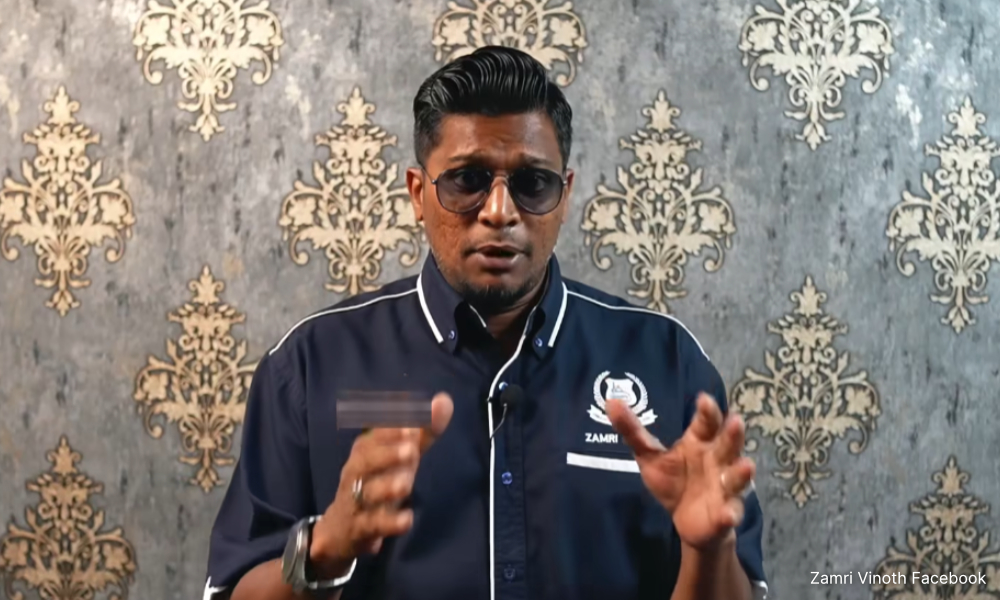
The memorandum named several individuals - among them preachers Zamri Vinoth, Firdaus Wong, and Ridhuan Tee Abdullah, self-proclaimed land activist Tamim Dahri Abdul Razak, and Perlis mufti Asri Zainul Abidin - alleging they had repeatedly made statements insulting to other religions and had spread provocative narratives over the course of more than a decade.
GHRF president S Shashi Kumar warned that unchecked hate rhetoric could threaten social harmony and deepen mistrust between communities if authorities fail to respond consistently.
He said that although many police reports had been lodged over such content, many were allegedly classified as “no further action” (NFA).
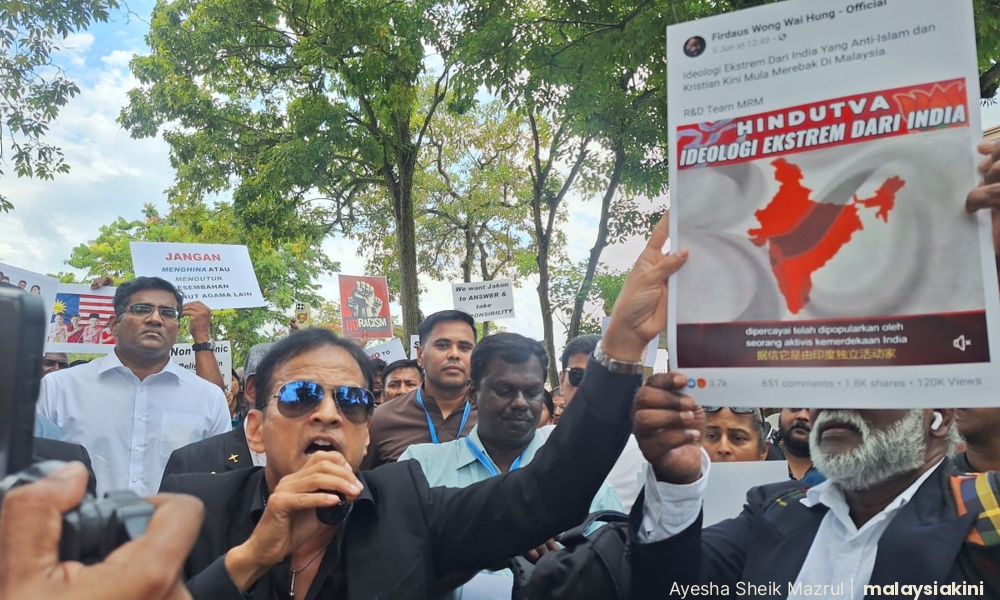
“The lack of legal action against them has confirmed that these individuals enjoy immunity from any accountability.
“As a result, they continue to intensify the spread of racist and religious propaganda and provocations, threatening social harmony and national unity,” Shashi said.
Lack of enforcement
Shashi argued that despite the country having laws to address hate speech, enforcement had been inconsistent.
In some cases, he added, non-Malay and non-Muslim communities had been labelled with derogatory terms such as “pendatang” (immigrants), “penumpang” (freeloaders), and “kafir” (infidels).
“Malaysia already has a clear legal framework to deal with incitement and hate speech, including the Sedition Act 1948, the Penal Code, and guidelines relating to 3R issues - race, religion, and royalty.
“But until today, no appropriate enforcement action has been taken against these individuals.
“This creates the perception that there are double standards in the enforcement of the law, which can undermine public confidence in the justice system and the government’s commitment to equality and racial harmony,” he added.
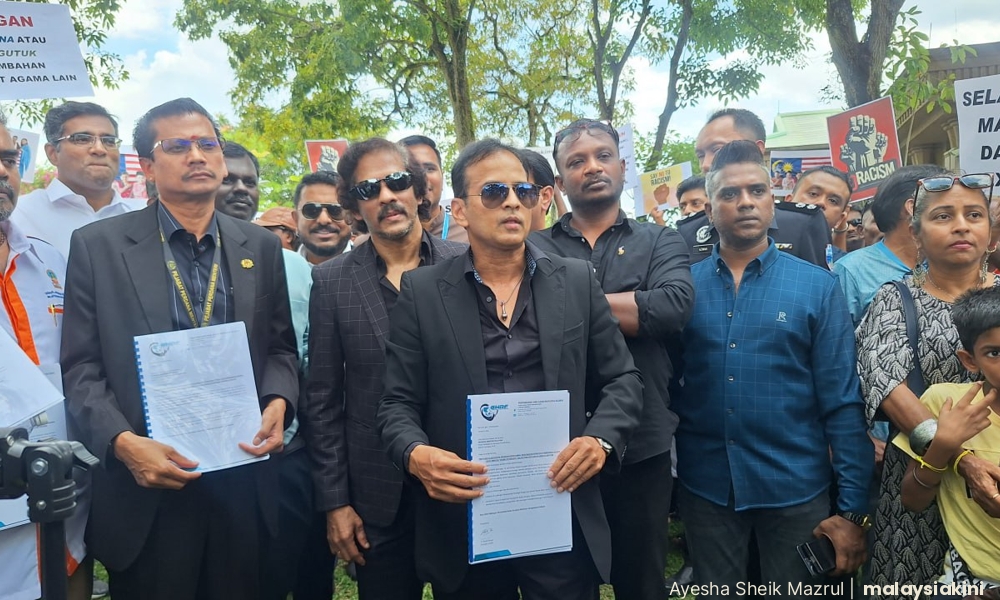
According to Shashi, the memorandum urged the government to convene an urgent meeting between the PMO, the Home Ministry, police, the Attorney-General’s Chambers (AGC), and MCMC to address the issue.
“This time we want change. We want the prime minister to take action. We are not asking for money; we only want peace, harmony, and unity,” he added.
Long-term solutions
Apart from enforcement, the memorandum also proposed several long-term measures to address disputes involving non-Muslim houses of worship.
They include establishing a statutory body through Parliament to oversee the management of temples, churches, and other non-Muslim religious properties, as well as a nationwide initiative to gazette land occupied by long-standing houses of worship.
Other proposals include clearer relocation standard operating procedures (SOPs) requiring equivalent replacement sites, the creation of a mediation tribunal to resolve land disputes involving houses of worship, and a fund to maintain such sites.
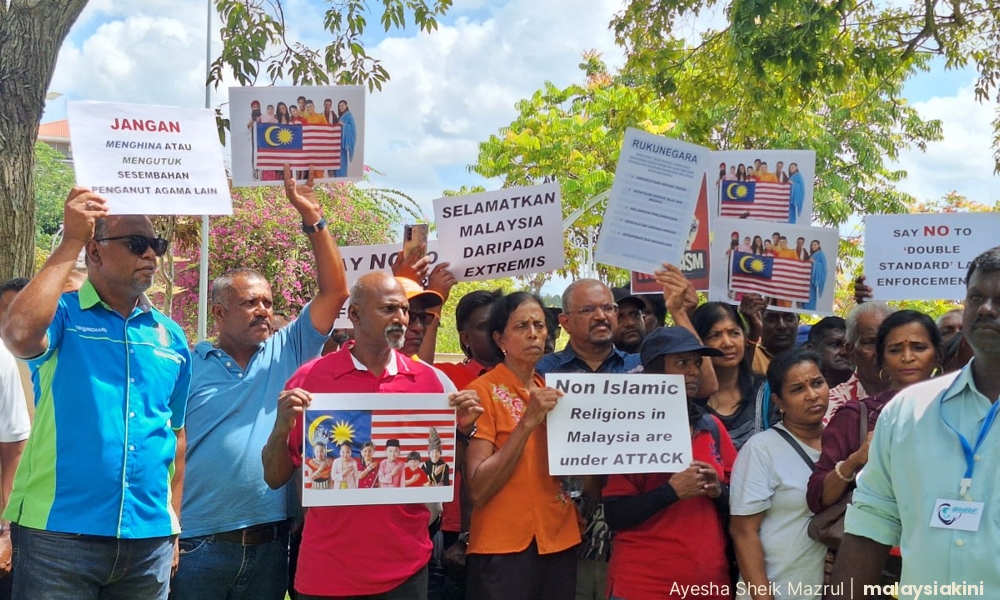
Later, Shanmugam Mookan, a special officer for Anwar, received the memorandum from the group at 3.30pm. The crowd dispersed at about 4pm.
Guidelines for non-Muslim religious sites
Earlier today, DAP secretary-general Anthony Loke said the government is preparing to table guidelines on resolving land issues affecting non-Muslim religious sites at the National Council for Local Government.
In an interview with The Keywords, Loke said Housing and Local Government Minister Nga Kor Ming has briefed the cabinet on the matter, and that the framework is ready.
Loke, who is also the transport minister, said the guidelines, once tabled, will require all local authorities across the country to comply.
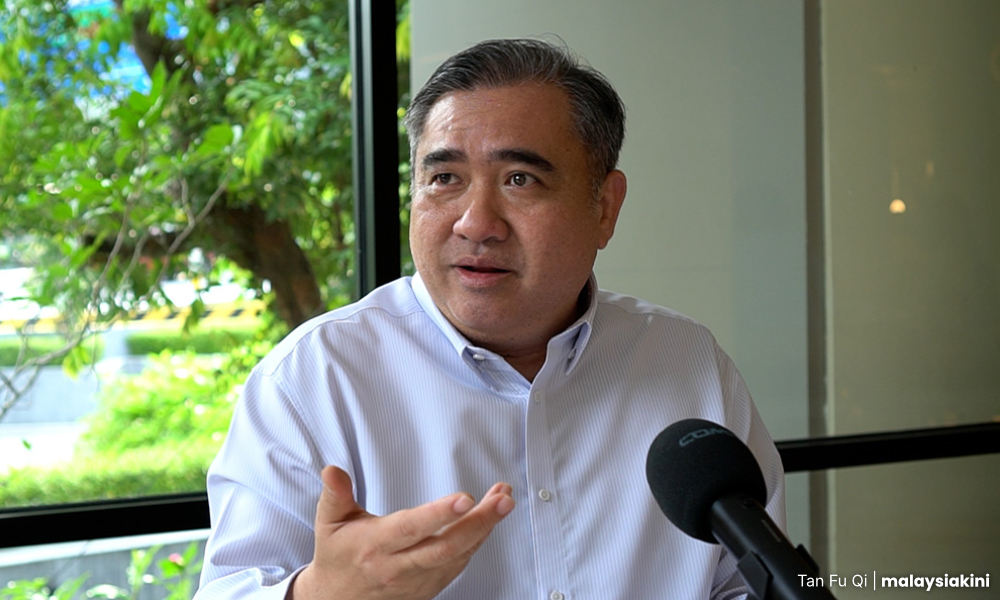
“However, this is an enormous undertaking. It exists in every state. Every state could have hundreds of such structures that need to be dealt with.
“Finding suitable sites is no easy matter either, but it is certainly something that must be done and addressed. So, we hope that people can see our commitment here.
“We are not trying to brush the problems aside. When we tackle these issues, we hope to find a long-term solution,” he was quoted as saying.
Rising tensions
The issue of unauthorised temples and shrines has surfaced with increasing frequency, stoking racial tensions. Recent weeks have seen a series of religiously charged incidents.
Among those targeted were Zamri and social media personality S Chandrasegaran, better known as Cikgu Chandra.
Zamri was attacked while travelling in his car, while Chandrasegaran’s home was stormed, with three of his vehicles set ablaze.
The Penang police are also investigating Zamri for sedition over a TikTok livestream on March 8, where he purportedly made statements that were threatening, provocative, insulting, and racist.
Additionally, two cases of Quran desecration were recorded.
Plus, Tamim was filmed stepping on a trident, a sacred Hindu symbol known as a “soolam”, drawing widespread condemnation.
He claimed ignorance over allegations that he had desecrated the symbol. He claimed he thought the object he was filmed stepping on was a rusty piece of metal in an unoccupied land clearing.
However, Indian community activist Umagandhan Krishnan disputed Tamim’s version of events.
Umagandhan said the trident was part of the Langkawi Shree Muniswarar Alayam temple, which he claimed was located on private land with permission from its owner, an automotive company. - Mkini

No comments:
Post a Comment
Note: Only a member of this blog may post a comment.