

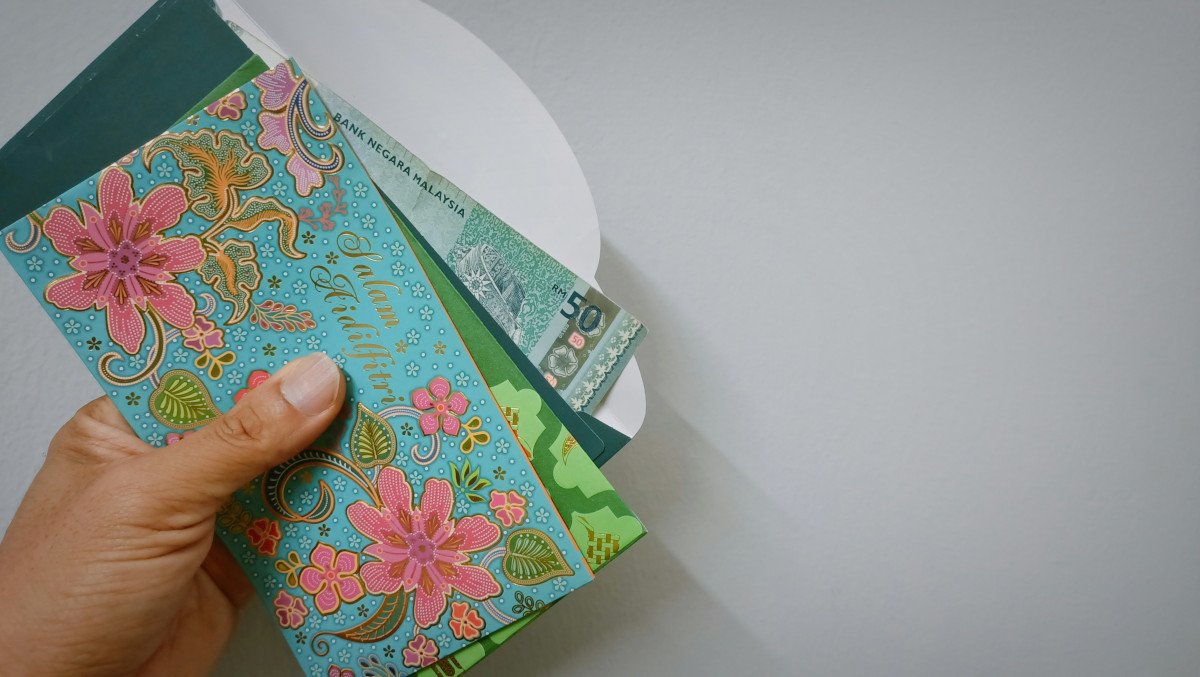
EVERY Syawal, a familiar scene unfolds across Malaysian homes. Children line up politely after greeting elders, waiting for the moment a small green envelope is placed in their hands, marking the cherished tradition of duit raya.
For many families, the exchange of these envelopes has long symbolised joy, generosity and shared blessings during Hari Raya visits.
Yet, behind the cheerful ritual lies a deeper reflection of Malaysia’s social values: the importance of giving, sharing rezeki and strengthening relationships within families and communities.
For generations, the small green envelope has been part of Malaysia’s festive culture. The amount inside may be modest, but its meaning is far greater. It represents goodwill, blessings and the spirit of sharing during Syawal.
However, in today’s economic climate, this simple tradition is increasingly viewed within a more complex financial reality. Rising living costs, growing household financial commitments and economic uncertainties have made many families more mindful about festive spending.
For households with large extended families, preparing duit raya envelopes for numerous relatives and visiting children requires careful financial planning.
In recent years, the cost of living has remained one of the most pressing concerns among Malaysian households.
The Household Expenditure Survey 2022 by the Department of Statistics Malaysia shows that average monthly household spending increased from RM4,534 in 2019 to RM5,150 in 2022, driven largely by rising costs in food, housing and transportation.

At the same time, Bank Negara Malaysia’s Financial Stability Review indicates that household debt stood at about 84.8% of Gross Domestic Product in 2025, with total household debt reaching approximately RM1.67 tril.
These figures do not suggest that Malaysians cannot celebrate Hari Raya joyfully. Rather, they highlight the reality that in a more challenging economic environment, traditions of giving such as duit raya may also require thoughtful balance between generosity and financial prudence.
Traditionally, duit raya has always been understood as a voluntary act of kindness. It was never meant to be a social obligation, let alone a measure of financial capability.
However, as with many cultural traditions, social expectations can gradually shape how the practice is perceived.
During large family gatherings, some individuals may feel subtle pressure to prepare numerous envelopes or worry that the amount given might appear insufficient. Without realising it, a gesture meant to symbolise generosity can sometimes become influenced by social comparison.
This is precisely why it is important to return to the true meaning of the tradition.
At its core, duit raya has never been defined by the amount inside the envelope. Instead, it symbolises goodwill, blessings and the joy of sharing during Syawal. A small amount given sincerely often carries far greater meaning than a larger sum given under social pressure.
When generosity is guided by sincerity rather than expectation, the tradition remains inclusive. Everyone can participate according to their means without feeling that festive customs must come at the expense of financial wellbeing.
At the same time, the responsibility of those receiving duit raya is equally important, especially among children.
Hari Raya celebrations provide valuable opportunities for parents to teach manners and values. Children are encouraged to greet elders respectfully, shake hands and express gratitude for whatever they receive.
Simple etiquette can make a meaningful difference. Opening the envelope immediately in front of the giver or commenting on the amount received can unintentionally undermine the sincerity of the gesture.
Instead, children should be taught that the value of a gift lies not in its monetary worth but in the goodwill behind it.
This practice is closely connected to a fundamental principle in Islamic teachings: gratitude or syukur.

In an era where consumer culture and social comparison increasingly influence how children perceive money and gifts, nurturing gratitude becomes even more important. Without guidance, festive traditions risk shifting from moments of appreciation to moments of comparison.
Therefore, parents play a crucial role in shaping how the younger generation understands duit raya. When children learn to accept even a small amount with humility and gratitude, the true spirit of the tradition is preserved.
Some families have even begun using duit raya as an opportunity to introduce basic financial awareness. Children may be encouraged to divide the money they receive into portions for saving, spending and charity.
In doing so, the festive tradition becomes an early lesson in financial responsibility and generosity.
Beyond family settings, duit raya also reflects a broader social dynamic within Malaysian society. Although the amounts involved may be small, these exchanges strengthen relationships and reinforce a culture of mutual care and solidarity.
Maintaining this tradition, however, requires balance.
Festive customs should bring joy and strengthen relationships, not create financial strain or unnecessary expectations. When generosity becomes a source of social pressure rather than kindness, its original meaning risks being diluted.
After a month of fasting and reflection during Ramadan, Syawal symbolises a spiritual victory. It is a time to express gratitude, renew family bonds and celebrate togetherness.
The joy of Hari Raya should not be measured by the number of duit raya envelopes prepared or the scale of celebrations. Rather, the true meaning of Syawal lies in strengthened relationships, forgiveness and appreciation for the blessings we have received.
The value of Syawal is not determined by how much we give or receive, but by how sincerely we uphold the values of humility, moderation and gratitude for every rezeki bestowed upon us.
Perhaps that is the most meaningful lesson behind the small green envelope. Even the simplest act of giving can carry profound significance when accompanied by sincerity, gratitude and compassion.
Dr Dalilawati Zainal is a senior lecturer at the Department of Accounting, Faculty of Business and Economics, Universiti Malaya.
The views expressed are solely of the author and do not necessarily reflect those of MMKtT.
- Focus Malaysia.

No comments:
Post a Comment
Note: Only a member of this blog may post a comment.