


Malaysia needs to wean off fossil fuels as its primary energy source by accelerating the transition to renewable energy, including solar and hydro.
This comes amid the latest conflict in West Asia, which has disrupted global oil supplies and pushed up prices - risks that experts say Malaysia can mitigate.
Concerned with the surge in petrol prices, the government yesterday announced that it will implement cost-cutting measures, including restricting overseas trips for officials.
Prime Minister Anwar Ibrahim also announced the cancellation of Hari Raya open houses by government agencies and government-linked companies (GLCs).
Malaysian University of Science and Technology economist Barjoyai Bardai pointed out that the latest crisis in West Asia highlights Malaysia’s vulnerability due to its dependence on imported fossil fuels.
“The ongoing conflict in the Middle East has made it clear that Malaysia’s long dependence on imported fossil fuels places it at high economic and strategic risk,” he told Malaysiakini.
This means the government should bring forward its timelines in the National Energy Transition Roadmap (NETR), which had set targets by 2050, he added.
"Accelerating the NETR will reduce the country's vulnerability to global oil shocks, strengthen its economic resilience, and position Malaysia as a regional clean energy leader,” he said.

Transitioning to renewables would also protect households and industries from future energy price surges, and enhance sustainability in line with the Sustainable Development Goals, he explained.
"Given the severity of the global energy disruptions, the argument for shortening the 2050 timeline, or at least accelerating near-term milestones, is now stronger than ever,” he added.
On Feb 28, war broke out in Iran following Israel and the United States' surprise attacks, resulting in oil prices skyrocketing, crossing the US$100 (RM392) per barrel mark on March 9.
The global oil supply faces severe disruption due to Iran shutting down the Strait of Hormuz, where about a fifth of the world's oil and gas passes through every year.
Over 40 percent of Malaysia's crude oil imports come from the United Arab Emirates and Saudi Arabia, where supply has been cut off over Iran’s threats to fire on any ship trying to cross the narrow sea passage.
Low renewable sources
According to NETR, which was launched in 2023, fossil fuels have been dominating Malaysia’s primary energy supply.
As of 2020, natural gas constituted the largest portion at 42.4 percent, followed by crude oil and petroleum products (27.3 percent) and coal (26.4 percent).
Renewable sources comprising hydropower, solar, and bioenergy constituted a mere 3.9 percent.
The transition plan is aimed at increasing renewable power sources to a combined 70 percent by 2050, reducing reliance on oil and almost completely moving away from coal, with natural gas as a transitional fuel.
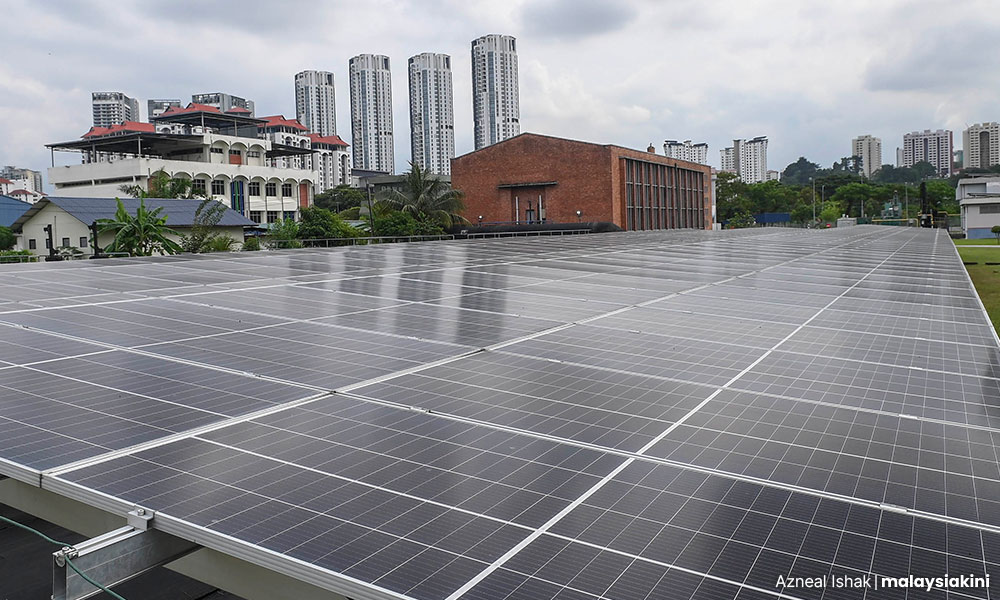
Barjoyai said NETR targets, including increasing renewable energy sources to 40 percent by 2035, should be brought forward by five to 10 years, with an aggressive early phase implementation starting this year until 2035.
"Large-scale solar power parks, hydro floating solar, and 'renewable energy zone' projects should be fast-tracked by offering streamlined approvals and enhanced investment incentives.
"The nation must also build a smarter, more flexible grid with storage systems that reduce blackout risks and make Malaysia less dependent on imported fossil fuels," the economist added.
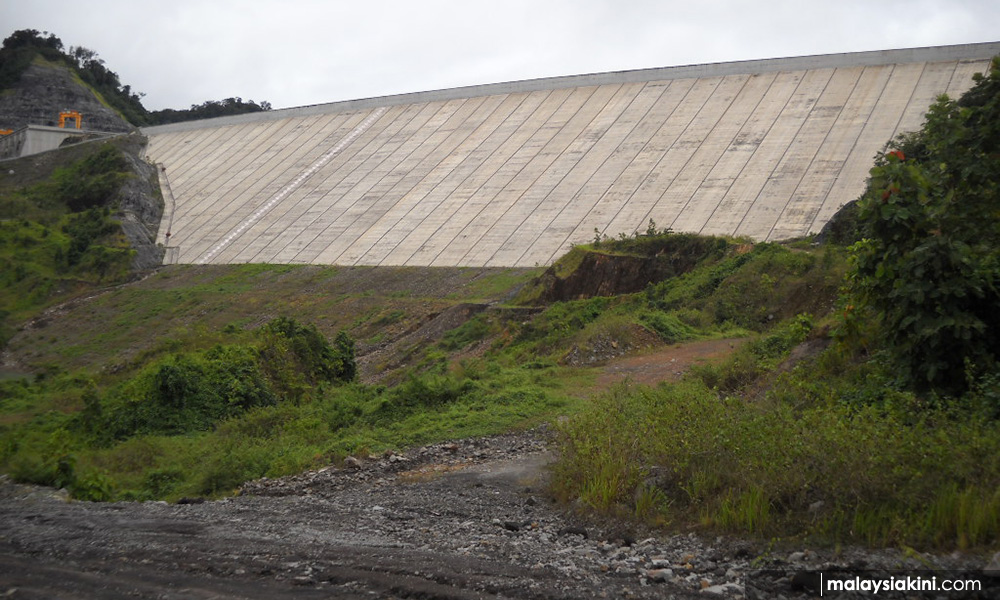
Hydrogen hubs and bioenergy clusters should also be accelerated to diversify energy supply and support industrial decarbonisation, he said.
“The NETR offers a comprehensive pathway toward resilience - but the timeline needs adjustment.
"We must accelerate the NETR to protect the economy, strengthen energy independence, and position ourselves as a regional leader in the green transition.
“The cost of inaction is far greater than the cost of transition," Barjoyai stressed.
Transition fuel
Another economist, Ahamed Kameel Mydin Meera, argued that the country should increase the use of liquefied natural gas (LNG) while transitioning to renewables.
This was because, as an exporter of LNG, Kameel said the country has an ample supply of the fuel.
If local industries can use LNG as their main source of energy, Kameel opined that it could make the economy less susceptible to external energy shocks.
The economist also supported the plan to transition towards renewable energy, especially solar, which he said is a good alternative.
"Sitting on the equator, the irradiation rate in Malaysia is very good, especially in the northern area.
"There's a lack of heavy marketing for the installation of home and industrial rooftop solar panels.
"Also, oil palm biomass is another potential source since we are also a major producer of palm oil," he added. - FMT

No comments:
Post a Comment
Note: Only a member of this blog may post a comment.