

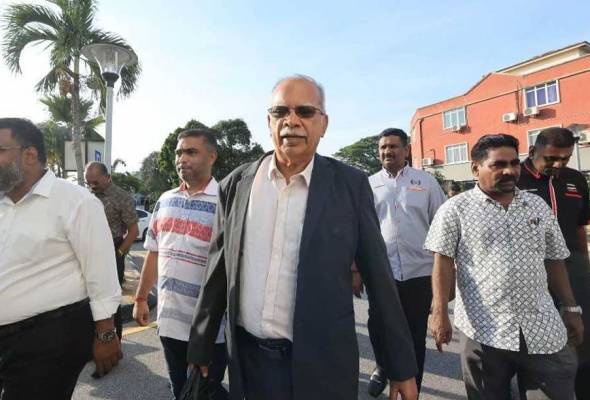
ON MAY 13, 2026, the former High Court judge Abdul Halim Aman will be appointed as the chief of the MACC.
The present chief, Azam Baki, who had three one-year extensions, will vacate the post on May 12, 2026.
The appointment of Abdul Halim, with more than 20 years in judicial service, comes in the wake of the controversy surrounding Azam’s purchase of shares in two companies exceeding the limit imposed on civil servants.
Furthermore, the anti-graft agency, or at least some sections of it, were alleged to have colluded with shady businessmen in the corporate sector to intimidate companies into parting with their shares at low prices (corporate mafia).
Prime Minister Anwar Ibrahim has withstood pressure to appoint a royal commission of inquiry (RCI) on the MACC in general and Azam in particular.
Anwar thinks that by letting Azam go, the pressure for the appointment of an RCI would cease.
The political forces against Azam are not just about his removal but the appointment of a RCI.
This was the thrust of the “Tangkap Azam Baki” rally organised by some NGOs on Saturday, April 25, 2026, in the heart of Kuala Lumpur.
While the public welcomes the appointment of Abdul Halim as the new head of the MACC, such an appointment does not address the structural problems in the functioning of the MACC.
The MACC might be the national anti-graft body, but unfortunately it lacks the independence to function without interference from the executive branch of the government.
It is very much beholden to the chief executive of the government, in other words, the prime minister.
Major investigations need the consent of the prime minister. This is where the MACC is not in a position to commence investigations independently.
Seeking the consent of the prime minister means some cases might be investigated and action taken, while others are not.
This is why the MACC has often been criticised for being harsh on the opposition but not on those in the ruling government.
There have been suggestions that the MACC should be accountable to Parliament, but such a proposal has not been accepted by the government for fear that the agency might become too “independent.”
Abdul Halim takes up the post at a time when the credibility of the MACC is at its lowest point. How he will clean up the image of the agency remains to be seen.
The key question is whether the government is prepared to reform the MACC so that its independence is ensured.
Former DAP stalwart and Penang deputy chief minister II Prof Ramasamy Palanisamy is chairman of the United Rights of Malaysian Party (Urimai) interim council.
The views expressed are solely of the author and do not necessarily reflect those of MMKtT.
- Focus Malaysia.

No comments:
Post a Comment
Note: Only a member of this blog may post a comment.