


Negeri Sembilan is now in the grip of an extraordinary constitutional crisis – one that strikes at the very heart of its celebrated Adat Perpatih system.
On April 19, the four undangs – the powerful chieftains of Sungai Ujong, Rembau, Johol, and Jelebu – publicly proclaimed that Tuanku Muhriz Tuanku Munawir, the Yang di-Pertuan Besar of Negeri Sembilan, had been deposed over alleged “misconduct”.
No details were provided to substantiate the accusation. In the same declaration, they named Tunku Nadzaruddin Tuanku Ja’afar, the son of the previous ruler, as the new Yang di-Pertuan Besar.
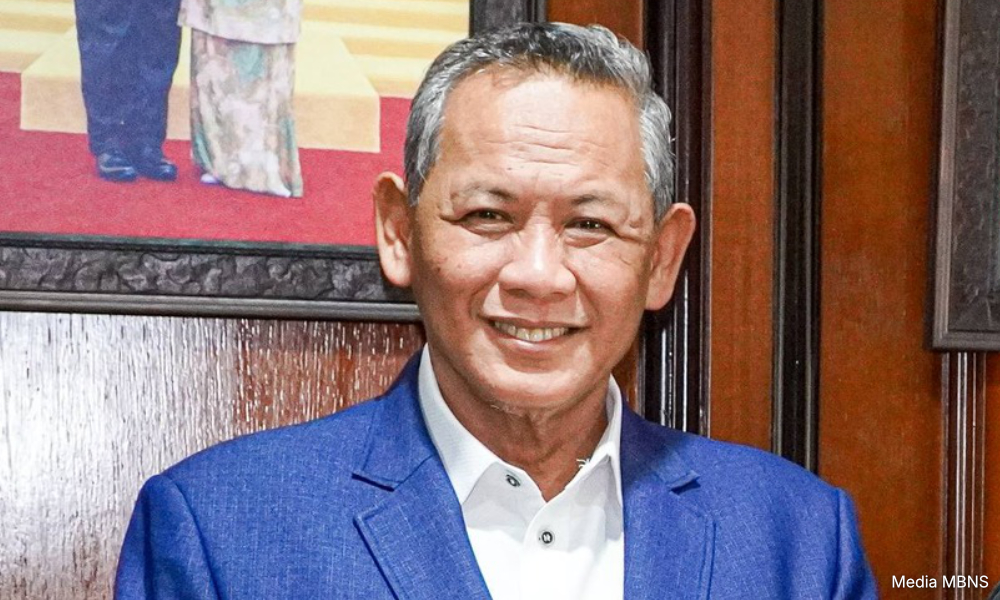
The following day, Menteri Besar Aminuddin Harun declared the move invalid.
His position was premised on the assertion that Mubarak Thahak, the undang of Sungai Ujong, had earlier been stripped of his office on April 17 by the Council of the Yang di-Pertuan Besar and the Ruling Chiefs (Dewan Keadilan dan Undang), for allegedly committing 33 breaches of adat (customs) and law.
The four undang rejected this claim, accusing the menteri besar of misrepresentation and insisting that no such collective decision had been validly reached.
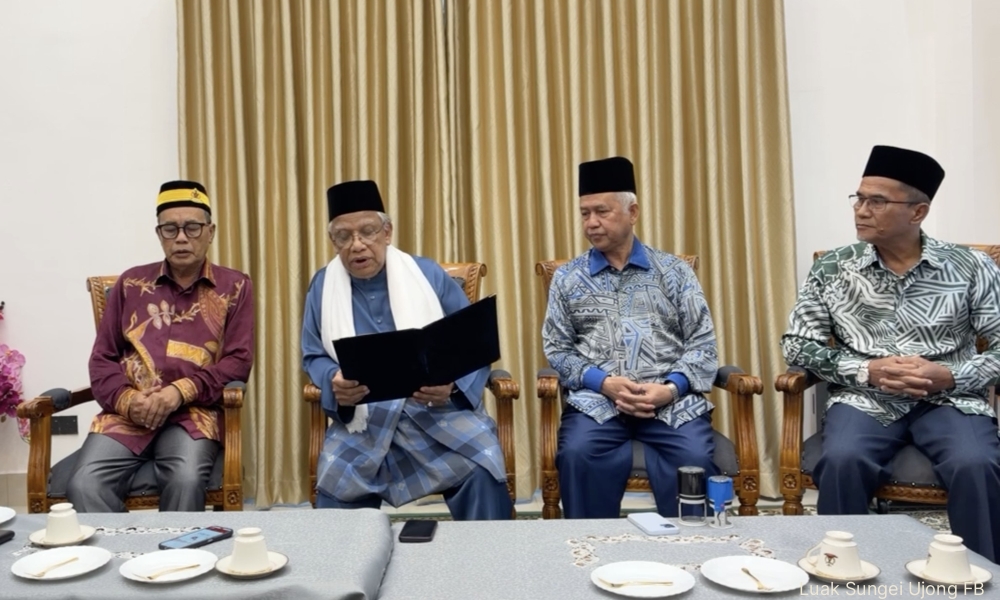
The crisis escalated further when they boycotted the opening of the state assembly on April 23, signalling a deep institutional impasse.
This is no ordinary political dispute. It is a confrontation between competing claims to legitimacy – customary authority on one side and constitutional procedure on the other.
At stake is a question of profound importance: can the ruler of Negeri Sembilan be removed without strict adherence to both adat and the constitution?
Historical foundations: Minangkabau migration, local adaptation
To answer this question, one must first appreciate the historical foundations of Negeri Sembilan’s unique political system.
The origins of Adat Perpatih are closely linked to the migration of the Minangkabau people from the central highlands of West Sumatra, centred on the Pagar Ruyung (also spelled as Pagaruyung or Pagarruyung) kingdom.
According to historian CM Turnbull, Minangkabau settlers began arriving in areas such as Rembau, Naning, and Sungai Ujong around the mid-fifteenth century, with migration intensifying from the sixteenth century onwards.
These settlers established communities organised into matrilineal clans, or suku, which formed the basis of social and political organisation.
Yet Negeri Sembilan did not emerge as a mere extension of Minangkabau society. Rather, it evolved through a process of localisation and adaptation.
The Minangkabau migrants encountered and interacted with the indigenous Orang Asli populations of the peninsula, and through intermarriage and social integration, a distinctive socio-political order gradually took shape.
This process was not incidental but foundational. It produced a society that was neither wholly Minangkabau nor purely indigenous, but a uniquely local synthesis that would underpin Adat Perpatih as a living and adaptive system.
Emergence of Biduanda: A foundational community
Central to this process of integration was the emergence of the Biduanda, one of the most important and prestigious clans in Negeri Sembilan.
Scholarly research, including that of Toshihiro Nobuta and earlier authorities such as MB Hooker, indicates that the Biduanda Waris lineage arose from intermarriage between Minangkabau migrants and local Orang Asli groups, particularly the Jakun.
Historically, during the Malacca sultanate, Orang Asli communities in the region were often referred to as “Biduanda”, meaning “followers of the Raja”.
Over time, many were assimilated into Malay society through Islamisation, while others retained distinct identities as Orang Asli groups.

This historical evolution is significant because it demonstrates that the Biduanda were not peripheral to the political system but were central to its formation and legitimacy.
In several luak (territories), the office of the undang was traditionally drawn from Biduanda lineage, and as the anthropologist Patrick Edward de Josselin de Jong observed, in places such as Rembau, the authority of the undang was closely tied to Biduanda descent.
Today, Negeri Sembilan’s society is organised into 12 suku: Biduanda, Batu Hampar, Paya Kumboh, Mungkal, Tiga Nenek, Seri Melenggang, Seri Lemak, Batu Belang, Tanah Datar, Anak Acheh, Anak Melaka, and Tiga Batu. This clan-based structure remains central to the functioning of Adat Perpatih.
Adat Perpatih: A matrilineal yet political system
Adat Perpatih is often described as a matrilineal system, and while this is accurate in terms of lineage and inheritance, it does not fully capture its institutional complexity.
In Negeri Sembilan, descent, clan membership, and rights to ancestral property, or tanah pusaka, are traced through the female line.
Women thus play a central role in maintaining lineage continuity and safeguarding customary land. However, political leadership is exercised by men through a structured process grounded in consultation and consensus.
A distinctive feature of this system is that Minangkabau men enter their wife’s suku upon marriage, reinforcing the matrilineal framework. Yet governance remains embedded in a male-led but community-based leadership structure.
This dual arrangement reflects a sophisticated balance between social organisation and political authority.
Democratic tradition: Leadership through consensus
What distinguishes Adat Perpatih most strikingly is its deeply participatory system of leadership selection. Authority does not flow from hereditary entitlement alone, nor is it imposed from above.
Instead, it emerges through a layered process of consensus-building from the grassroots.
This principle is encapsulated in the well-known perbilangan adat (customary poetry): “Bulat anak buah menjadikan buapak, bulat buapak menjadikan lembaga, bulat lembaga menjadikan undang, bulat undang menjadikan raja.”
In essence, consensus among the anak buah leads to the appointment of the buapak, agreement among the buapak produces the lembaga, the lembaga selects the undang, and the undangs collectively elect the Yang di-Pertuan Besar.
As noted by Wu Min Aun in his book “The Malaysian Legal System”, Adat Perpatih governs fundamental aspects of life, including land tenure, inheritance, lineage, and the selection of traditional leaders.
This structured process bears a striking resemblance to representative governance, where legitimacy is derived from community acceptance and accountability at each level.
Negeri Sembilan’s elective monarchy
The election of the Yang di-Pertuan Besar represents the highest expression of this tradition.
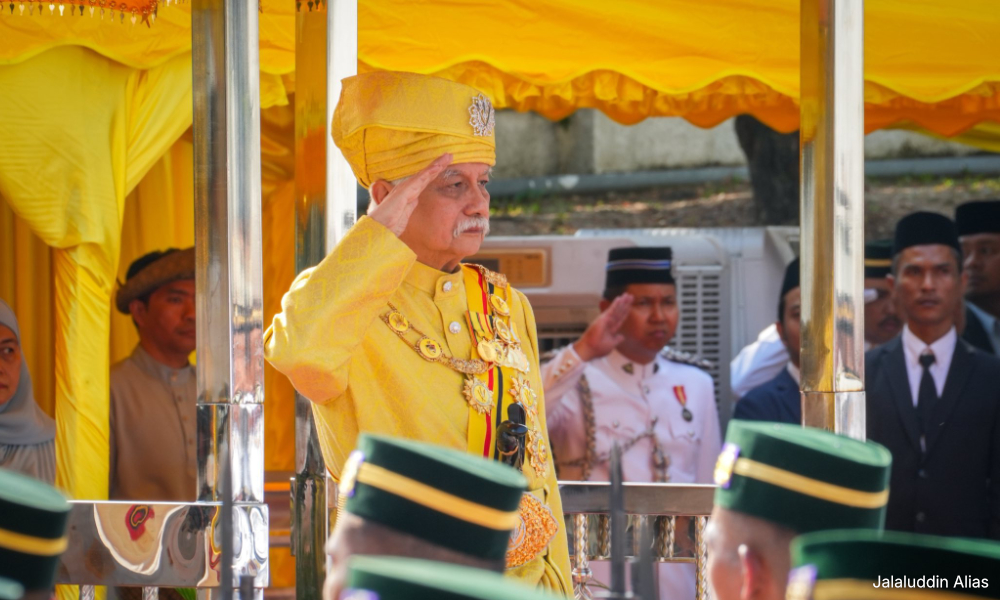
Unlike other Malay rulers who inherit their positions, the ruler of Negeri Sembilan is elected by the four undang from among eligible royal descendants.
Under Article VII (3) of the Negeri Sembilan Constitution 1959, the ruler must be a Malay Muslim, of sound mind, and a male descendant of Raja Radin Raja Lenggang.
Historically, this system dates back to the eighteenth century, when the chiefs of Negeri Sembilan invited a prince from the Minangkabau royal house of Pagar Ruyung to serve as a unifying authority.
This led to the installation of Raja Melewar at Penajis, Rembau in 1773 as the first Yang di-Pertuan Besar. The institution was thus established through consent rather than conquest, reinforcing its elective and consensual character.
Even after the establishment of a central ruler, the luak retained considerable autonomy, ensuring that the authority of the Yang di-Pertuan Besar remained balanced by that of the undang.
Constitutional provisions, the question of removal
The present crisis must ultimately be assessed against the constitutional framework governing Negeri Sembilan.
The state constitution provides clear guidance on both the election and removal of the Yang di-Pertuan Besar. Article VII (2) affirms that the Yang di-Pertuan Besar shall be elected by the undangs of Sungai Ujong, Jelebu, Johol and Rembau in accordance with the constitution and the custom of the state.
More significantly, Article X provides that the four undangs may require the Yang di-Pertuan Besar to abdicate after a “full and complete enquiry” and a determination that he is unfit to rule, and that a formal proclamation must then be issued under the hands of the four undangs and the menteri besar.
Article XXIX further stipulates that the exercise of the undangs’ powers is valid if carried out by three of them, or such number as may be living at the material time.
These provisions establish several important principles. They confirm that the four undangs do possess constitutional authority to remove the Yang di-Pertuan Besar, and that unanimity among all four is not strictly required.
At the same time, they impose procedural safeguards that are integral to the legality of such an action.
The requirement of a “full and complete enquiry” implies that removal cannot be arbitrary but must be grounded in due process and substantiated findings.
Equally important is the requirement that the proclamation be issued with the participation of the menteri besar, which suggests that his role is not merely ceremonial but forms part of the constitutional mechanism validating such a decision.
In the present case, the legality of the purported deposition hinges on several unresolved procedural questions.
It remains unclear whether a “full and complete enquiry” was conducted in accordance with the constitutional requirement, whether the Yang di-Pertuan Besar was afforded an opportunity to respond to the allegations against him in line with principles of natural justice, and whether the proclamation was properly executed in the manner prescribed by Article X.
On the available facts, the apparent absence of the menteri besar’s concurrence in the proclamation raises serious doubts about its constitutional validity.
The crisis in Negeri Sembilan is therefore not merely a contest for power, but a test of a system often celebrated as one of the most democratic indigenous traditions in the Malay world.

The strength of Adat Perpatih lies in its commitment to consultation, consensus, and procedural integrity. These are not symbolic ideals but essential principles that sustain its legitimacy. When they are bypassed or applied selectively, the very foundation of the system is undermined.
What is ultimately at stake is not only the position of the Yang di-Pertuan Besar but the integrity of a constitutional order that represents a rare synthesis of custom and law.
If Adat Perpatih is to remain relevant in contemporary Malaysia, it must be upheld in both letter and spirit, with strict adherence to constitutional provisions and the norms of justice embedded within it.
The resolution of the present crisis will therefore have far-reaching implications not only for Negeri Sembilan, but for the broader understanding of constitutional monarchy and indigenous governance in Malaysia.
Only by ensuring that power is exercised within clearly defined legal and customary limits can the state preserve the credibility of a system that has endured for centuries. - Mkini
RANJIT SINGH MALHI is an independent historian who has written 19 books on Malaysian, Asian and world history. He is highly committed to writing an inclusive and truthful history of Malaysia based upon authoritative sources.
The views expressed here are those of the author/contributor and do not necessarily represent the views of MMKtT.

No comments:
Post a Comment
Note: Only a member of this blog may post a comment.