

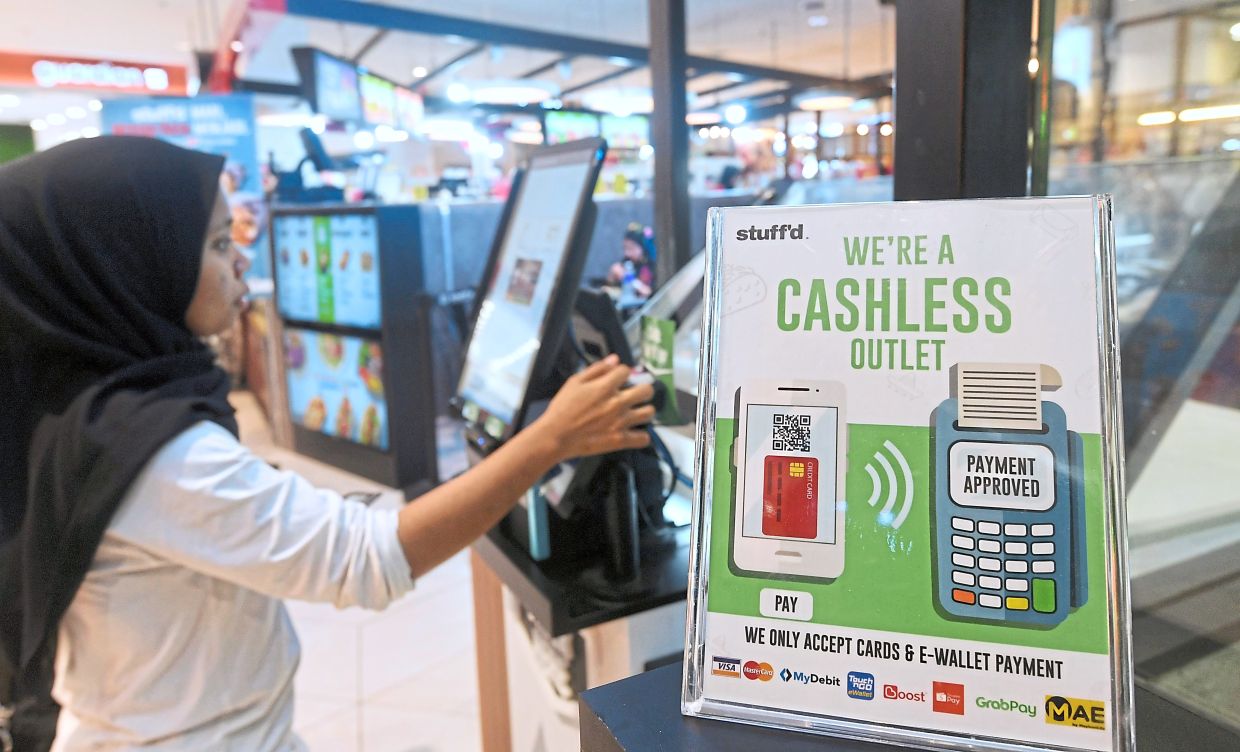
MALAYSIA’S digital payments ecosystem is expanding at remarkable speed. In 2025, the country recorded 18.4 billion e-payment transactions, a 25% increase year-on-year, with each Malaysian making an average of 538 digital payments.
DuitNow QR volumes alone doubled to three billion, supported by nearly three million merchant touchpoints nationwide.
These figures signal strong adoption. But they also raise a more critical question: is trust keeping pace as digital payments become embedded in everyday life?
Fraud data suggests otherwise. Reported losses reached RM2.8 bil in 2025, while the first quarter of this year saw over 12,000 online fraud cases, with losses exceeding RM573 mil.
These are not just statistics. They reflect a growing tension within the system, where rapid digitalisation is being matched by rising risk.
Malaysia is now at an inflection point. The challenge is no longer just to expand digital payments, but to strengthen trust at every level of the ecosystem.
Trust in payments is often discussed in abstract terms, but for businesses, especially micro, small and medium enterprises (MSMEs), it comes down to three essentials: visibility, control and protection.
Merchants need to know where their money is, when they will receive it, and whether they are protected if something goes wrong.
When any of these elements breaks down, trust erodes quickly. For MSMEs operating on tight margins, a delayed settlement or disputed transaction is not a minor inconvenience. It disrupts daily operations and cash flow.
Most failures do not occur at scale. They happen at the edges, where systems are fragmented and processes unclear. This is where trust is most fragile and where the industry must focus its efforts.
Bank Negara Malaysia (BNM) has already signalled a shift in priorities. The focus is no longer solely on driving adoption, but on reinforcing trust. Initiatives such as the Shared Electronic Fraud and Theft framework establish shared accountability between financial institutions and users, while infrastructure upgrades like RENTAS+ and the adoption of ISO 20022 standards aim to improve transparency and resilience.
These are important steps. But regulation alone cannot build trust. Trust is formed through consistent, reliable experiences at the merchant level.
Malaysia’s 1.2 million MSMEs sit at the centre of this transition. Unlike large corporations, they lack dedicated risk teams and financial buffers. Their exposure is immediate, and their tolerance for disruption is low.
For these businesses, trust is not defined by frameworks or policy documents. It is defined by whether payments arrive on time, whether transactions are transparent, and whether digital tools simplify rather than complicate operations.
Closing this gap requires rethinking how payment systems are designed. Direct connectivity to national payment infrastructure, for example, is not just a technical upgrade. It reduces intermediary layers, enabling faster settlements and clearer visibility over cash flow. More importantly, it provides certainty.
Similarly, consolidating multiple payment methods into a single platform is not merely about convenience. It reduces fragmentation, lowers operational risk, and ensures consistency across transactions.
Unified payment solutions that support QR codes, cards and alternative methods within one system offer businesses greater control and reliability.
These design choices matter because they reflect how businesses actually operate. For a small business managing tight cash flow, the difference between uncertainty and clarity can determine whether it grows or struggles.
Trust must also extend beyond transactions. Many MSMEs remain underinsured, often due to the complexity of traditional insurance products.
Integrating protection directly into payment systems offers a more practical solution, embedding coverage such as business interruption, liability and asset protection into tools merchants already use.
This approach reflects a broader shift in fintech. Value is no longer defined solely by functionality, but by how well solutions align with real business needs.
Malaysia has already demonstrated its ability to scale digital payments. But sustaining that growth will depend on something deeper.
BNM’s 2026 priorities, which emphasise fraud prevention, cross-sector collaboration and inclusive adoption, highlight that trust is now central to the ecosystem’s future.
In the years ahead, differentiation will not be driven by transaction volume alone. It will be shaped by the ability to deliver systems that are transparent, resilient and built around the realities of businesses on the ground.
Digitalisation moves fastest when confidence is strong. And confidence, ultimately, is not built through scale, but earned through consistency, clarity and protection.
Tee Kean Kang is the CEO of Paydibs.
The views expressed are solely of the author and do not necessarily reflect those of MMKtT.
- Focus Malaysia.

No comments:
Post a Comment
Note: Only a member of this blog may post a comment.