


On Nov 18, the United Nations High Commissioner for Refugees (UNHCR) announced that they are “currently not registering new asylum-seeker cases, following a decision by the Malaysian government”.
This abrupt development caused a stir not just within the network of formal and informal organisations devoted to the cause of refugee rights, but most consequentially, amongst the asylum-seeking and refugee populations in Malaysia.
Thousands of individuals and families arrive in Malaysia each year, with the hopes of a life without persecution and constant threat. The UNHCR has, for over 40 years, played the primary role of managing these populations by providing them humanitarian aid and documentation.
The UNHCR card has been one such document that has not only dignified asylum-seekers as rightful individuals, but has also, more pragmatically, been one of the only reasons an asylum-seeker could access life-saving medical assistance through marginal subsidies.
It has shielded them, as do most identification documents, from the fear of unjust detention and has allowed them to exist without constant fear. As such, the UNHCR card has been a beacon of hope and a tool for survival to thousands of people who have escaped persecution, war, and genocide.

While the sudden suspension of UNHCR’s registration activities has caused fear and uncertainty amongst these communities, its enhanced replacement programme, the Refugee Registration Document (DPP) system, is in fact a logical, even desirable progression.
The system has been created to identify, surveil, and legitimise the temporary residence of verified asylum seekers who have been in Malaysia since 2022, ensuring management and the protection of sovereignty and national security. The aim of this system is to seek the eventual resettlement or voluntary repatriation of the direct beneficiaries.
The implementation of the programme started with Phase 1, with 4,010 recorded arrested individuals in detention centres. As of Oct 28, it has resulted in 78 of them having been approved for the acquisition of the DPP card.
The second phase, reported as of Nov 17 by the Home Ministry, aims to complete all registration by Dec 31, 2030.
Distressing development
We commend this effort taken by the government, as it appears to be a valiant step in the right direction. It bears with it the promise of converging national safety, screening and management of asylum-seeking individuals, and appropriate humanitarian intervention and aid, with the goal of resettlement.
The execution of this programme could alleviate the concerns of both Malaysians as well as the asylum-seeking population, providing both parties a net of safety through enhanced security and documentation. For Malaysians, this could mean more peace of mind, knowing that every individual in their community is accounted for and justly present.
For the asylum-seeking populations, as well as organisations concerned with their activities, the programme could mean efficiency, accountability, and security in registration, identification, and the implementation of humanitarian aid and resettlement.
The goal of the UNHCR, in any country, is to eventually develop a resourceful and efficient government-led asylum procedure, such that the nation itself can regulate and manage asylum-seekers with sovereignty.
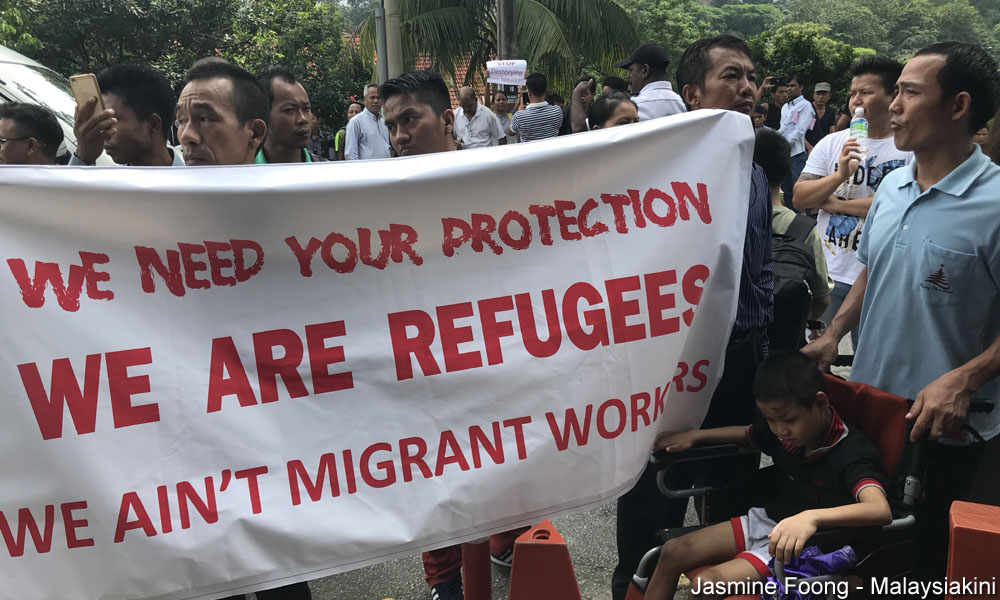
While this initiative for regulation, management, identification, and documentation from the government’s part appears to be a natural solution to the management of asylum-seekers, it remains but a hope for a promise.
The method of implementation thus far has been a distressing development for the concerned communities, as the elusive dissemination of information has rendered their futures uncertain.
While some data regarding the first phase of the programme has been published through official channels, such as the targeted demographics and approved individuals, the implications of being a DPP card holder, or even its criteria, are undisclosed.
The processes concerning the replacement of, and hopefully the improvements upon, the UNHCR card functions remain uncertain.
Details on rights to healthcare, education, employment and even residence remain evasive, causing distress amongst asylum-seeking communities.
Collaboration recommendation
The abrupt halting of the UNHCR’s registration programme has further aggravated this uncertainty, as the only reliable mechanism was taken away before a replacement or even transitory mechanism was transparently and accessibly put into place.
The only details across official platforms (such as the UNHCR and Home Ministry websites) are inaccessible to the direct beneficiary communities, as many are unable to read or understand English or Bahasa Melayu.

We implore the government to increase transparency, accessibility, and accountability in the second phase of the Refugee Registration Document programme, especially to the direct beneficiaries.
Many NGOs and other organisations that have been involved in asylum-seeker rights and activities have, for decades, conducted outreach in methods that are accessible to these communities, whether that be through community meetings, collaboration with community-based organisations (CBOs), in-person outreach sessions, translations, or other alternative modes of communication.
As such, we recommend collaborating with such organisations to appropriately disseminate information, ultimately supporting and accelerating the programme’s functions. - Mkini
REFUGEE ACTION FOR CHANGE (REACT), is an advocacy group which seeks to ensure inclusive refugee-led efforts in advocacy efforts for the community.
The views expressed here are those of the author/contributor and do not necessarily represent the views of MMKtT

No comments:
Post a Comment
Note: Only a member of this blog may post a comment.