


Student groups have welcomed the government’s move to abolish the Universities and University Colleges Act 1971 (UUCA) but urged Putrajaya to ensure its replacement guarantees academic freedom, student autonomy, and broader reforms to laws governing higher education.
Himpunan Advokasi Rakyat Malaysia (Haram) warned that the abolition must not amount to “mere political rhetoric” or a populist attempt to win over young and progressive voters.
Similarly, Liga Mahasiswa Malaysia president Alyaah Hani Anuar said the replacement legislation should have two key principles.
“We want two elements to be enshrined in the drafting of the new principal Act: academic freedom and student autonomy.
“Certainly, matters concerning the minister’s power to appoint vice-chancellors and the vice-chancellor’s power to dissolve student organisations must also be reviewed.
“We do not want any provision in the new law to resemble the repressive nature of UUCA or allow for the centralisation of administrative power,” she told Malaysiakini.

The groups’ call follows Prime Minister Anwar Ibrahim’s announcement on Aug 15 that UUCA would be fully repealed without introducing any new law that restricts or suppresses student movements.
Higher Education Minister Zambry Abd Kadir, however, said a more comprehensive legislative framework was being developed under the Malaysia Higher Education Plan 2026-2035 through the “One Higher Education Act” agenda.
The proposed framework is intended to strengthen institutional autonomy, academic freedom, and student participation.
What about other laws, governing bodies?
Elaborating, Haram, in a statement, made five key demands, beginning with clarity on the fate of other laws governing higher education.
It said abolishing UUCA alone would not result in meaningful academic liberalisation if similar restrictions remained in laws such as the Universiti Teknologi Mara Act 1976, the Private Higher Educational Institutions Act 1996, and the Statutory Bodies (Discipline and Surcharge) Act 2000.
The group also called for student movements, student and academic unions, scholars, and civil society organisations to be included as co-drafters of a new Higher Education Act, rather than merely serving on a consultative panel.
Haram said the replacement law must not reintroduce UUCA restrictions under a different name.
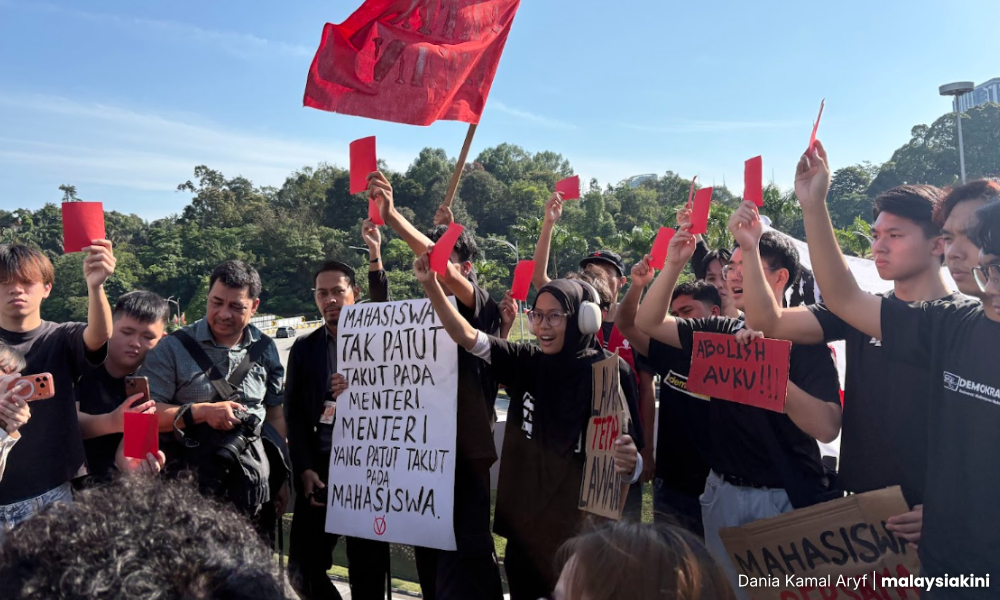
Among its proposals are removing provisions that place investigative powers under executive control and ensuring vice-chancellor appointments are independent, merit-based, and free from political influence.
It also wants mandatory parliamentary scrutiny of public university finances, independent audits, reforms to procurement committees, asset and income declarations by university decision-makers, and the removal of legal protections shielding officials acting in “good faith”.
Haram further demanded a clear timeline for abolishing UUCA and implementing its replacement.
“We will not tolerate bureaucratic delaying tactics deliberately used to postpone the liberation of students,” it said.
Its fifth demand was for an independent disciplinary appeals tribunal comprising legal practitioners and impartial representatives to hear appeals by students facing disciplinary action, particularly over political involvement or activism.
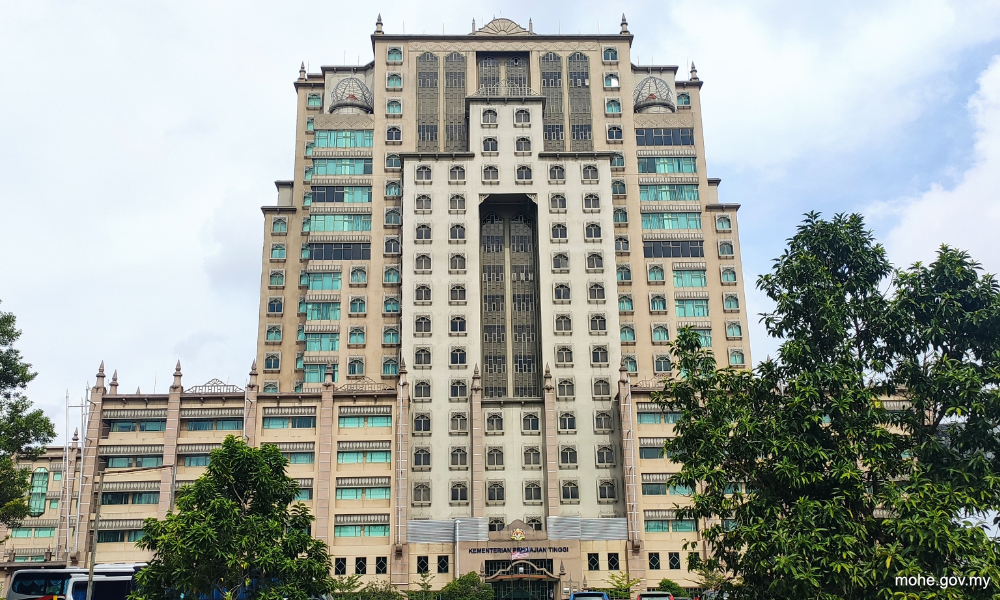
Haram said the current system, in which appeals are made to the Higher Education Ministry, leaves such decisions open to political discretion.
Culture change needed
It also urged the government to table the proposal to abolish UUCA at the next parliamentary sitting in November.
“If the announcement to abolish UUCA turns out to be nothing more than an empty promise that is not fulfilled, or if the legislation is drafted carelessly to deceive the hopes of young people, Haram will not hesitate to label the government a betrayer of students,” it said.
Liga Mahasiswa Malaysia similarly called for reforms to extend to laws governing students at UiTM, community colleges, polytechnics, and private universities.
“We hope that the new law will not only eliminate the UUCA culture, which has become one of the main adversaries of the student movement today, but will also pave the way for laws governing fellow students at UiTM, community colleges, polytechnics, and private universities to be amended to become more open and democratic.
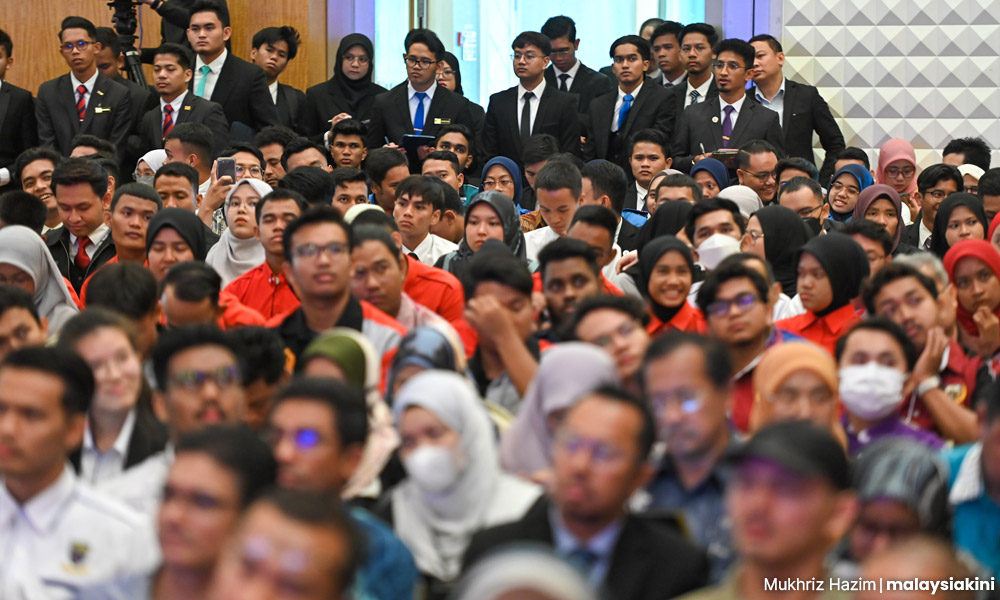
“We urge the government to immediately involve the entire campus community in engagement sessions on the formulation of the new bill and to promptly provide a concrete timeline,” Alyaah said.
Borneo involvement
Separately, Sarawak-based youth organisation Pertiwi Progresif chairperson Ivan Alexander Ong said any committee drafting the new higher education law should include youth and student representatives from Sabah and Sarawak.
He said representation from both states should be built into the process in keeping with the spirit of equality under the Malaysia Agreement 1963.
“As a youth organisation based in Sarawak, we join in solidarity with the long struggle of the student movement, which has for decades demanded academic freedom and institutional autonomy for higher education,” Ong said in a statement.
UUCA was enacted in 1971, shortly after Parliament reconvened after a period of Emergency rule, to provide a legal framework for the establishment, administration, and governance of public universities.
The law was later tightened through amendments in 1975, following a period of heightened student activism and major protests in the early 1970s.- Mkini

No comments:
Post a Comment
Note: Only a member of this blog may post a comment.