


The Star recently published a piece asking whether Kuala Lumpur sits on one of the world's most intense urban heat islands. The answer, confirmed by peer-reviewed science and satellite data, was yes - and increasingly so.
The data is astounding on its own. Yet that an article like that was even published is a symptom of a deeper problem: in a city governed seriously, skyrocketing urban heat would not be a "true or false" question requiring a newspaper to fact-check foreign studies.
Government-mandated longitudinal data on Kuala Lumpur’s temperature would be part of domestic academic studies and deeply embedded into the institutions responsible for urban planning and policymaking.
It is worth asking if our leading universities are engaged in any such cutting-edge research to address these issues. The absence of these fundamentals should scare us all - except those who seem to be furthering it with a mixture of ignorance, incompetence, negligence, and denial.
Kuala Lumpur is a city that has been consuming voraciously and building relentlessly, while the well-established systems that are critical to making a tropical city liveable and resilient have been sidelined and trampled upon in the pursuit of ill-defined notions about progress and economic growth. The rising heat is the most visible result, but it is not the only one.
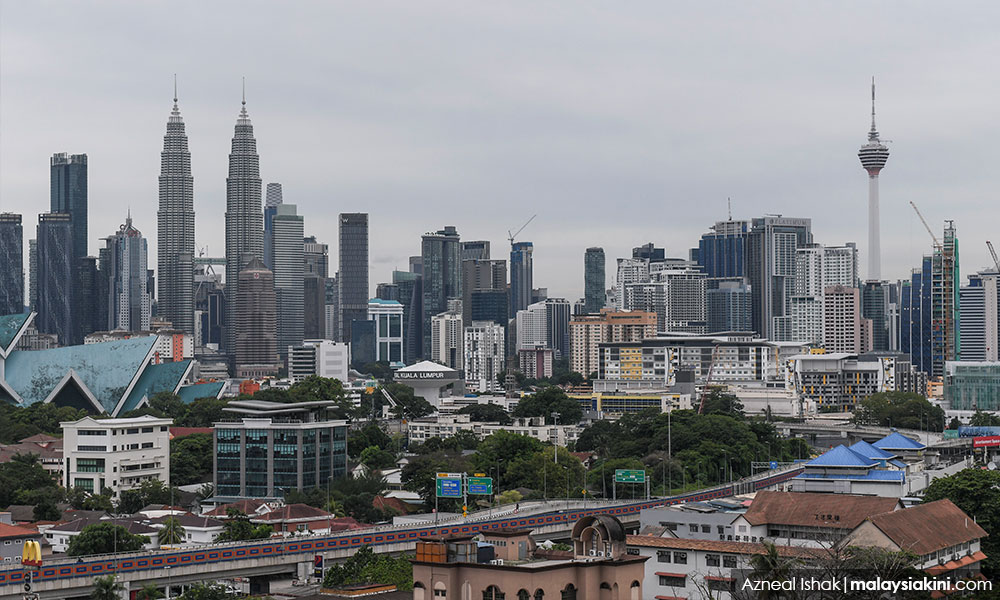
Flash floods, deteriorating water quality and ecology, air quality failures, poor solid waste management - not to mention hazardous waste - and a gas pipeline exploding through a residential suburb - these are not unrelated “misfortunes”.
They are the outputs of the same governance and institutional failure, rooted in a lack of accountability of decision makers, ignorance, lack of competence and apathy, expressing itself across different systems and allowing for abuse of public funds.
A vision of the city of the future
In 2024, I argued that Kuala Lumpur had the potential to become the world's first Botanical City - a tropical capital that puts ecological management and design as well as restoration at the centre of its identity and growth.
This was not some utopian "green" idea, as many in city administration and the government imagined; it was a proposal to reverse the trend towards irreversible decline and collapse. But before a city can be reimagined, it must be diagnosed properly. This two-part piece is that diagnosis.
This piece sets out the case and drivers of the mess we are creating and that it will lead to ruin. The second part sets out who the main actors are and how they are facilitating the current decline unless there is a major overhaul of current approaches, capabilities and attitudes.
Importantly, the argument here is not an environmental one; it is about governance, economic and social development as well as urban planning for an unpredictable 21st century. It is an argument about building robust governance for urban resilience and security in the face of the economic assault driven by archaic views about growth.
These have normalised ways of thinking about progress in narrow terms, predominantly linked to crude ideas about making money at all costs. In this outdated view, everything is for sale if it adds to gross domestic product (GDP) growth.
Thus, better and more advanced approaches which value real and intangible assets and equity are crushed to maximise profits derived from fast-track and unsustainable development.
The question of how a tropical city manages heat, water, ecology, and infrastructure is not a specialist concern for sustainability departments or NGO campaigns; it is ironically an economic question which must be at the heart of all decision-making.
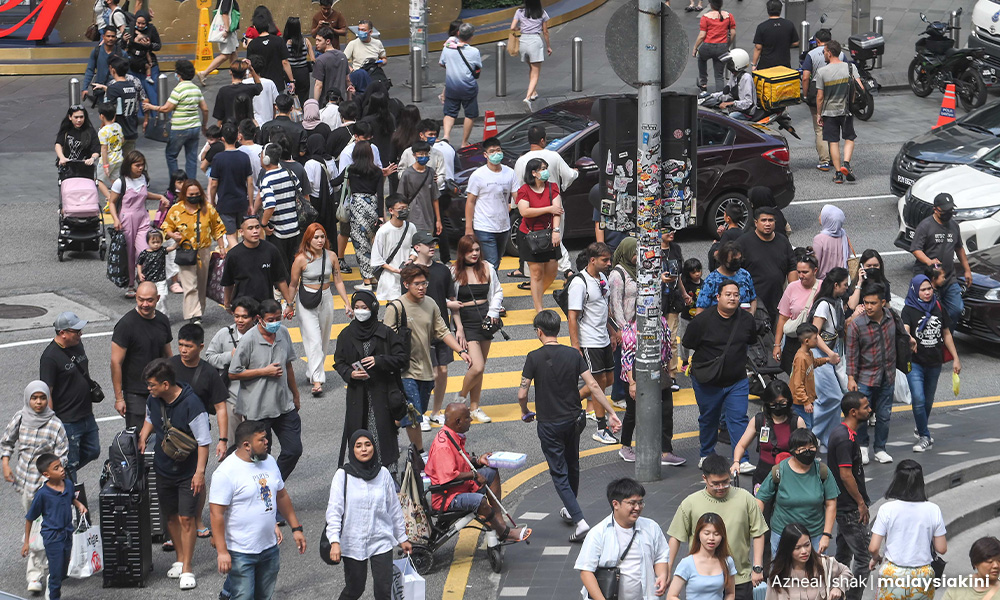
It is the central question of whether a city can function - whether its workers can be productive, its children can learn productively, its hospitals can manage rising populations, its air is breathable, its water drinkable, its economy can attract and retain the talent and investment it needs to compete and stay relevant.
It is a question of ensuring the majority of residents - not just the wealthy and middle class - do not suffer from the drudgery of daily life and enjoy the same rights of access to public goods – clean air, potable water, etc - as the more privileged.
What the science tells us
Multiple peer-reviewed studies have found that Kuala Lumpur's urban heat island pushes temperatures between 4.2°C and 9.5°C above surrounding rural areas, with the worst readings at night. That upper range places Kuala Lumpur among the most intense urban heat islands on earth.
How many city leaders and politicians are aware of this, or are they blissfully ignorant? And if they are aware, then what are they doing about it, as there is scant evidence that mitigation measures at scale are being put in place?
A March 2026 study in Scientific Reports found the effect is still worsening and that, combined with heatwave events, the cumulative heat burden on residents is considerably higher than previously estimated.
A 2025 systematic review in ScienceDirect, covering 27 peer-reviewed studies on urban heat in Southeast Asia, confirmed Kuala Lumpur is among the most severely affected cities in the entire region. But it has triggered no policy discussion, no debate discussions unless they are all taking place in secret. It is hard to tell if any university is conducting research on this topic. Peer-reviewed scientific reports are hard to find.

Kuala Lumpur's total green coverage fell from 6,564ha in 2001 to 5,891ha in 2013. It lost 50 percent of its natural green space since 1970. Per capita green space dropped from 13 to 8.5 sq m between 2010 and 2014 - below the World Health Organization minimum of nine sq m - and construction has continued at pace since.
There has been no discussion about the need to take action. Measurable in the last few years, authorities in Kuala Lumpur and Petaling Jaya have mounted an unprecedented assault on urban trees.
And the way solutions are discussed is also off track. A 2025 systematic review in ScienceDirect of 27 peer-reviewed studies across Southeast Asia found that planting more trees, adding green roofs, and expanding parks could reduce air temperatures by up to 2.6°C and surface temperatures by up to 11°C in treated areas. This is all good but not happening at the rate needed in the capital.
And what is being done is still cosmetic. The city generates enormous additional heat from traffic, millions of air-conditioning units, and the energy demands of a rapidly growing metropolis, all of which feed back into the heat island. We must stop the problem at source by rethinking the notion of the city, not constantly optimising for addressing the symptom.
But the inconvenient question is whether our institutions have the capabilities.
No institutions, no experts, no knowledge pipeline
A key factor in this relentless unchecked destruction is that most of our institutions are weak without any strong commitment to using science and technology to tackle threats which are of an existential nature.
Malaysia has no dedicated urban climate science institution. Singapore's "Cooling Singapore" programme - a funded, mandated, multi-institutional effort led by the Singapore-ETH Centre, with the National University of Singapore (NUS), the Singapore-MIT Alliance for Research and Technology, the Technical University of Munich, Singapore Management University, and A*Star - represents the benchmark for what a serious tropical city government builds when it takes urban heat as a governance problem.
Malaysia has nothing equivalent. No university is spearheading studies in this area.
Singapore's Lee Kuan Yew Centre for Innovative Cities runs transdisciplinary urban heat research with an explicit mandate to translate findings into tested, validated policy interventions. The science-to-policy pipeline is institutionalised, and it is staffed and funded as a core state function, in a way that it is not in Kuala Lumpur.
There is no such thought; after all, who would ever think of it? The rot is deep.
The most comprehensive recent heat mapping of Greater Kuala Lumpur was funded by the Habitat Foundation - a private NGO - and conducted by Think City, another civil society organisation. The most important urban climate data being generated about our capital is not being generated by a government body with a policy mandate; it is being generated by charities filling a vacuum left by the state.
And academic research on Kuala Lumpur's heat, drainage, and ecological systems is published predominantly in international journals, often through international collaborations. Where are the local universities in all of this? Even with this knowledge, what is absent is the institutional channel to translate it into Kuala Lumpur City Hall (DBKL) planning decisions, ministerial briefs, or legislative reform.
Research on Malaysia's climate knowledge ecosystem is quite clear that the knowledge gap in the science of climate change over Malaysia and the surrounding region remains wide. And there are hardly any tangible efforts to narrow the gap. Instead, money is invested in lacklustre conferences with little science and hardly any serious discussion about policies to re-imagine the city.
At the same time, there is an obsession about attracting investment in data centres across the country, which will only help exacerbate these problems. The absence of hard questions being asked and independent regulatory oversight about data centres is a stark reminder of the malice.
The same pattern appears beyond urban ecology. The government's approach to food security repeatedly defers to foreign expertise in a way that reveals the same absence of confidence in our domestic scientific institutions.
In May, the agriculture and food security minister said it was partnering with the United States for sustainable agriculture and regenerative practices. A country that has been farming in a tropical climate for centuries does not need to import the conceptual frameworks of a country whose food system is among the most ecologically destructive on Earth.
It needs better domestic institutions that generate knowledge for local applicability and policy that enables the right kind of development with the correct accountability systems.
This is not a funding problem per se. It is a structural choice, repeated across successive governments, not to build institutions that would make inconvenient knowledge impossible to ignore. After all, a state that does not produce the science has a convenient excuse and no basis for not acting on it.
A press that is unable or unwilling to hold power to account
No major Malaysian national publication has a science editor with a dedicated remit for environmental and urban systems reporting. This is representative of a culture that does not take science seriously - despite the endless slogans about investing in Science, Technology, Engineering and Mathematics (Stem). It also means there is little critique of governance failures from an evidence-based perspective in the fourth estate.
The Putra Heights pipeline explosion of April 2025 illustrates the pattern. The explosion affected 1,254 people from 308 families, destroyed 87 homes completely, and left 148 others needing repair. The Peninsular Gas Utilisation Pipeline - 2,680km long - had been laid through what became densely populated residential areas, with no adequate inspection regime in the intervening decades.
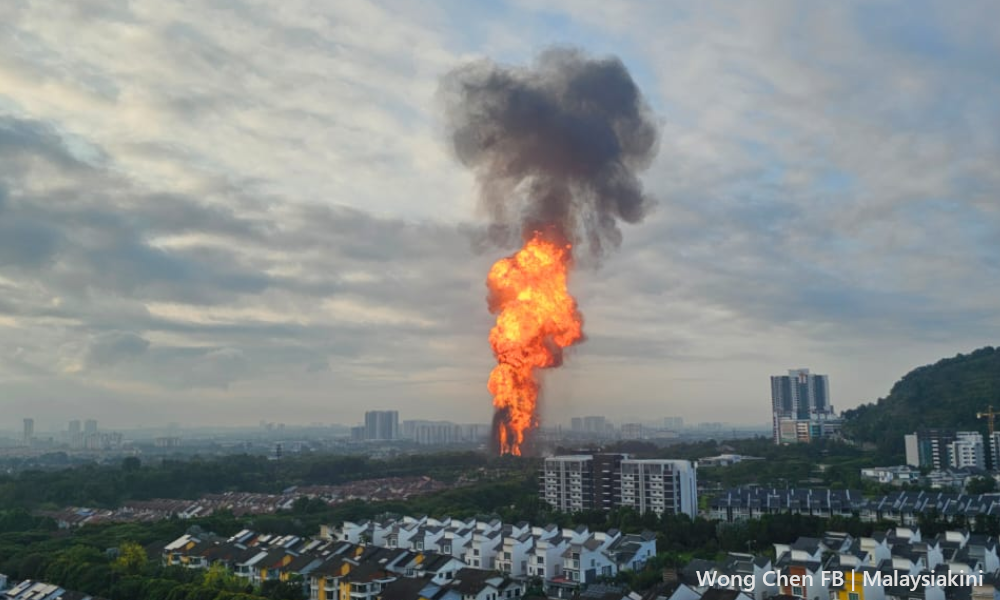
The Environmental Quality Act 1974 requires additional monitoring after such incidents but carries no obligation to make findings public. Twenty-eight NGOs called publicly for transparency in the aftermath, but to no avail. The independent inquiry into the cause has produced no published conclusions. Yes, the press covered the fire, but it did not build and sustain the accountability case.
After the explosion, Petronas itself identified additional pipeline segments with conditions resembling the Putra Heights site - but the locations of these at-risk segments were not disclosed publicly. And no one is asking questions, not politicians, not academics, not NGOs.
This is critical infrastructure running beneath the homes of hundreds of thousands of Klang Valley residents. A functioning press environment would have made the non-disclosure politically untenable. It did not.
This is not about looking for scapegoats or blaming but about creating an environment in which society collectively improves by learning from its mistakes and thus raising standards for all.
Ecological and urban systems reporting is not a specialist niche. It is governance reporting. A city that does not know how hot it is getting, why it continues to flood, why its pipelines are exploding, why its trees are being cut indiscriminately, or what is being stored in its industrial zones is a city whose residents cannot make informed demands of those who govern it.
The public has no effective channel
Malaysia has not held local council elections since the 1960s; the Kuala Lumpur mayor is a political appointee picked by the federal government, not by the residents of the city. The planning decisions that shape the city - what gets built, what gets demolished, what is rezoned from green lung to condominium - are made by people who answer to no one that residents can vote out.
They are unaccountable and thus open to pressure from potential vested interests, including politicians and businesses. Six decades without local government elections have produced a city that has no plan for a hot world, for more severe floods, and a public that is structurally disempowered, disillusioned and even apathetic in most cases - because what can we do?
It need not be this way. In other megacities across the world, residents have statutory rights of consultation on planning applications, elected local councillors who are answerable at the ballot box, an elected mayor with a mandate specifically from their constituents, and formal channels through which environmental objections carry legal weight.
These are not cultural differences; they are institutional ones based on a quest for good governance. When a KL-ite objects to a development destroying a green space, there should be a system designed to hear that objection at the outset and make the consequences of ignoring it real.
Consultations which are limited, last-minute and often inconsequential should not be tolerated. Petitions get ignored, letters are never replied to because institutions have normalised their power to ignore the public.
Some communities do organise, and occasionally win. Taman Rimba Kiara residents went to court and prevailed at Malaysia's highest court. Bukit Dinding residents have mounted sustained legal challenges. But these victories are exhausting and the exception.
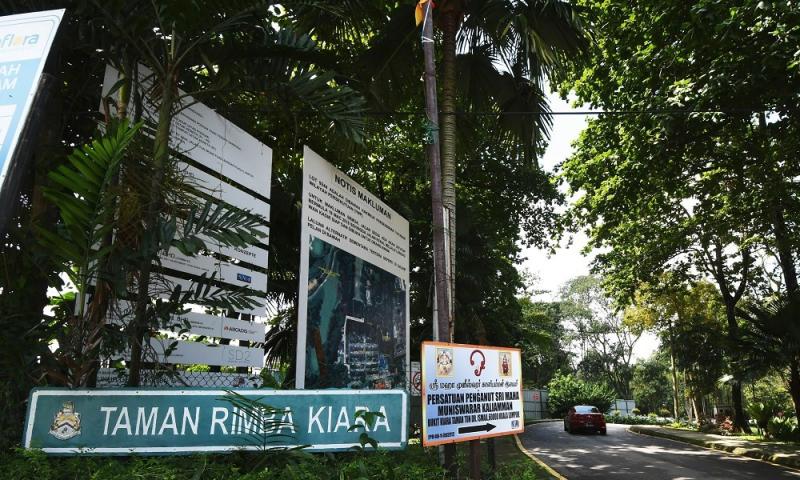
The 90-day judicial review window - which is the primary mechanism made available to residents for challenging development decisions - is expensive, technically challenging, and easily suppressed by well-resourced developers. Winning once does not prevent the same model being applied to the next green space.
There is a fear cultivated over decades - of speaking out, of being categorised as political, troublemakers or subversive, of what happens to people who are too visible in their objections. Some NGOs say the hard and honest thing, but they are consistently marginalised.
The result is a city where people adapt their personal lives - with air conditioning, with shorter outdoor hours, with children kept inside - while expecting nothing from the institutions that made the conditions they are adapting to, and inadvertently helping destroy the future of the city. - Mkini
CHANDRAN NAIR is the founder and CEO of Global Institute for Tomorrow and the author of “Dismantling Global White Privilege: Equity for a Post-Western World”.
The views expressed here are those of the author/contributor and do not necessarily represent the views of MMKtT.

No comments:
Post a Comment
Note: Only a member of this blog may post a comment.