


Interviewed by Bloomberg’s Haslinda Amin at the Milken Institute Asia Summit in Singapore in September 2023, Prime Minister Anwar Ibrahim spoke on a variety of issues – from people’s expectations and his fight against corruption to his campaign for good governance and foreign relations.
However, the highlight of the 47-minute interview before a live audience was his explanation of the course of events that led to his deputy, Ahmad Zahid Hamidi, being given a discharge not amounting to an acquittal (DNAA).
Anwar said the 47 charges were so flawed that they bothered the conscience of the then-outgoing attorney-general, Idrus Harun, who wanted to set things right before he left office.
But if they were indeed defective as claimed, how did the court decide that the prosecution had established a prima facie case and Zahid was to enter his defence? For the record, four witnesses had already testified for the defence.
While Idrus maintained stoic silence, Anwar, as if the AG himself, went on a tirade of sorts: “Was it 47? Every cheque is a charge. So, the charge is questionable. Every cheque issued is a charge by itself, which does not necessarily seem to be professionally done.”
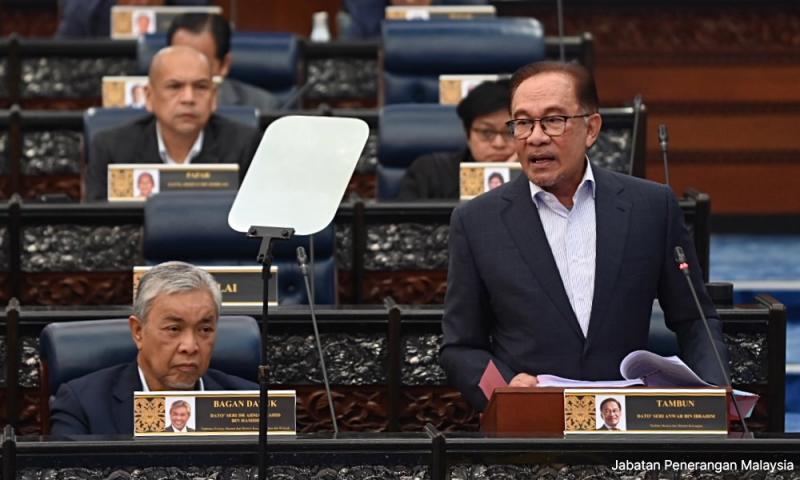
What Anwar failed to understand or explain is that the Criminal Procedure Code requires every cheque to form a separate charge.
But in Malaysia, nothing is more convincing than throwing in a bit of political drama for a more salacious reading.
“When was the charge proffered? During that time, Dr Mahathir Mohamad was prime minister. When? A week after he called up the president of this nationalist party (Umno), which is a member of my coalition, and told him (Zahid), ‘You dissolve your party and join my party’,” Anwar said.
On Jan 12, Attorney-General Dusuki Mokhtar declared that Zahid's corruption case was “settled once and for all”, but he could have unwittingly exposed a fundamental breach of prosecutorial procedure established by one of his predecessors.
Zahid’s NFA
On May 3, 2019, then-attorney-general Tommy Thomas issued a Public Prosecutor Direction No 2/2019, a directive establishing stringent safeguards against the discontinuance of criminal proceedings.
For context, the directive emerged after a period of public outrage over prosecutorial decisions that appeared to lack transparency and consistency.
Thomas wrote in the directive’s background, lamenting that the spate of discontinued proceedings at that time had called into question the integrity of the entire prosecutorial system.
Lawyers from various quarters are urging the Attorney-General’s Chambers to explain why it has concluded that there will be “no further action” (NFA) in the Yayasan Akalbudi case against Zahid.
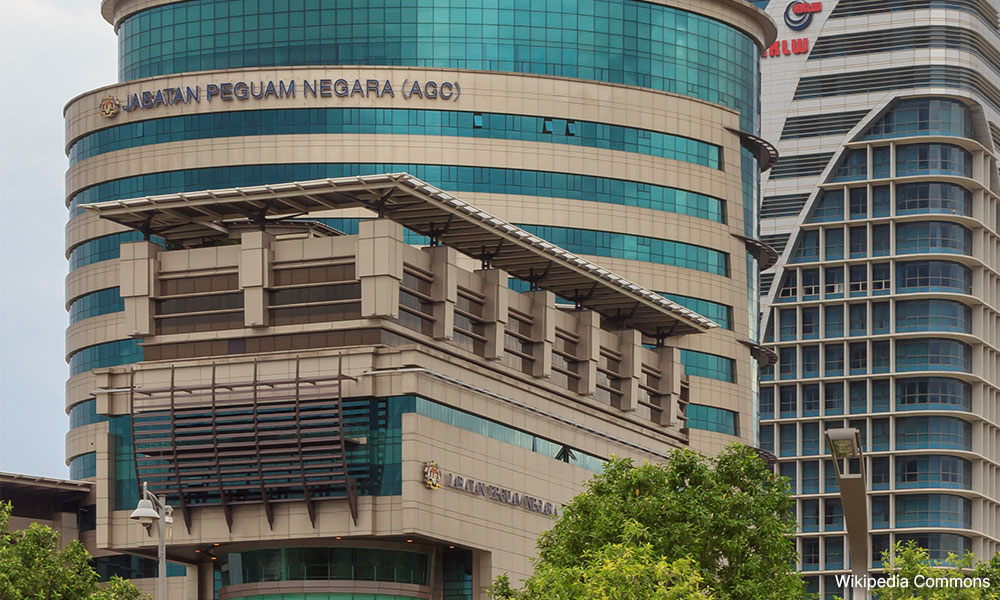
However, no answers were forthcoming from the AG.
In May, the Court of Appeal allowed the Malaysian Bar to pursue a judicial review against the decision to temporarily discontinue prosecution against Zahid in 2023.
In a unanimous decision, the panel of three judges led by Faizah Jamaludin said they found the Bar’s judicial review application “appropriate” and not frivolous.
They said the lawyers’ professional body raised arguable issues that warrant a full judicial review and remitted the matter back to the High Court for hearing.
The panel also said Bar’s challenge was not a collateral attack on the criminal court presiding over the case; instead, it challenged the legality and rationality of the AG’s decision that led to Zahid’s DNAA.
With Umno-Pakatan Harapan relations fraying after the Johor and Negeri Sembilan state elections, and leaders trading open attacks, Anwar - who for three years had deflected calls for answers, even in Parliament - now faces renewed demands for a review, with mounting pressure for Zahid to be charged.
Besides, with the MACC and AG prosecuting, among others, former prime minister Ismail Sabri Yaakob and former human resources minister M Saravanan, the voices have grown louder.
Calls for review
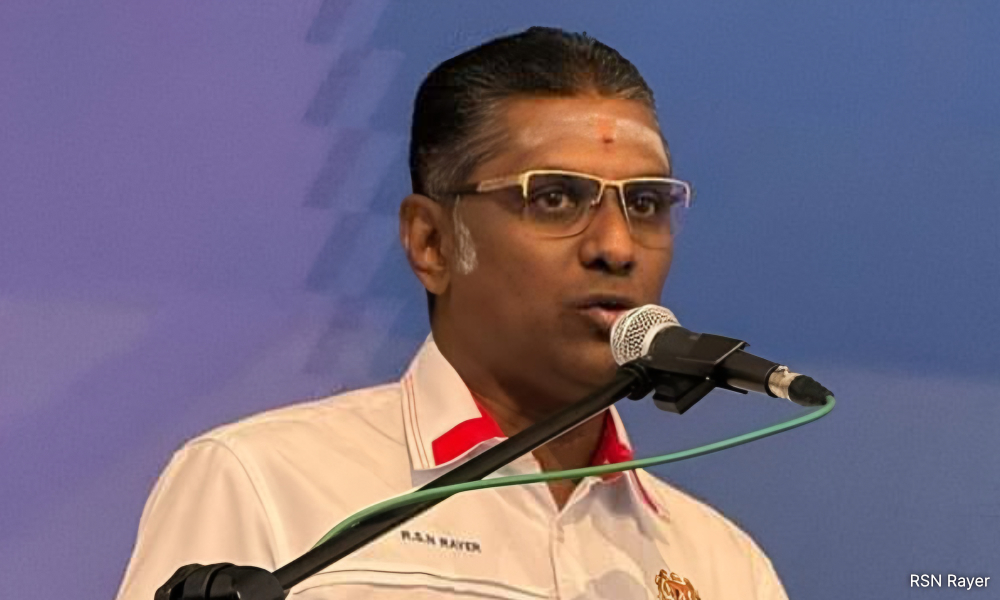
On Thursday, DAP’s Jelutong MP RSN Rayer fired the first salvo, urging the AG to review the discontinuation of Zahid’s 47 corruption charges, involving funds from Yayasan Akalbudi, a foundation chaired by Zahid.
Rayer questioned why prosecution against the BN chairperson was discontinued despite the government’s renewed crackdown on corruption, saying the same standards must apply to political allies and opponents.
Yesterday, DAP Youth joined the chorus, calling on the AG to revisit the decision to drop the charges and, if the evidence and legal grounds warrant it, revive the prosecution.
The wing said the matter was closely tied to the country’s institutional reform agenda, arguing that the Madani government’s credibility in fighting corruption could be undermined if politicians within the government were not subjected to the same standards as those outside it.
So, is this sudden surge of prosecutions a flash in the pan or a show of might, or is it another seasonal show to appease citizens calling for a concerted effort to wipe out corruption?
Anwar, despite repeatedly telling Malaysians he would never interfere with the MACC’s work, made a grave error of judgment by giving his take in Singapore when Zahid was given the DNAA in 2023.
The DNAA is not just a procedural twist in a corruption trial - it is a defining moment for Malaysia’s justice system. By defending the move, Anwar has placed his reformist credentials on the line, trying the Madani government’s anti-corruption agenda against a decision that reeks of political expediency.
The silence of the Attorney-General’s Chambers, the apparent disregard for safeguards introduced under Public Prosecutor Direction No 2/2019, and the timing amid coalition fragility all converge to erode confidence in the impartiality of the law.
In the end, the DNAA is more than a legal reprieve; it is a political signal. And unless that signal is corrected with clarity and courage, the Madani government risks losing the very credibility it claims to uphold. - Mkini
R NADESWARAN is a veteran journalist who strives to uphold the ethos of civil rights leader John Lewis: “When you see something that is not right, not fair, not just, you have to speak up. You have to say something; you have to do something.” Comments: citizen.nades22@gmail.com.
The views expressed here are those of the author/contributor and do not necessarily represent the views of MMKtT.

No comments:
Post a Comment
Note: Only a member of this blog may post a comment.