`


THERE IS NO GOD EXCEPT ALLAH
read:
MALAYSIA Tanah Tumpah Darahku

LOVE MALAYSIA!!!


31 AUGUST 2026

Wednesday, May 31, 2017

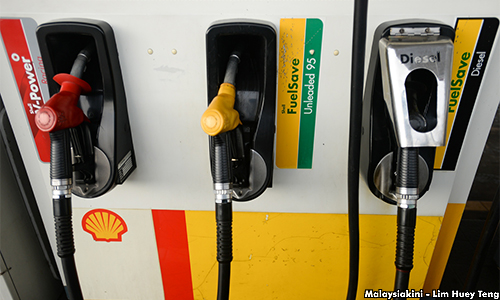
Fuel prices to go down between one-two sen at midnight


Fuel prices will go down between one to two sen effective midnight.
RON95 and RON97 will go down by two sens per litre, bringing the new retail price to RM2.10 and RM2.38 respectively.
As for diesel, the retail price will go down by one sen, to RM2.02 per litre.
The retail price of fuel is determined based on the Mean of Platts Singapore (Mops) and currency strength average of the previous week.
Global oil price has been erratic in the past week but the Malaysian ringgit strengthened slightly against the US dollar.
1.901.9522.052.102.152.202.252.302.352.402.452.502.55Mar 30Apr 6Apr 13Apr 20Apr 27May 4May 11May 18May 25Jun 1RM/litre
RON 95
RON 97
Diesel

-Mkini

Ministry returns brushes to traders, pig bristles were actually goat's hair


The Malacca branch of the Domestic Trade, Cooperatives and Consumerism Ministry (KPNKK) today returned about 200 watercolor brushes and paintbrushes to two shop operators in the state after finding out the brushes were made of goat's hair, reported China Press.
This comes three months after the ministry embarked on nationwide raids following concerns that such brushes were made of pig bristles. 
Hamzah Mahadi, the enforcement chief of Malacca KPDNKK, returned the brushes today, witnessed by state unity and consumer affairs committee chairman Lai Meng Chong. 
According to Lai, the ministry decided to return the items to two hardware shop operators after finding out they were made of goat's hair. 
He urged business owners however, to label the products accordingly, if they are aware of products made of pig bristles. 
The controversy surfaced back in February when Malay daily Berita Harian sent a sample of a paintbrush for analysis, and claimed that the brushes were found to be of porcine origin. 
This triggered the nationwide sweep by the ministry on hardware and even stationary shops, under the Trade Descriptions Order (Item Made of Any Part of Pig or Dog) 2013, which stipulates that items made from pig or dog parts must be placed separately from other items in a shop and clearly labeled as to its origin.
A violation of this order carries a fine of up to RM1 million, up to three years' imprisonment or both, upon conviction.

However, the move by the ministry invited backlash from various parties, including traders' organisations. 
On Feb 9, KPDNKK minister Hamzah Zainuddin announced that he has instructed his officers to stop conducting raids on shops selling pig bristles brushes. 
Prime Minister Najib Abdul Razak had also remarked that the seizures were done in a hasty manner. - Mkini

Sivarasa to write to Selangor sultan over speech in mosque controversy


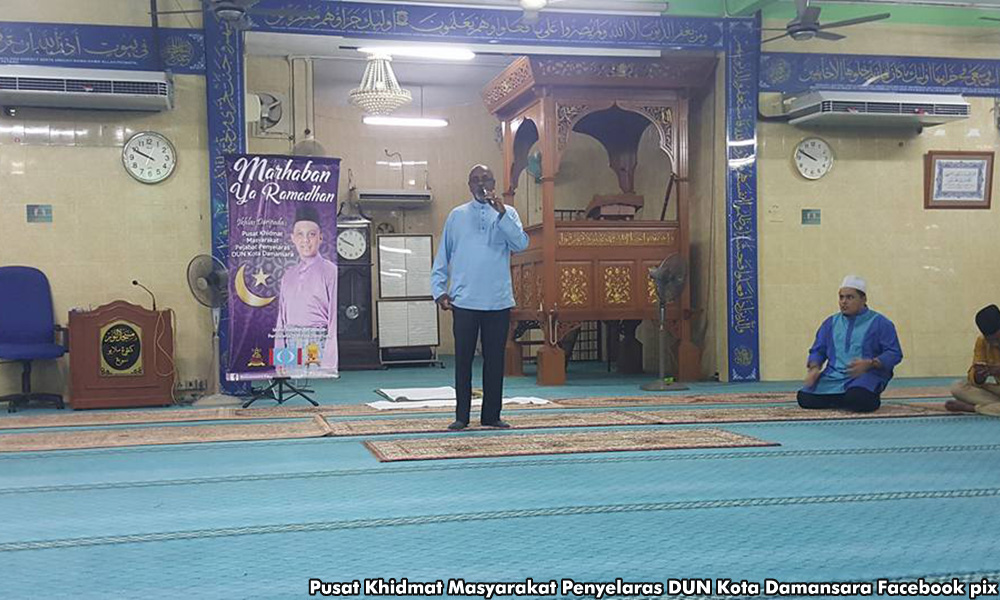
PKR's Subang MP Sivarasa Rasiah said he will pen a personal letter to the Selangor sultan to explain the controversy surrounding his speech at a mosque in Subang.
In a statement this evening, the lawmaker also sought to correct several media reports, which he said did not paint the correct picture, by reporting that he delivered a political speech at Masjid An-Nur in Kampung Melayu Subang last week.
"Some even reported wrongly that I attended (the event) as a representative of Selangor Menteri Besar (Azmin Ali)," he said, while denying such claims.
He clarified that he was actually attending a fund handover to surau and mosques for Kota Damansara state constituency, organised by Radzlan Jalaludin of the Kota Damansara State Constituency Cordinating Office.
"I was not listed in the itinerary by the organiser to give a speech at the event.
"However, I was invited by the emcee to speak a few words to 70 representatives from the mosques and surau before the handout of Ramadhan contribution with Radzlan. Radzlan also delivered a brief speech before me.
"As a guest who was invited for a speech, it wouldn't be nice if I turned down (the invite)," he said.
He added that his speech only consisted a brief Ramadhan greeting, followed by him expressing his confidence in the commitment from the state government to continue guiding surau and mosques in Selangor.
Pictures of Sivarasa speaking in the mosque has incurred the wrath of the Sultan of Selangor, Sultan Sharafuddin Idris Shah, who instructed the Selangor Islamic Affairs Department (Jais) to take action against the mosque.

Sivarasa has since clarified that he had merely distributed aid of RM71,000 to the mosque and was present as the MP for Subang, who was also voted into office by Muslim voters.
"It is appropriate for a representative to support fully the religious institutions at my constituency. That's all.
"Because this issue has been misunderstood and I don't have any intention to go against the Sultan's instruction and advice, so I will write a personal letter to the Ruler to expain the matter," he said.- Mkini

Explain addition of 28,000 soldiers to electoral roll, Harapan tells EC


Pakatan Harapan wants the Election Commission (EC) to explain what it claimed to be the "magical" addition of more than 28,000 to the first quarter 2017 draft electoral roll.
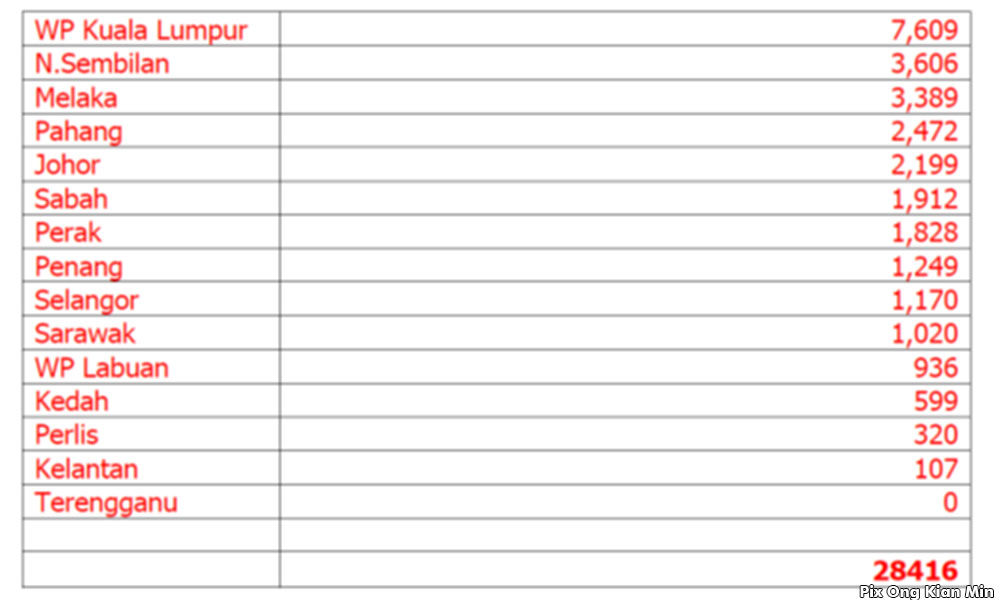
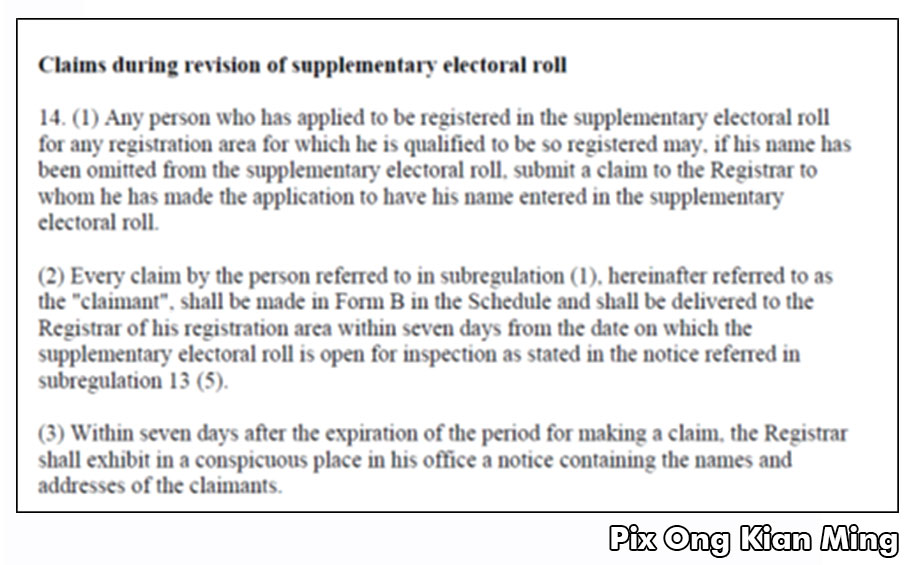
Serdang MP Ong Kian Ming claimed 28,416 soldiers and their families - 7,600 in Kuala Lumpur alone - were added to the electoral roll through the "claims" process.
Ong said this was a provision under the Elections Act, to allow newly registered voters who were either left out of a draft electoral roll or have had errors in their name or address, to have their names added to the list, or fixed.
However, Ong said this provision was obscure, and it is unlikely that anyone had actually submitted such claims, in such numbers, to the EC.
"It is very strange that this time, there were 28,000 names left out (of the draft electoral roll). This is not a small number.
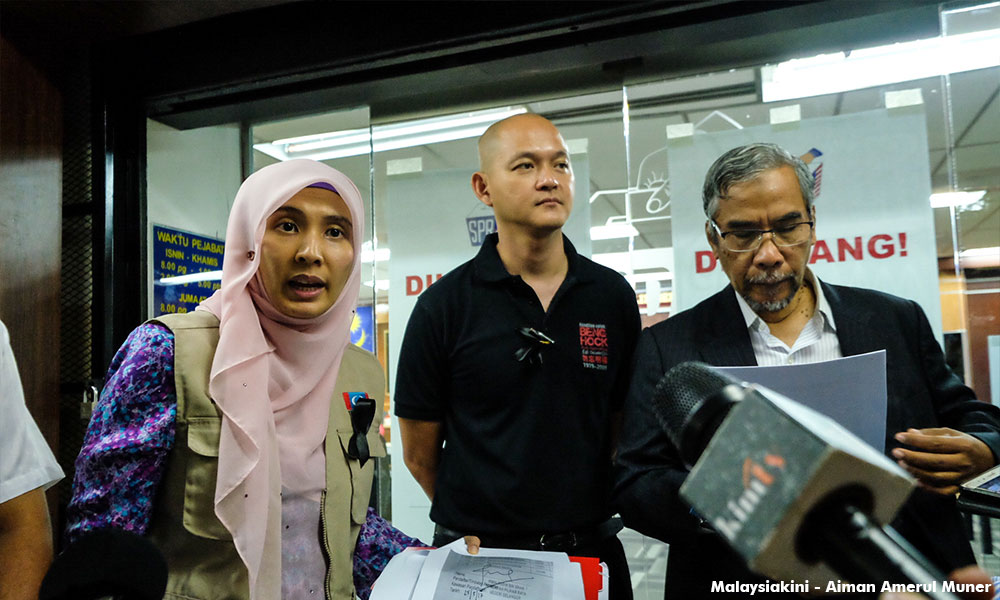
"We want the EC to explain how this could have happened. It is as though the EC is using back ways to bring in voters," the DAP lawmaker said when met by reporters at the Selangor EC office in Shah Alam today.
He was accompanied by PKR vice president Nurul Izzah Anwar, and Amanah elections director Hatta Ramli.
Ong said usually the EC would not display the names of claimants, as the number of errors or names left out were small.
Meanwhile, Johor DAP Mengkibol assemblyperson Tan Hong Pin said 2,193 voters were added to the state's draft electoral roll through the claims process.

Of this number, Tan said 1,184 voters were added to Kluang.
"Kluang residents are asking if this is an attempt by the ruling party to seize back Kluang," he said in a statement.
Besides the 28,000 additions, Ong also questioned the removal of over 8,000 voters from the first quarter draft electoral roll through the objections process.
He claimed 88 percent of those rejected were from Selangor, and that 99 percent of those affected were also Chinese. -Mkini

Pakatan Harapan finally has a logo


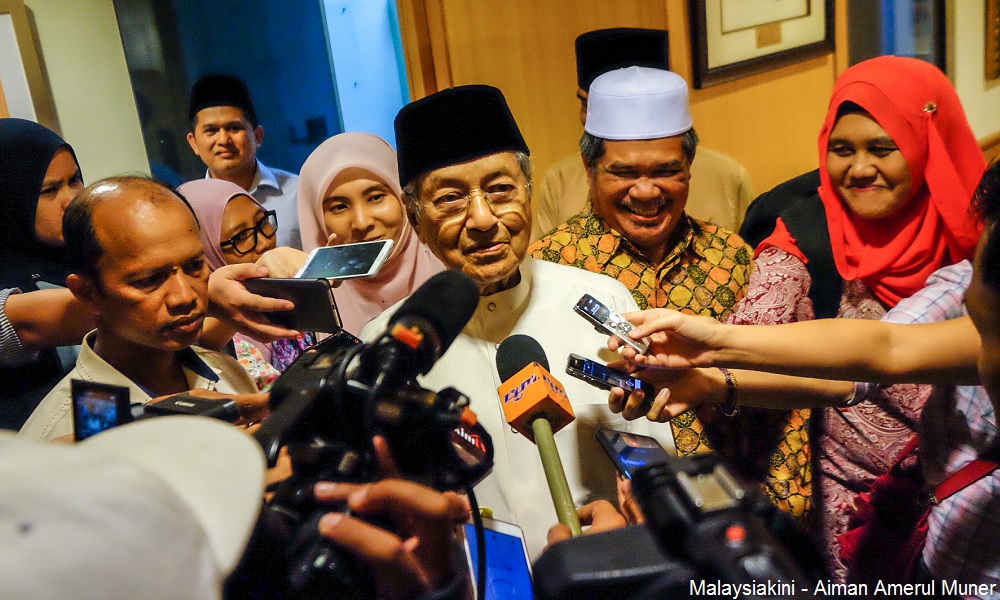
Pakatan Harapan parties have finally settled on a common logo for the coalition, announced Parti Pribumi Bersatu Malaysia (Bersatu) chairperson Dr Mahathir Mohamad.
Mahathir said the logo will be unveiled on Friday next week.
"We have agreed on the Harapan logo. We will be using the 'Harapan' text with slight modifications," he told journalists in Putrajaya after a Harapan presidential council meeting.
However, the coalition parties have yet to come up with a common prime minister candidate.
Mahathir said the matter was not discussed during the meeting.
"We haven't talk about it," he said.
Meanwhile, Parti Amanah Negara communications director Khalid Abdul Samad said the Harapan presidential council meeting also discussed about seat allocations and manifesto for the 14th general election.

Khalid said the seat allocation negotiations for Johor, Malacca and Negeri Sembilan will be finalised within a month.
Earlier this month, Harapan courted brickbats after internally-made logos were ridiculed for their unappealing designs.
This caused the coalition to extend invites for public submissions, which it received to the tune of over 130. -Mkini

Menteri Kantoi!! Bukan Cuaca Sebabkan Harga Ikan Mahal Tapi Nelayan Naikkan Harga...


Kenaikan ketara harga ikan kembung di negara ini berlaku ekoran perubahan cuaca yang dianggap luar biasa, kata Menteri Pertanian dan Industri Asas Tani, Datuk Seri Ahmad Shabery Cheek.

Itu adalah jawapan Ahmad Shabery menjawab soalan Mastura Mohd Yazid (BN-Kuala Kangsar), Ahmad Shabery juga berkata keadaan itu menyebabkan berlaku kekurangan bekalan ikan berkenaan.

“Selalunya bulan Mac dijangkakan ikan kembung ada banyak, tetapi daripada apa yang kita pantau, sekarang ia belum naik.

“Ada (berlaku) kelainan dari segi pola cuaca, tengkujuh pun agak berbeza kali ini,” katanya di Dewan Rakyat dan dilaporkan kebanyakkan media pada 13hb Mac 2017.

Dan akhirnya terbukti jawapan itu hanyalah satu jawapan untuk memperbodohkan rakyat, bukan cuaca ataupun peraih yang menyebabkan harga ikan itu meningkat.. tapi Nelayan sendiri..

“Bukan orang tengah atau peraih yang mengaut untung lebih tetapi nelayan yang menaikkan harga ikan,” kata Pengerusi Persatuan Nelayan Kawasan Kuala Perlis.

Baca laporan ni..

KUALA LUMPUR – “Bukan orang tengah atau peraih yang mengaut untung lebih tetapi nelayan yang menaikkan harga ikan,” demikian kata Pengerusi Persatuan Nelayan Kawasan Kuala Perlis. 
Idris Saad berkata, kenaikan harga ikan tidak dapat dielakkan oleh nelayan khususnya nelayan pantai disebabkan tekanan kos hidup yang tinggi. 
Kehidupan nelayan di Malaysia dari dahulu sehingga hari ini masih mendatar dan jika harga ikan tidak dinaikkan maka kehidupan golongan nelayan semakin sukar. 
Katanya, berbanding nelayan laut dalam, pendapatan nelayan pantai tidak besar dalam lingkungan RM100 hingga RM200 sehari. Itu pun bergantung jumlah ikan yang berjaya dipukat. 
Kebiasannya dengan membawa balik antara 50 hingga 100 kilogram ikan, nelayan pantai hanya mampu meraih pendapatan bersih RM100 hingga RM200 sehari. Itu pun bergantung kepada cuaca. 
“Walaupun nelayan pantai masih mendapat subsidi minyak tetapi harga pukat dan jala pun naik. Perlu juga mengambil kira kos membaiki jala, penyelenggaraan bot yang perlu ditanggung serta gaji pekerja antara RM50 hingga RM70 sehari. 
“Di atas faktor-faktor itu, Idris berkata, harga ikan yang dijual atau ‘ditolak’ oleh nelayan kepada peraih tidak semurah dahulu. Tidak ada lagi ikan dijual RM3 sekilo sepanjang tahun. Memang tidak ada. 
“Kalau murah sangat, macam mana nelayan hendak hidup dalam keadaan semua kos naik. Walaupun harga ikan dinaikkan pun, mana ada nelayan pantai yang hidup senang, mewah jauh sekali. Kehidupan mereka masih mendatar,” katanya ketika dihubungi. 
Mengulas mengenai harga ikan, Idris mengakui kenaikan harga ikan termenung atau ikan kembung perut labuh (gelaran nelayan utara) mencecah RM16 hingga RM22 pada bulan lalu disebabkan harga yang dijual oleh nelayan adalah tinggi. 
Keadaan itu disebabkan musim tengkujuh yang menyebabkan bekalan ikan kembung itu berkurangan dan masa sama ikan berkenaan mendapat permintaan tinggi pada bulan tersebut. 
“Apabila nelayan yang turun ke kompleks (tempat jualan ikan) mendapati ikan itu kurang tetapi permintaan tinggi, maka harga yang ditawarkan dari RM12 hingga 14 sekilogram. Pada nelayan ia adalah bonus bagi mereka. Bukan selalu boleh jual mahal. 
“Peraih pula terpaksa beli walaupun mahal kerana ketika itu bekalan ikan kurang. Mereka pula terpaksa jual mahal selepas mengambil kira kos minyak, pengangkutan, ais dan pekerja. Jadi, apabila sampai kepada pengguna harga ikan tu jadi RM22 sekilogram,” ulasnya. 
Bagaimanapun, harga ikan kembung dan ikan-ikan biasa sudah kembali normal antara RM6 hingga RM8 sekilogram mengikut saiz. 
Ikan sardin dan ikan selayang pula hanya RM2 sekilogram berbanding RM6 sekilogram semasa musim tengkujuh. 
Bagaimanapun, ikan besar mula menyaksikan kenaikan dengan ikan siakap dari RM16 sekilogram), jenahak RM23 hingga RM25, tenggiri RM20 hingga RM25 sekilogram. 
Ikan terubuk yang berat mencecah 600 gram seekor kini mencecah RM70 disebabkan permintaan tinggi selepas ikan ini diborong oleh China dalam pasaran Myanmar dan Bangladesh. – MalaysiaGazette

Dah semua barang naik harga dan mahal, apa lagi pilihan yang Nalayan itu ada?.. mahu tak mahu terpaksalah juga naikkan harga..

Boleh dikatakan semuanya naik setelah GST dilaksanakan.. tapi dulu ada Menteri dari UMNO kata dan bagi jaminan barang akan turun harga kalau GST dilaksanakan.. kenapa tak turun pun ni?

WHAT COULD WORLD LEADERS LEARN FROM NAJIB TODAY EXCEPT HOW TO STEAL: WHEREAS DURING DR M’S ERA, EVEN IMF SOUGHT HIS INPUT

Tun Mahathir is more than capable of defending himself and his track record.
I just thought that maybe it would be useful to share a little of my perspective of him because he was a minister and later, prime minister during most of my working life.
There were occasions when I was very angry with him. He bulldozed decision-making in government and he always seemed to favour certain businesspeople.
He had his favourite projects, from privatising MAS (Malaysia Airlines System), to setting up Sogoshosha, Perwaja and Proton etc.
Later, he had his Formula 1 circuit, the Petronas Twin Towers and Putrajaya. Perhaps he too had his hands in commodity and forex trading fiascos.
Many of the “mega” projects, including the North-South Highway, Kuala Lumpur International Airport, privatisation of TM (Telekom Malaysia) and TNB (Tenaga Nasional Berhad), the establishment of Independent Power Producers, at the time of their conception, were viewed quite negatively. But today, they are in fact quite necessary.
There were monies wasted in the sense that many of these projects could have been implemented more equitably and efficiently.
But to be fair, I don’t think there was any stealing or pilferage by wilful design or deliberate intention. To put it simply, I don’t think Mahathir set up Proton or Perwaja to siphon money, but money was nevertheless lost.
Mahathir was meticulous in his work. I remember him talking about “transfer pricing” and “marginal costing” in a meeting about foreign investments in Malaysia. I could sense that half the people at the table could not quite understand what he was talking about at the time.
During the 1997 financial crisis, he was willing to take unorthodox measures to contain the meltdown of the ringgit. Later, even the IMF, the great architect of free market and unfettered capital flows, acknowledged and praised Malaysia’s unorthodoxy.
We were successful in handling the crisis at the time because Malaysia depended on foreign direct investment mainly in the manufacturing sector, not massive foreign borrowing as in the case of South Korea and Thailand. That was why South Korea and Thailand went the “IMF way” while Malaysia did not.
In foreign direct investment, the foreigners took the risks, including profitability and currency fluctuations. In foreign borrowing, the borrower i.e. the Malaysian government, took all the risks, including investments turning out to be white elephants.

I think this is one of the major concerns right now given our massive foreign borrowing to fund projects, the feasibility of which has remained a big question mark.
This, in essence, is moral hazard – the lenders do not care about the viability because the government has guaranteed the loans.
In this regard, I would like to urge Penang Chief Minister Lim Guan Eng not to be too hasty in borrowing money from abroad, unless the proposed projects are really viable.
The Exim Bank of China will go after the Penang state government, failing which, the federal government, if the proposed projects fail.
During Mahathir’s time, the salaries of government servants were kept under control. However, by and large, most were able to get by reasonably well.
The cost of living then was in line with the wages earned. I remember Mahathir saying high income was useless if prices increased faster than the income earned.
Today he is still saying the same thing if you care to listen to his many “campaign” speeches.
Now we have “high income” as our policy objective. I really wish things could be that simple i.e. as if we can “talk up” our income.
As far as I know, a higher income is the consequence of sound macroeconomic policies diligently implemented over time. We can’t have a policy that says we want to have higher income. That is too simple and too idiotic despite the assertion by our highly paid Pemandu executives.
I think slowly, we are seeing the consequence of our “high income” policy today – the escalation in the cost of living far outstripping the wages we earn.
Mahathir did put Malaysia on the world map. When travelling abroad during his tenure as prime minister, I noticed other countries did respect us as one of the “tigers” of Asia.
Some sought to adopt our development model. Even the IMF and the World Bank acknowledged and solicited our input in regional conferences and meetings.
I am not sure of the situation today. What could other countries learn from us today – how to avoid our pitfalls perhaps?
The above are just my views based on anecdotal observations and experience. Maybe I am a little nostalgic of the past – the good old days after we came out of the commodity crisis in the mid-1980s and the go-go era of the 1990s.
If you disagree, you are most welcome to write your own account. I won’t be defending my piece.
– FMT