`


THERE IS NO GOD EXCEPT ALLAH
read:
MALAYSIA Tanah Tumpah Darahku

LOVE MALAYSIA!!!


31 AUGUST 2026

Tuesday, March 31, 2020

Polis Pahang perketat sempadan negeri fasa ke-2 PKP

Polis Pahang mengadakan 42 sekatan selama 24 jam di seluruh laluan utama dan masuk ke Pahang.
KUANTAN: Mulai tengah malam ini, polis Pahang akan memperketatkan sekatan sempadan negeri dalam menguatkuasakan fasa ke-2 Perintah Kawalan Pergerakan (PKP).
Ketua Polis Pahang Abd Jalil Hassan berkata sekatan itu bukan hanya melibatkan jalan persekutuan namun turut dilakukan di laluan tikus bagi memastikan orang awam mematuhi PKP.
“Selain itu, kita juga mengadakan 42 sekatan selama 24 jam di seluruh laluan utama dan masuk ke Pahang. Kita juga akan menambah bilangan pegawai dan anggota terlibat, bergantung kepada keperluan.
“Bukan hanya laluan utama, kita turut mengadakan pemeriksaan dalam skala kecil di kawasan seperti Felda dan kawasan kampung,” katanya kepada pemberita selepas meninjau Program Derma Darah di kem Sri Panching, hari ini.
Program anjuran bersama Angkatan Tentera Malaysia (ATM) dan Polis Diraja Malaysia (PDRM) itu turut dihadiri Panglima 4 Briged (Mekanize) Brigadier Jeneral Zaidan Atan dan Komander Pangkalan Udara Kuantan Brigadier Jeneral Mohd Fadzil Mohd Diah.
Abd Jalil juga memaklumkan dalam tempoh 24 jam semalam, pihaknya memeriksa 12,048 kenderaan dan menahan 24 individu kerana melanggar PKP di seluruh Pahang.
Dalam perkembangan lain, Abd Jalil berkata 3 anggota polis dari Kuantan dan Pekan disahkan positif Covid-19 dan sedang dirawat di Hospital Tengku Ampuan Afzan (HTAA), manakala 43 lagi dikuarantin selepas dirujuk sebagai pesakit dalam siasatan (PUI).
“Mereka yang positif merupakan kontak rapat pesakit positif Covid-19. Keputusan ujian terhadap anggota PUI dijangka dapat diketahui dalam beberapa hari lagi,” katanya.
Mengulas mengenai program itu, Abd Jalil berkata seramai 87 orang pegawai dan anggota daripada pasukan beruniform negara menderma darah bagi menampung keperluan tabung darah HTAA yang semakin berkurangan. - FMT

183 charged with going against stay at home order in Penang

Security personnel ensure the movement control order is observed at the market in Air Itam, Penang.
GEORGE TOWN: A total of 183 people were charged in three separate Magistrate’s Courts in Penang today with violating the movement control order (MCO).
Of that number, 151 pleaded guilty to the charges and were handed penalties of a fine of RM1,000 fine and community service or jail time.
According to details furnished by the district police chiefs, 77 were charged in Bukit Mertajam, 73 in Butterworth and 33 in George Town.
They were charged under Regulation 3(1) of the Prevention and Control of Infectious Diseases (Measures within the Infected Local Areas) Regulations 2020, which forbid people leaving their homes to carry out any activity classified as non-essential.
The charge carries a RM1,000 fine or six months’ jail if convicted. Those arrested had committed the offence throughout the state between March 24 and 29. - FMT

Corruption trials of Najib, Rosmah to restart on April 15

Former prime minister Najib Razak and his wife Rosmah Mansor are facing separate corruption hearings.
PETALING JAYA: The corruption trials of former prime minister Najib Razak and his wife Rosmah Mansor are scheduled to reconvene on April 15, ad hoc prosecutor Gopal Sri Ram said.
“That is the next date fixed for the continued hearing of both cases,” said Sri Ram, who is leading the prosecution team in both cases.
Najib’s 1MDB trial was scheduled to restart tomorrow but was postponed after the government extended the control movement order to April 14 to check the Covid 19 outbreak.
High Court judge Collin Lawrence Sequerah is presiding over the case.
When the 1MDB hearing resumes, lawyer Muhammad Shafee Abdullah is expected to continue cross-examining theninth prosecution witness, former 1MDB chief executive officer Shahrol Azral Ibrahim Halmi.
Najib, 67, faces four charges of abusing his position to obtain gratification totalling RM2.3 billion in 1MDB funds and 21 counts of money laundering involving the same money.
Rosmah is charged with soliciting RM187.5 million from Jepak Holdings Sdn Bhd managing director and majority shareholder Saidi Abang Samsudin as an inducement to help the company secure the solar hybrid project for 369 schools in Sarawak.
She is also accused of receiving bribes amounting to RM6.5 million from Saidi between 2016 and 2017.
Sri Ram said Rosmah’s case was to resume from April 6 to April 15 but was also postponed because of the extended MCO.
The defence is expected to cross-examine the 12th prosecution witness, former education ministry secretary-general Alias Ahmad, when the trial resumes before High Court judge Mohamed Zaini Mazlan. - FMT

Protect children from Covid-19, Suhakam tells Putrajaya as more get infected

Suhakam child commissioner Noor Aziah Mohd Awal says the safety and health of children are paramount as the nation battles the spread of Covid-19.
PETALING JAYA: Suhakam child commissioner Noor Aziah Mohd Awal has reminded the government of its obligation to children in light of 71 positive cases of Covid-19 reported at a tahfiz school recently.
Defence Minister Ismail Sabri Yaakob ordered a lockdown of seven villages in Hulu Langat district, Selangor, on Sunday after 74 cases of Covid-19 were reported among the 274 students and staff of the Maahad Tahfiz An-Nabawiyyah residential school at Batu 23, Sungai Lui.
Seventy-one of the 74 cases involved students.
Last week, 132 students of another tahfiz school in the area were quarantined as they had attended the tabligh gathering at the Sri Petaling mosque last month, which has been linked to multiple Covid-19 cases.
Noor Aziah also said 87 students of a tahfiz school in Terengganu were also placed under quarantine yesterday.
Citing Article 24(1) of the Convention on the Rights of the Child (CRC), she called on the government to recognise the right of children to the enjoyment of the highest attainable standard of health and to facilitate the treatment of illness and rehabilitation of health, while ensuring that no child was deprived of his or her right of access to healthcare services.
“The government through the ministry of women, family and community development should ensure the child’s well-being is protected and cared for by taking appropriate legislative and administrative measures,” she said in a statement today.
“The government shall also ensure that the institutions, services and facilities responsible for the care or protection of children shall conform with established standards, particularly in the areas of safety, health, the number and suitability of their staff as well as competent supervision.”
With the movement control order (MCO) currently being enforced, children – particularly those who are not under the care of their parents – have a right to protection under the law and not to be discriminated against, she said.
Noor Aziah said MCO measures such as school closures had interrupted children’s daily routines, and there was an increased risk of them being more susceptible to violence and psychosocial distress while staying at home. -FMT

How Muhyiddin has fared so far as prime minister in the time of Covid-19

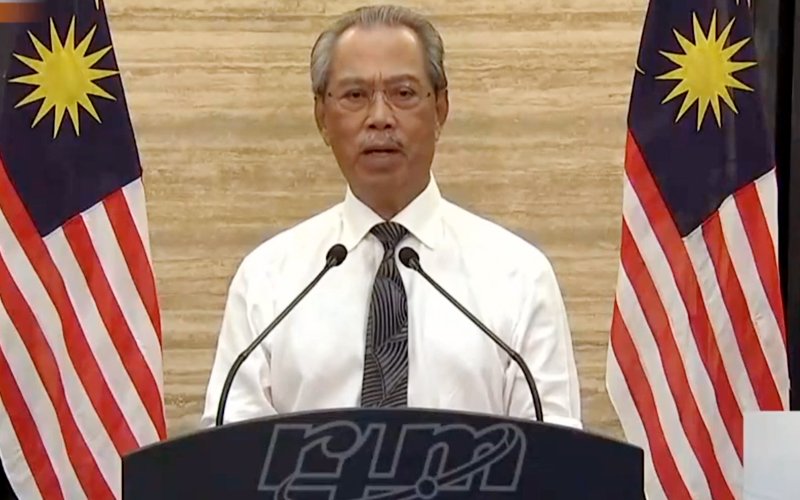
A live broadcast of Prime Minister Tan Sri Muhyiddin Yassin unveiling the Covid-19 stimulus package in Kuala Lumpur March 27, 2020. ― Picture by Yusof Mat Isa
COMMENTARY, March 31 ― Tan Sri Muhyiddin Yassin has shown his mettle as a leader as he rallies the nation against an invisible enemy ― Covid-19 ― while at the same time having to deal with his political enemies and a volatile economic situation.
Emerging from the political battle that brought down the nearly two-year-old Pakatan Harapan (PH) government, he wasted no time in working to contain the deadly coronavirus while offering the people new hope.
The absence of a trustworthy opposition made Muhyiddin acceptable to Malaysians at large and at this present moment, he has thus far managed to handle the Covid-19 crisis with wisdom.
He took about a week from March 2, the day he was sworn in as prime minister, to settle down and pick his Cabinet who are now working with him as a team to stop the Covid-19 pandemic.
It is no easy task for a man whose leadership capabilities has not been tested at this level but Muhyiddin seems to have taken the challenge in his stride.
Just three weeks ago, the opposition was in a “killing mode” with claims that this was an illegitimate, backdoor government and threats of votes of no-confidence.
Together with Barisan Nasional (BN) and Pas, Muhyiddin managed to weather all that and brought things under control, a feat even the PH government may not have managed so well, according to people on the ground.
Muhyiddin is not fighting one battle alone, he has also to fight his position in the party where he is being challenged by the son of Tun Dr Mahathir Mohamed, his chairman who won the party chairmanship uncontested.
Dr Mahathir had also questioned Muhyiddin’s legality as prime minister ― a position Dr Mahathir himself resigned from, a move which brought down the PH government.
Since he took over, Muhyiddin has not had a single day of peace but he seems to be cool when he appeared twice on TV to address Malaysians about measures needed to contain the pandemic.
In a way, the movement control order (MCO) the country is now under has given Muhyiddin a real political break as all political activities have now stopped.
While he has been getting quite a lot of praise on the ground for his swift actions to help alleviate the suffering of the B40, his stimulus package was not well received by the business community.
He has to address this matter fast or the country may not be able to turn over fast enough to recover from the effects of the shutdown as well as the world economic downturn. - MM

The Reason Why The Agong Allowed Muhyiddin To Form The Government

In short, the rakyat gave the MPs they voted for the mandate to speak and act on their behalf for the next five years. And this mandate includes the power to leave one bloc to join another bloc. There is nothing wrong or illegal in that. Anwar Ibrahim taught us that when he tried to get 30 Barisan Nasional MPs to cross over to Pakatan Rakyat on 16th September 2008. Of course, Anwar failed, but had he been successful then Pakatan Rakyat would have LEGALLY been the government on the 16th of September 2008.

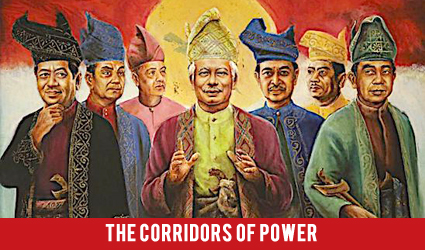
THE CORRIDORS OF POWER
Raja Petra Kamarudin
Prime Minister Muhyiddin Yassin told Malaysians he knows the people did not vote for Perikatan Nasional. Actually, they did not vote for Pakatan Harapan either. They voted for Umno, PPBM, PAS, PKR, DAP, MCA, MIC, Gerakan, PBB, Warisan, Amanah, and so on. Those were the parties that contested the general election on 9th May 2018.
All the 36 political parties (and some independents) contesting the 14th general election or GE14 garnered a combined total of 12 million votes, which is 80% of the 15 million registered votes or about 37.5% of 32 million Malaysians.
The opposition bloc (which at that time consisted of PKR, DAP, PPBM and Amanah) won 45.68% of the votes and 50.9% of the seats. The ruling bloc and others won 54.32% of the votes but only 49.1% of the seats.
One important point to note is that only 16% of Malaysians voted for the Pakatan Harapan bloc. The balance 84% of Malaysians DID NOT vote for the Pakatan Harapan bloc. Hence when they say Pakatan Harapan represents the people’s voice that is not true. The Pakatan Harapan bloc only won the largest minority, not the majority, and a minority is still a minority. The truth is, Pakatan Harapan represents 16% of the people’s voice.

Only 16% of Malaysians or 45.68% of the voters voted for Pakatan Harapan

As DAP and all those others keep saying: the system is not fair. The Pakatan Harapan bloc won only 45.68% of the votes but they won 50.9% of the seats while those others who won 54.32% of the votes won only 49.1% of the seats. But then that is how the first-past-the-post system works, which Anwar Ibrahim complained about back in 2013.
Anyway, the total number of seats which the Pakatan Harapan bloc won was 113 out of 222 while the seats they DID NOT win was 109, a difference of four seats in favour of the Pakatan Harapan bloc.
Of course, that changed later when a few MPs from the non-Pakatan Harapan bloc crossed over to the Pakatan Harapan bloc (which the anti-Barisan Nasional people were very happy about) and changed, yet again, when a few MPs from the Pakatan Harapan bloc crossed over to the other side (which the anti-Barisan Nasional people were NOT happy about).
But then those who live by the sword die by the sword, is that not so? That is called karma. How can we get excited when non-Pakatan Harapan people cross over to Pakatan Harapan but then get angry when Pakatan Harapan people cross over to the other side? It is a two-way street, not a one-way street.

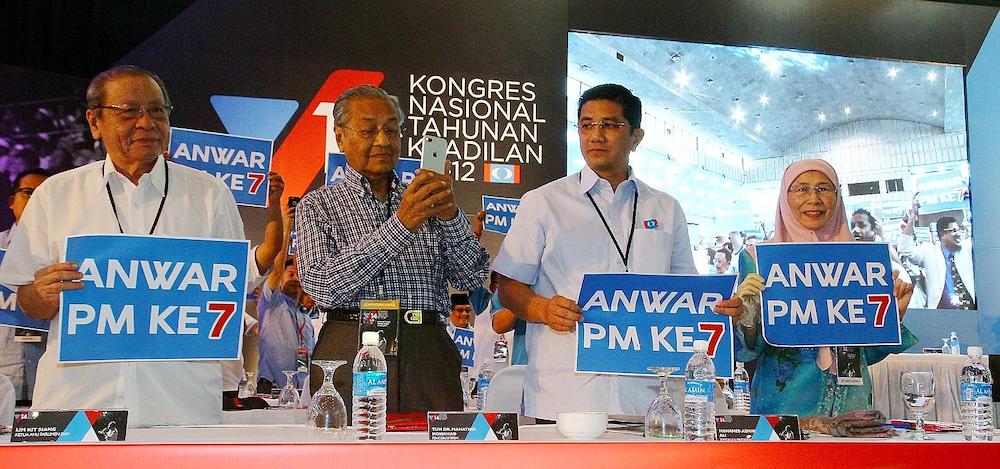
The message was clear: Mahathir never intended for Anwar to become PM7 or even PM8 and most people knew this

But never mind, let us now talk about whether the voters did or did not vote for Pakatan Harapan in GE14. I would say the answer is no. The voters voted for Umno, PPBM, PAS, PKR, DAP, MCA, MIC, Gerakan, PBB, Warisan, Amanah, etc.
Let us take Terengganu and Kelantan as examples. The Pakatan Harapan bloc won only 7.3% of the votes in Terengganu and 10% of the votes in Kelantan. Umno and PAS combined won 92.7% and 90% of the votes in Terengganu and Kelantan respectively. The Pakatan Harapan bloc won zero seats while Umno and PAS combined won all the 99 state and parliament seats.
Basically, the people rejected Pakatan Harapan. However, PKR, PPBM and Amanah might have won (I repeat, might have won) some of those 99 seats had they contested under their individual banners rather than as partners of DAP under Pakatan Harapan.
The same goes for the Chinese voters in Penang, Selangor and Perak. They did not vote for Pakatan Harapan. They voted for DAP. If DAP was not a partner in Pakatan Harapan but had instead contested as an independent party, Pakatan Harapan would not have won those 42 Chinese seats. Most likely the Pakatan Harapan bloc would have won only 70 seats or less instead of 113 seats.

The Chinese support DAP, not Pakatan Harapan, and if DAP was not in Pakatan Harapan they would not get any Chinese votes

So, perish the thought that Pakatan Harapan won GE14 and therefore is the legitimate government of Malaysia.
PKR, DAP, PPBM and Amanah, which contested under the banner of Pakatan Harapan, won only 45.68% of the votes, while all the others won 54.32% of the votes. But then PKR, DAP, PPBM and Amanah combined their seats. Hence, combined, they gained a four-seat majority over all the others.
Yes, just a four-seat majority. Two seats less and the Pakatan Harapan bloc would have won just 111 seats, which is below  the ‘magic’ figure of 112 seats and would have been a ‘hung’ parliament. So, it is not really an ‘overwhelming victory’ like the impression they are trying to give, especially when these 113 seats were won with only 45.68% of the votes.

Anwar Ibrahim proved that cross-overs are legal when he launched his “Langkah 16 September” in 2008

And did Anwar Ibrahim not say that any party or bloc that wins the election with less than 50% of the votes is an illegitimate government? That is what Anwar kept saying back in GE13. Would that not also apply to Pakatan Harapan in GE14? Why is it in GE13 any party or bloc that wins with less than 50% of the votes is an illegitimate government while for GE14 it is legitimate?
So, the Pakatan Harapan bloc formed the government not because they won more than 50% of the votes but because PKR, DAP, PPBM and Amanah combined their seats to total 113, just two seats above the 50% mark of 111 seats, which gave them a majority of four seats above all the others.
Okay, what happens when the combination changes, as it did on 1st March 2020? Well, if the combination changes then the bloc changes as well. The Pakatan Harapan bloc of PKR, DAP, PPBM and Amanah totalled 113 seats on 9th May 2018. On 1st March 2020, the Perikatan Nasional bloc of PPBM, Umno and PAS totalled more than the Pakatan Harapan bloc of PKR, DAP, PPBM and Amanah. Hence the new bloc takes over. Simple!
Now, for this to happen, Seri Paduka Baginda Yang di-Pertuan Agong interviewed each and every one of the 222 MPs to personally ask them which bloc they want to be in: the Pakatan Harapan bloc or the Perikatan Nasional bloc? More than 112 MPs said they wish to be in the Perikatan Nasional bloc and less than 112 MPs said they want to be in the Pakatan Harapan bloc.

More than 112 MPs told His Majesty the Agong they support Muhyiddin Yassin as PM8

Let me repeat that. His Majesty the Agong interviewed each and every one of the 222 MPs to personally ask them which bloc they want to be in and more than 112 MPs said they wish to be in the Perikatan Nasional bloc while less than 112 MPs said they want to be in the Pakatan Harapan bloc. That was how Muhyiddin Yassin became the new prime minister or PM8.
What about the so-called people’s choice or people’s wishes? That is the people’s choice or people’s wishes. When the people go to the polls to vote for their choice of MP, basically they have transferred their rights to the MPs. The MPs represent the people, which is why they are called wakil rakyat.
In short, the rakyat gave the MPs they voted for the mandate to speak and act on their behalf for the next five years. If you do not like what they say and do then in the next general election do not vote for them, vote for somebody else. However, in the meantime, the MPs you voted for speak and act in your name. That is how the system works.
And this mandate includes the power to leave one bloc to join another bloc. There is nothing wrong or illegal in that. Anwar Ibrahim taught us that when he tried to get 30 Barisan Nasional MPs to cross over to Pakatan Rakyat on 16th September 2008. Of course, Anwar failed, but had he been successful then Pakatan Rakyat would have LEGALLY been the government on the 16th of September 2008.

Pakatan Harapan is trying to use the COVID-19 debate on the RM250 billion stimulus package to pass a vote of no confidence against Muhyiddin in parliament

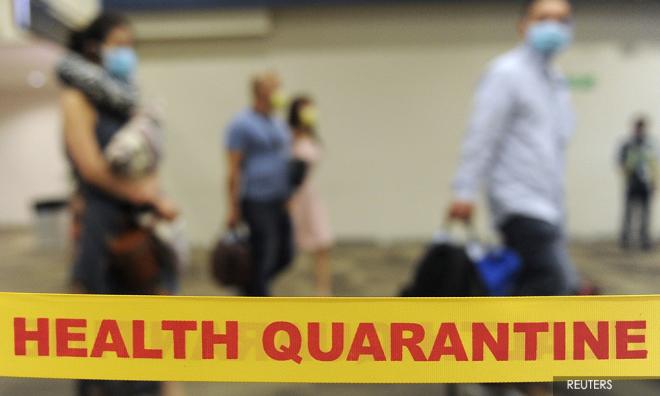
Clear messages about quarantine key to success, research finds

Malaysiakini

CORONAVIRUS | Clear and consistent messaging about lockdown measures, why they are needed, and about the practicalities of social distancing such as food and finances, are crucial to their potential for slowing outbreaks of disease, researchers said today.
With hundreds of cities worldwide already using isolation and quarantine during the Covid-19 pandemic caused by the new coronavirus - and more likely to follow - a study of previous disease outbreaks found that quarantine adherence rates range from 0 percent to more than 92 percent, and that clarity is key.
If instructions and language are unclear, then people tend to make up their own rules, the research found, and social pressure from others to comply with quarantine is also important.
"The effectiveness of quarantine depends on how many people do it, so it is important to know what makes people more likely to comply," said Simon Wessely, a professor of psychological medicine at King's College London's Institute of Psychiatry, Psychology & Neuroscience, who worked on the research.
"In the era of 'fake news', consistent messaging is difficult, but leaving the information needs of the public unmet can be dangerous. Public health teams should provide clear, authoritative information... and then check the messages are getting through."
Published in the journal Public Health, the research analysed data from 14 studies from around the world looking at adherence by different groups to quarantines during a range of disease outbreaks including Ebola, Severe Acute Respiratory Syndrome (Sars), the H1N1 flu pandemic and mumps.
If people believed that quarantine was beneficial in controlling the outbreak, and if they also believed the disease itself is risky, then adherence tended to be better - especially if lockdown measures began fairly swiftly to slow the spread of the disease.
Rebecca Webster, who co-led the study, said it showed that because people vary so much in their adherence to quarantine, "public health officials should provide a timely, clear rationale for (it)".
"Our research also showed that messaging around the benefit could be influential, as well as ensuring that sufficient supplies of food, medication and other essentials are provided," she said. - Reuters