Their excitement over a fishing trip in Bachok waters here ended in tragedy when a boat carrying 20 people including the skipper and crew capsized after it was caught in a storm about 10 nautical miles from the Kuala Kemasin Base Jetty, Bachok, last night.
Kelantan deputy police chief SAC Abdullah Mohamad Piah said in the incident at 8pm, four of the men were found drowned, four more are still missing while 12 anglers were confirmed safe. All are between the ages of 18 and 60 years.
“The fishing boat they boarded for their trip was reported to have been hit by a storm and strong waves, causing the rope of the anchor to break and the boat to overturn, throwing all into the sea.
“Amidst the chaos, those who were saved were rescued by their friends on other boats, including fishermen, and four bodies were recovered in the vicinity,” he said in a press conference at the Kuala Kemasin Base Jetty here early this morning.
Abdullah said the four bodies and 12 men who were saved were taken to the jetty by a Malaysian Maritime Enforcement Agency (MMEA) team and other fishermen boats at about 2.15am.
"The bodies and those who were saved were sent to the Raja Perempuan Zainab II Hospital in Kota Bharu for a post-mortem and treatment while the search-and-rescue operations continue, with help from other agencies this morning,” he said.
He said 14 of the anglers were from Kampung Padang Tok La, Pasir Mas, while six others were the skipper and crew who set out on their trip from Kuala Besar, Kota Bharu at 3pm.
He said several others who have not yet been identified had boarded other boats and started fishing before the storm hit.
Those who died in the incident were Mohd Syahrizan Daud, in his 40s, Muhamad Zaki Muhamad Nordin, 19, Wan Aminudin Wan Hussin, in his 60s, and a Thai national known only as Pokta, in his 50s.
The four missing men are Arman Ismail, 43, Harun Daud, in his 60s, Syafiq Abdul Halim, 30, and Che Wadi Bakar, in his 40s.
Meanwhile, Mohd Rowi Hussin, 50, who is the nephew of victim Harun Daud hopes that his uncle is found soon.
“We accept what Allah decides. I received a call from the police at about 11pm. yesterday and rushed here to find out the latest development,” he said.
He added that the anglers had gathered in his house yesterday morning before leaving for Kuala Besar, all excited to go on their trip to catch fish and squid.
He said the last time he saw the group was a video recording of them on the boat sent to him via Whatsapp at about noon yesterday.
Senior minister Azmin Ali chaired a meeting of the federal action council for Selangor state today. (Bernama pic)
SHAH ALAM: The federal government has given an assurance that it will be fair to all states, including those led by opposition parties, in the efforts to revive the economy from the effects of the Covid-19 pandemic.
Senior minister Mohamed Azmin Ali, who is minister for international trade and industry, said differing political ideologies were not an issue when it came to economic development, which was a shared responsibility.
“We put aside politics. This is the time when the Federal and state governments must work together to overcome the challenges faced due to the movement control order and Covid-19.
“It is very crucial for us — the Federal Government and state governments — to work together,” he told reporters after chairing a meeting of the Federal Action Council for Selangor state today.
The meeting was also attended by Selangor menteri besar Amirudin Shari.
Azmin said it was decided at the meeting to expedite the implementation of several infrastructure projects that had been approved previously.
This was viewed as crucial given that the projects had a multiplier effect towards stimulating the state’s economy as well as the country’s economy, he explained.
Azmin said the meeting also focused on infrastructure needs to support the growth of the digital economy in Selangor.
“Today, Telekom Malaysia Bhd tabled a working paper on the Selangor government’s efforts to enhance the fibre-optic infrastructure network and we will support the move,” he said. - FMT
A positive case at Sandakan market was one of the three Covid-19 cases reported in the country today. (Bernama pic)
SANDAKAN: Shoppers who visited the fish and wholesale sections of the Sandakan market between June 14 and June 28 have been advised to monitor their health following the detection of a positive Covid-19 case there.
Sandakan Municipal Council president Wong Foo Tin said anyone showing symptoms should immediately go to the Duchess of Kent Hospital or Sandakan health clinic for a Covid-19 test.
Health director-general Dr Noor Hisham Abdullah had said earlier a positive case at the Sandakan market was one of two local transmissions reported in the country today.
Malaysia reported three new cases during the past 24 hours, comprising two local transmissions and one imported case.
The Sandakan case, detected from workplace screening at the market, was the first reported in the district after it was declared a green zone two months ago. - FMT
The Association of Wedding Ceremony Operators Malaysia (PPMPM) today suggested that any wedding reception or feast with more than 250 guests during the recovery movement control order (MCO) period should be held in several sessions.
Its deputy president Daeng Syamsalleh Hamzah said such a move would help the organisers to comply with the standard operating procedures (SOP) for social events, which include the maximum number of attendees at 250 people.
“If the number of guests exceeds 250 people, the ceremony can be held in different sessions such as during day and night or Saturday and Sunday,” he told Bernama after a briefing session with more than 200 wedding operators.
There has been concern from many parties on ways to conduct wedding receptions or feasts with a large number of invitees, in order to adhere to the SOP set by the government.
Daeng Syamsalleh noted that many wedding receptions have been planned long before the Covid-19 pandemic and the number of guests usually exceeds 1,000 people.
“So, when the number of guests needs to be reduced during the recovery MCO, the wedding operators must be smart in providing additional services, such as photography or solemnisation, so that it matches the agreed price of the package,” he said.
On June 24, the government announced the ‘green light’ for social gatherings including wedding and engagement receptions, as well as religious ceremonies such as tahlil, akikah and doa selamat, involving up to 250 people from July 1.
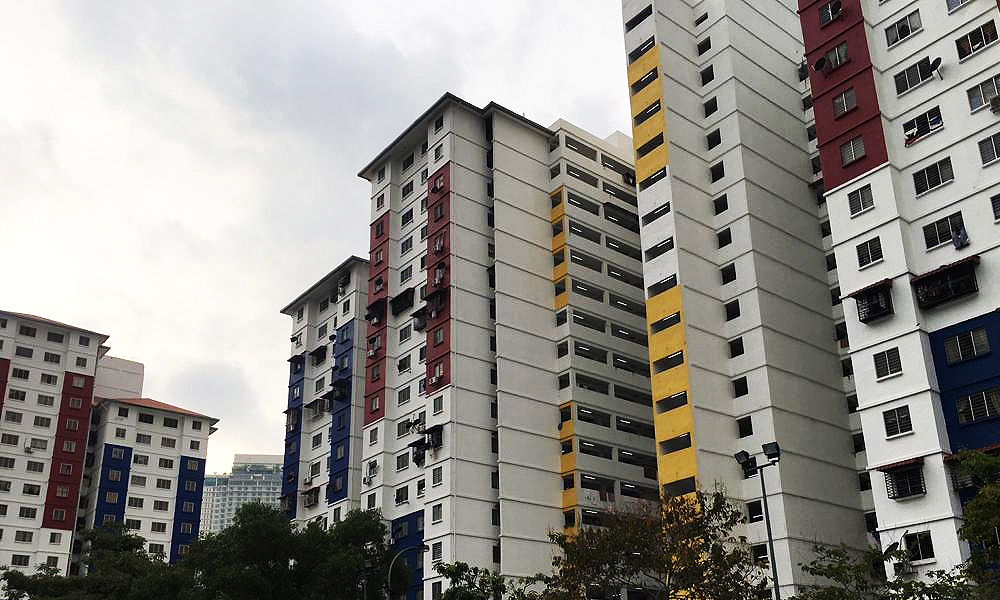
MP SPEAKS | I recently visited a family in Setiawangsa, my constituency. They live in a People’s Housing Project (PPR) flat. Sixteen of them live in a 750 square metre unit: The parents, children and grandchildren.
The head of the family - I’ll call him Pak Dollah - apologised when my team and I sat down with them on the floor of their living room. That’s where most of their children and grandchildren sleep every day, so there was no room for furniture.
Since the 1980s, Pak Dollah had worked in a prestigious hotel, serving faithfully. He could take back as much as RM3,000 in salary and allowances.
But with the movement control order (MCO) and the hotel industry in doldrums, this has shrunk to his basic pay of RM1,300. And he considers himself lucky to still have a job.
“Alhamdulillah, the hotel union is strong. It’s difficult for the hotel to lay people off.”
Dollah has tried to sell cakes on a small scale since the MCO. This makes him about RM20 a day.
His wife is looking for work but it’s hard at her age. One of his daughters was abandoned by her husband and she works in a nearby pharmacy.
Another child is studying early childhood education at a college. But it’s hard keeping his sons in education after they finished SPM, he tells me.
The price of chicken has gone up. Fish has become rare in their diets. Dollah recently quarrelled with a TNB meter reader over how high his electricity bill had gone up. They still have power though: he is paying the sum in instalments.
Another story, this time involving a man called Pak Mat. He came to my service centre recently to ask for help.
Pak Mat is almost 70 and a stroke survivor. To support his family, he took part in a hire-purchase programme for a taxi - not long before the MCO started.
Every day, whether he could work or not, he has to pay RM26 for his taxi. If he works 12 hours - 8am to 8pm - he can get around RM60.
But with his age and health condition, this has become harder, what more with the MCO.
He came to us for help because one of his children got an offer to study at a government college in the East Coast. The cost of it is too much for them.
Another child is in college in Kuala Lumpur. With learning activities being moved online, this child has complained that it’s hard to keep up with a poor quality handphone and is asking for a laptop.
A prime example of underemployment
Another child has a diploma but wasn’t able to get a job in that line. That’s a prime example of underemployment, a problem we rarely hear of compared to unemployment.
“I’m under a lot of pressure,” said Pak Mat sadly.
There are many Pak Dollahs and Pak Mats - not forgetting their non-Malay counterparts, the so-called Maniams and Ah Chongs - in Kuala Lumpur.
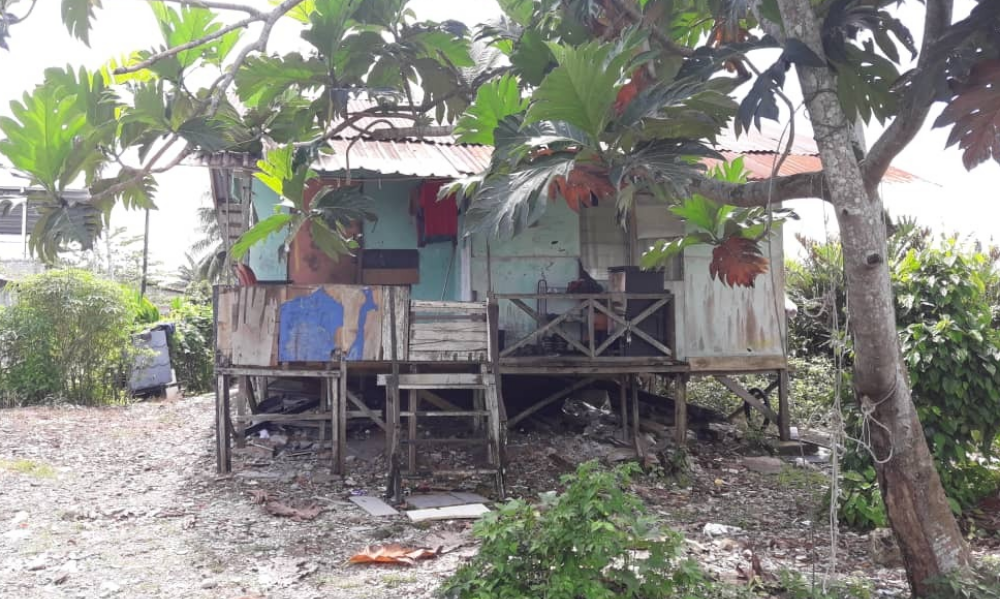
The idea that there aren’t many poor non-Malays isn’t true. In Setiawangsa, there’s a place called Kampung Baru Air Panas, a new village with PPR developments that have large non-Malay components. Urban poverty is a major problem in our country.
Many of the people in this group have jobs - some earn as much as RM3,000 a month. This might be comfortable in rural areas (especially with the stronger family and support system there) but it doesn’t go very far in our cities and towns.
Hence the lot of Malaysia’s urban poor. They’re a group that Umno and PAS elected representatives - most of whom hold rural seats - often ignore or dismiss.
The urban poor is made up of all races - although the bulk is Malay. People still believe that most Malays still live in rural areas like in colonial times.
This is the narrative that the New Economic Policy (NEP) was based on. Indeed, this perception has lingered on until today even though the situation has clearly changed, thanks in part to the success of the NEP.
In the 1970s, only 15.5 percent of urban dwellers in Peninsular Malaysia were Malays. In 2016, 68 percent of the bumiputera community live in cities. Of Malaysia’s collective urban population, 56 percent are bumiputera.
My father, a senior civil servant who was directly involved in the implementation of the NEP, believes that this policy, whether directly or indirectly, encouraged the Malays to head to the cities.
“Squatter” settlements sprouted up. Rapid economic developments created new job opportunities.
Soon, the government felt that with better education and healthcare facilities in urban areas, the migration process should be opened more widely. The size of cities across the country also grew.
It soon became popular for both government and opposition legislators to champion urban migrants. Idris Ibrahim, the MP for Setapak (1974—1982) was called the “King of the Squatters” (Raja Setinggan) for defending them.
During the tabling of the 1995 Budget, the-then finance minister Anwar Ibrahim launched what became the PPR on a major scale with an allocation of RM2.6 billion (around RM4.74 billion today)
PPR housing units in Kerinchi, Kuala Lumpur.
The focus of the programme at the time was Gombak, Wangsa Maju, Ampang, and Kerinchi. The construction of 58,200 houses was approved.
From 1998, the government began demolishing the houses of the urban migrants on a large scale.
Two years later, the “Zero Squatter Policy” (Dasar Setinggan Sifar) was launched with a 2005 target date for completion. While the goal was not met then, it did have a major impact.
But the “Zero Squatter” approach did not really address the problem of urban poverty.
A lack of progress on housing, wages and addressing the high cost of living means that urban poverty and exclusion are huge challenges today, perhaps more so than its rural counterpart.
In the 1990s, many of my friends at the La Salle Petaling Jaya school were from Kampung Baiduri and Kampung Medan.
But it was only when I started being active in my party’s Kelana Jaya branch from 2005 onwards, including engaging in grassroots work at the Desa Mentari, Desaria, Kampung Lindungan and Desa Hormat, that I saw for myself their milieu.
When the teaching of Mathematics and Science in English (PPSMI) was being implemented, I learned first-hand the difficulties it caused for primary school students from these areas in terms of learning.
Their parents also had a tough time helping them out with their homework. Even their teachers found teaching these subjects in English difficult.
Via the Mentari Project, we started a voluntary tuition programme in there. Besides tutoring the children there, we took them on trips to Petrosains, Kidzania, and elsewhere.
Middle-class families in the Klang Valley may find these excursions a normal thing but they are often beyond the means of their less well-off counterparts.
Some of the latter had not even set foot in KLCC once, even though they lived in Petaling Jaya.
Two years ago, there was a stir due to a Unicef report about poverty and poor nutrition affecting children in Kuala Lumpur.
Indeed, the problem was apparently worse in Kuala Lumpur, although economically the city is on a par with its Asian peers.
Unfortunately, some quarters - including certain Malay leaders - blame the urban poor for their own plight; such as by alleging they are lazy. There are also those who blame foreigners or non-Malays for the problems the community faces.
The latter is especially dangerous as it is easy to enflame such sentiments, given the economic difficulties the people are currently facing.
There are, regrettably, also the so-called “liberal” Malays and their non-Malay counterparts who believe that racialist sentiments are inexorably linked to the Malays and Islam because many Malay voters choose to back ethnic or religious-based parties.
All of these views are mistaken. How could anyone say that the families of Pak Mat and Pak Dollah are lazy?
The fact is that they work hard in unimaginable conditions to support themselves. They desperately want their children to get an education so they can have better lives than them.
Also, the majority of the Malays in the constituencies I have served in - both in Seri Setia and Setiawangsa - have no problems at all with their Chinese and Indian counterparts.
The real “enemies” are arguably the country’s profiteering elite. These are people who are up in arms when the minimum wage goes up by RM100, in the next breath complaining that Malaysians and Malays are unreliable workers.
There are not a few of them who have no qualms to pay bribes to bring in foreign workers.
Also in the mix are Malay elites who scream “Hidup Melayu” and brandish the keris supposedly in defence of “Malay rights” but send their children to international schools so much so the latter can’t even speak Malay properly.
But it’s also wrong to assume that the entire Malay workers are ignorant, backward and prejudiced (ironically revealing the prejudices of the groups who feel this is the case) when they are basically struggling to survive.
Given the twin pressures of a poor economy and attempts to inflame ethnic tensions, it is no wonder the Malays are increasingly wondering who they can depend on.
A grave mistake the Democrats in the US and the Labour Party in the UK made was to have ignored, or rather, only paid lip service to the anxieties of their majority communities. This is arguably what contributed to the rise of Donald Trump and Brexit.
Understanding the problems of and giving a voice to the urban poor is a duty for all: Malays and non-Malays.
Indeed, given that the Malay community is growing and that urban areas are now increasingly Malay, change in Malaysia can’t take place without the support of the Malays who have the least, but who work the hardest.
NIK NAZMI NIK AHMAD is the MP for Setiawangsa and chair of the Parliamentary Special Select Committee on Defence and Home Affairs. He is also PKR organising secretary. - Mkini
STAR president Jeffrey Kitingan (third from left) accepts the membership forms of former Warisan Kota Belud pro tem chief Awang Salleh Makmud and his group.
KOTA KINABALU: The opposition Parti Solidariti Tanah Airku (STAR) has shed its Kadazan, Dusun and Murut (KDM) image by welcoming 500 new Muslim Bumiputera members from the Bajau heartland in Kota Belud.
Party president Jeffrey Kitingan said the entry of the group led by a former Warisan branch leader marked a new beginning for the party.
Kitingan said STAR was expecting more new members from the east coast districts and Kudat, where the majority of the people were from Muslim Bumiputera ethnic groups.
“We are pleased that more are joining us, especially from the east coast areas like Semporna, as well as from Kudat, Kota Belud and Penampang,” he said after receiving membership applications from the 500 Muslim Bumiputera members, led by Awang Salleh Makmud, at the party headquarters in Penampang today.
Formed in 2016, STAR holds the state seats of Bingkor and Tambunan and the Keningau federal seat, where most of the voters comprise non-Muslim Bumiputera ethnic groups, or better known as the KDM communities.
The party has been vocal about the return of state rights and finding a solution to the illegal immigrant problem in Sabah, which Kitingan has accused the Warisan-led state government of failing to resolve.
FMT has learnt that former Warisan members with connections in Sabah Umno have been visiting the east coast districts to persuade party members to leave and join Umno or STAR.
Sources said hundreds of party members in Kinabatangan, Sukau, Beluran, Tawau, Lahad Datu and Semporna on the east coast were expected to resign from Warisan in the coming weeks.
About 600 members from Sepanggar have also left Warisan but said they would continue their struggle to help the people through an NGO. - FMT
A fire broke out at the women’s ward of Hospital Sultanah Aminah yesterday. All 24 patients were evacuated. (Bernama pic)
PEKAN: Urgent checks will be made of electrical wiring at all government hospitals, in the wake of a fire at Hospital Sultanah Aminah (HSA) in Johor Baru yesterday.
Health minister Adham Baba said several critical allocations have been approved for that purpose. “We will see that electrical systems are checked nationwide,” he said after visiting the Chini Health Clinic near here today.
A fire broke out at the HSA women’s ward yesterday, leading to the evacuation of all 24 patients. There were no casualties.
The fire was the second in less than four years. Six people died when fire broke out on the second floor of the hospital’s intensive care unit in October 2016.
Adham expressed his gratitude to the Sultan of Johor, Sultan Ibrahim Sultan Iskandar, who has agreed to bear the cost of repairing the HSA women’s ward.
“As requested by the sultan, the Fire and Rescue Department, the Public Works Department and the health ministry will come out with the best plan.
“I visited the area yesterday and saw the areas to be improved. The whole complex needs rewiring and upgrading and facilities for patients’ accommodation especially must be improved,” he said.
Sultan Ibrahim said earlier today that the cost of repairs would be fully borne by the Sultan Ibrahim Johor Foundation. - FMT