


PAS’ 71st Annual Congress, scheduled from Sept 11 to 16, 2025, will take place at the PAS Complex in Kedah, Kota Sarang Semut, Alor Setar.
This year’s congress has drawn the attention of both media and political analysts, as PAS is expected to make several key decisions, particularly regarding Perikatan Nasional’s internal crisis ahead of the 16th general election.
A brief glance at PAS’ history: founded on Nov 24, 1951, as the Pan-Malayan Islamic Association during a meeting in Butterworth, Penang, it was soon renamed the Pan-Malayan Islamic Party (its original name).
In its early days, PAS was seen as a Malay party championing Islamic affairs beyond what Umno offered.
Backed by religious scholars, PAS became the party of choice for Malays with religious education before joining the BN coalition in June 1974.
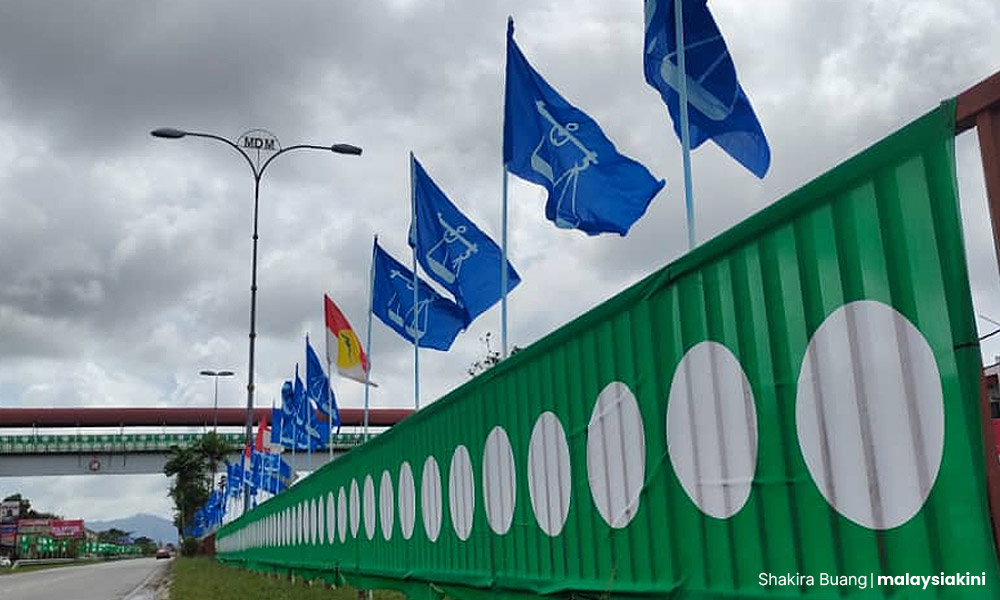
However, PAS left BN following the 1978 emergency crisis in Kelantan. The party then took a long time to regroup.
In GE15, PAS emerged as the single largest party, winning 43 parliamentary seats. It now governs four states: Perlis, Kedah, Terengganu, and Kelantan.
This raises the question: Is PAS ready to take on the “big brother” role within PN, which is currently led by Bersatu?
PN’s internal crisis
This year’s PAS congress, hosted in Kedah for the sixth time, is expected to address grassroots dissatisfaction with Bersatu, which is seen as often making unilateral decisions within PN.
On Feb 19, 2024, PN shocked many by announcing Azmin Ali as its new secretary-general, sparking protests from PAS that led to Terengganu Menteri Besar Ahmad Samsuri Mokhtar resigning as PN treasurer.
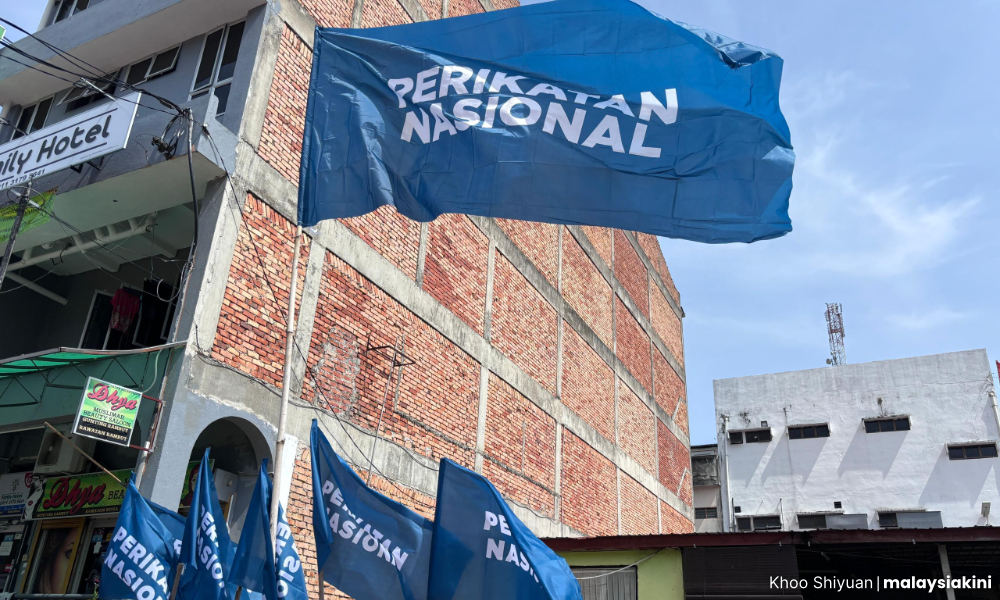
PAS leaders, including spiritual adviser Hashim Jasin, openly voiced their displeasure, stressing that all major appointments should be decided through meetings and consensus, not unilaterally.
Bersatu’s dominance in holding key positions has not sat well with PAS’ grassroots.
Despite having fewer members and elected representatives, Bersatu controls the chairperson and secretary-general posts. PAS feels its major contributions (votes and seats) are not reflected with equal influence in the leadership structure.
Delegates are expected to press the PAS leadership to resolve this imbalance of power and the decision-making process that has, so far, favoured Bersatu.
Possible talks on PM candidate
Beyond PN’s internal crisis, the congress is also expected to discuss PN’s prime ministerial candidate for GE16, which is likely in 2027, less than two years away.
Although the PAS leadership may not name its own candidate, delegates are expected to debate the matter.
This comes after Bersatu’s annual general assembly (PAT) on Sept 7 approved a motion naming party president Muhyiddin Yassin as the coalition’s candidate for the 11th prime minister.
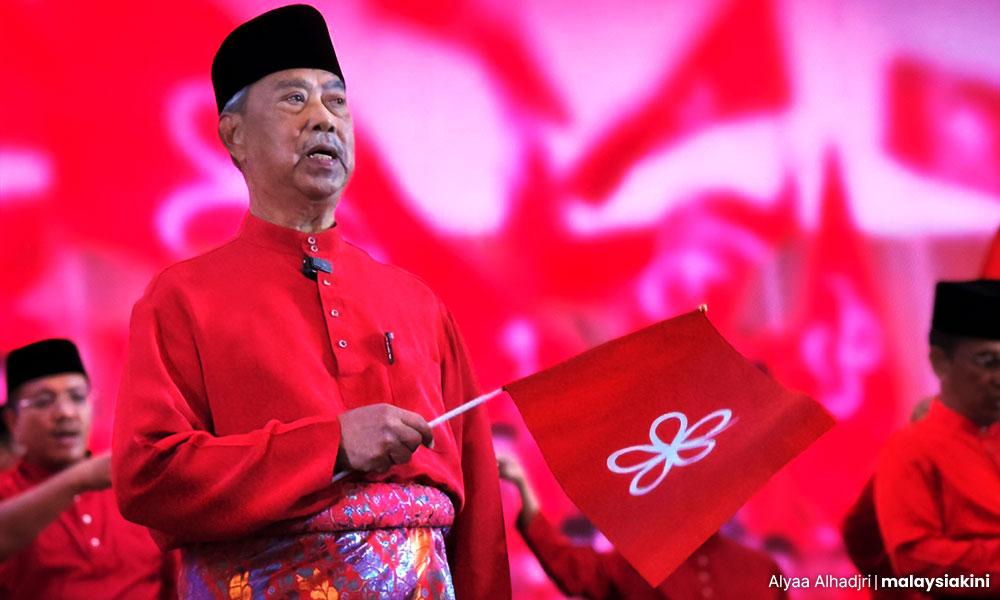
The motion did not go down well with PAS. The party’s central election directorate deputy chief, Annuar Musa, even advised Bersatu to “first purify itself by improving its image and policies and restoring public trust.”
Annuar, who is also a former BN secretary-general, added that Bersatu should prepare a new generation of leaders “with high integrity and the capability to take the country to new heights.”
Previously, Hashim also reminded Bersatu to be more cautious with announcements about PN and to practice consultation.
Given PAS’ current dominance among Malay voters, if it has ambitions to move to the next level, the party will likely consider fielding its own prime ministerial candidate.
Ready to accept Waythamoorthy, Ramasamy?
Hindraf leader P Waythamoorthy and Urimai president P Ramasamy have recently drawn closer to former prime minister Dr Mahathir Mohamad, frequently joining him at forums and in political statements.
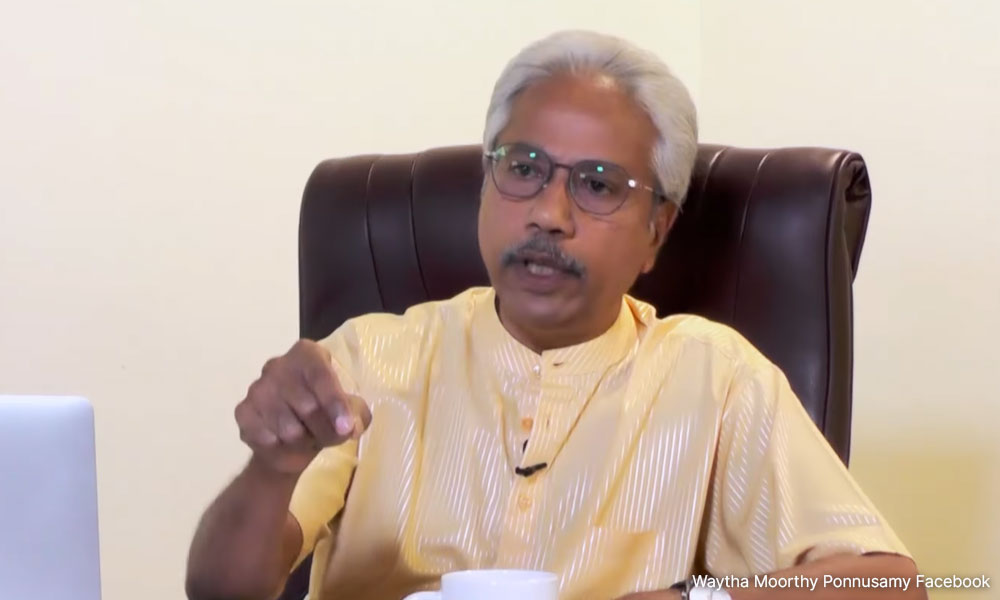
Mahathir remains with Gerakan Tanah Air (GTA) but often engages with PN on issues concerning Malay interests.
While their presence with Mahathir reflects efforts to gather multiethnic figures for strategic political strength, the question is whether PAS’ grassroots are prepared to welcome them into PN.
Critics on social media claim PAS has strayed from its original struggle after its leaders sat at the same table with Waythamoorthy.
Ramasamy, a former DAP leader, and Waythamoorthy, president of the Malaysian Advancement Party (MAP), are known as champions of Indian rights and secular pluralism.
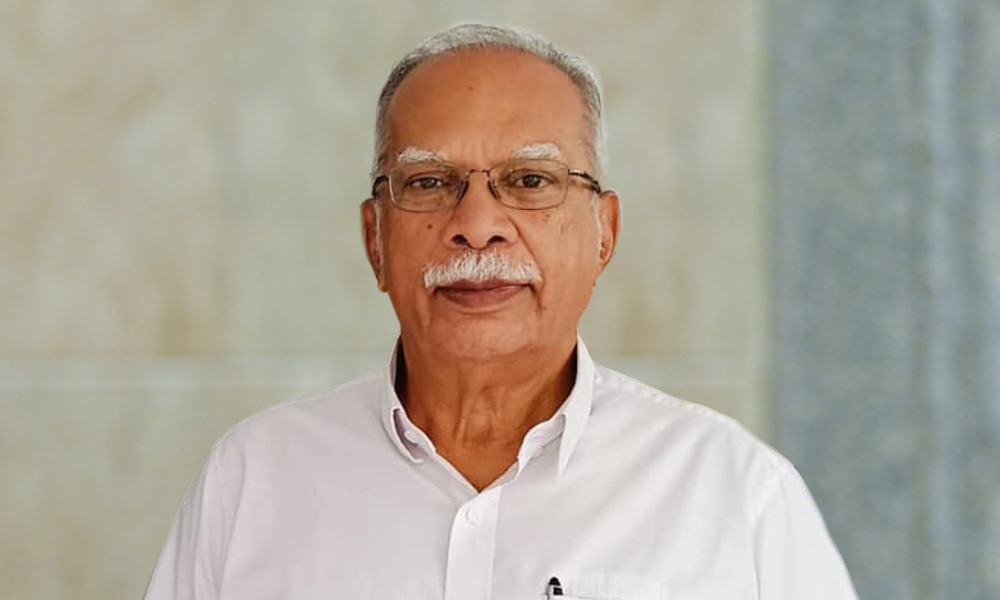
Previously, Muhyiddin announced numerous opposition parties had agreed to form a loose coalition to push issues they claimed were neglected by the Madani government, including unfulfilled reform promises.
The coalition consists of Bersatu, PAS, Gerakan, Pejuang, Muda, Malaysian Indian People’s Party (MIPP), Putra, Berjasa, MAP, and Parti Perikatan India Muslim Nasional (Iman).
The group includes Urimai, which is not yet officially registered as a political party.
Although PAS has not shown signs of discussing or committing to collaboration with Waythamoorthy or Ramasamy, its “silence” as Mahathir brings them into a shared platform makes it difficult for PAS members to respond to critics, especially online.
Delegates are expected to demand that party leaders clarify PAS’ stance on PN’s cooperation through this loose coalition with political figures who do not share PAS’ ideology or Malay nationalism.
Ultimately, the 71st PAS congress is more than just a party gathering - it is a space for reflection, structural renewal, and political strategy ahead of GE16. - Mkini
B NANTHA KUMAR is a member of the Malaysiakini team.

No comments:
Post a Comment
Note: Only a member of this blog may post a comment.