


As Anwar Ibrahim Madani’s government works towards a second term, Malaysia’s opposition coalition Perikatan Nasional aims to return to federal power.
This past weekend, Bersatu held its annual assembly, and while they closed the meeting with a unanimous resolution endorsing party president and former prime minister Muhyiddin Yassin as their candidate for prime minister, it was not without internal party calls for him to “turun” (step down), poison pen letters, and open disruptions in the assembly.
The Islamic party PAS will hold their annual meeting next week, with the expected usual pattern of rallying its members. PAS will also hold a party election where the contests to watch are those fighting for the vice-presidency and the central and youth working committees.
The question is whether PAS members will opt to stick with the same leaders or bring in new blood and ideas, especially more leaders with technocratic expertise.
A leadership deficit
Irrespective of what they decide, one of the most serious problems facing the opposition is leadership.
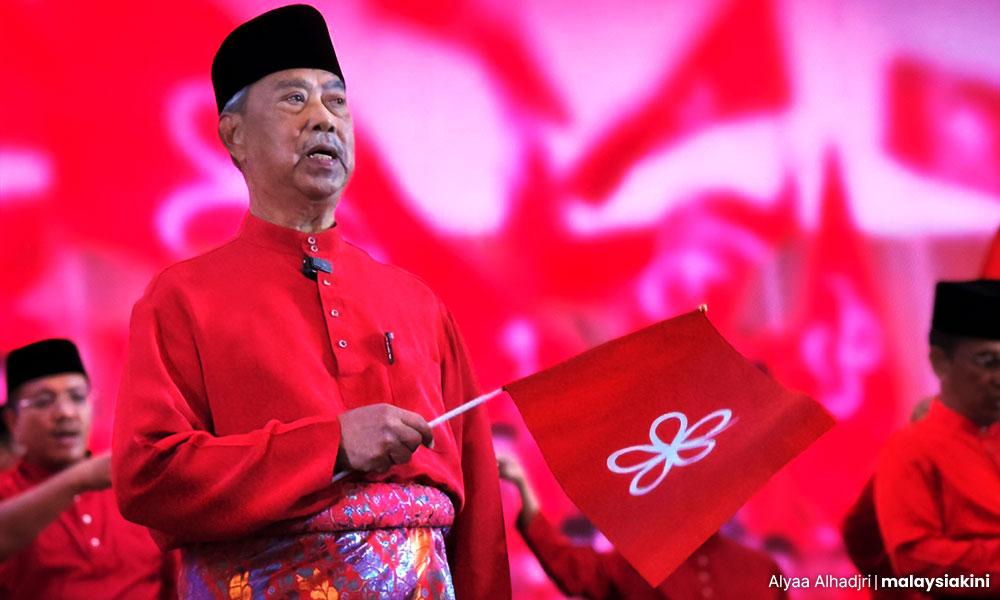
Arguably, this is a national challenge across parties, especially as there continues to be a gap in younger leaders being allowed to shine. Malaysia remains caught in the infighting of leaders in their 70s (or older) who continue to hold onto or aspire to power.
The country has been further damaged as past (and current) leaders have been found with unaccounted-for millions of ringgit for which they are seen not to be accountable. In short, there is a widening deficit of trust in political leaders across parties.
For PN, the problems go beyond personalities and a decreasing public confidence.
Foremost, the opposition coalition’s parties have not agreed on which party or who should lead - PAS, Bersatu, or even among the various contenders from the parties. This issue plagues the opposition, showcasing divisions and disarray.
Opposition leaders also bring along baggage - and some of it is in excess. Whether legal charges or “betrayal” deal-making, public perceptions of most of the opposition leaders have already formed, with the limited ability to rebrand.
PAS leaders are grappling with an ethnically polarising leader, Abdul Hadi Awang, who has chosen to stay in the presidency despite his poor health. Muhyiddin’s pull is no longer what it was, not least due to the reality that many, even within his own party, are not confident he could secure elite permission to form a government.
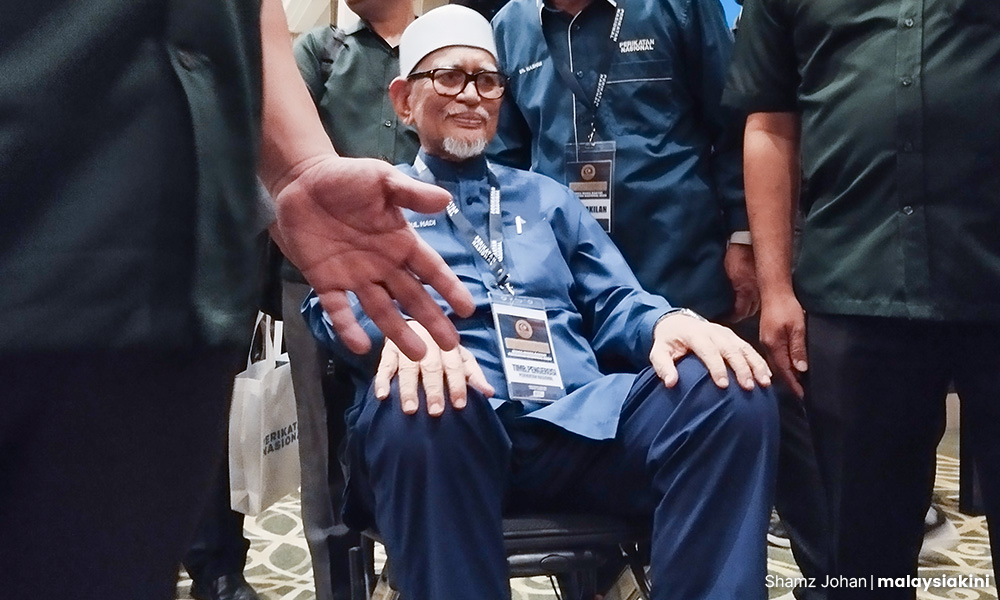
Publicly, the opposition brand is increasingly seen as “more of the same” and the “past”. “Abah” is a reminder of the Covid pandemic era that most Malaysians want to forget. His taciturn public demeanour reinforces his connection with a serious period of trauma for the country.
After the “second chance” leadership of the Mahathir era (2018-2020), there is greater reluctance to bring back previous leaders to office. This extends to Najib Razak as well, although all three men - Muhyiddin, Mahathir, and Najib - have core supporters. With the idea of “tukar” (change), Malaysians are increasingly looking for new, rather than recycling.
A matter of exclusion
PN has yet to be able to shed the belief that they represent part of Malaysia rather than Malaysians as a whole. Electoral support from non-Malays and Borneo remains minimal.
In Peninsular Malaysia, the coalition has only marginally gained in various by-elections among Indians, whose disappointment with the Madani government has deepened. Chinese disgruntled voters are choosing not to come out rather than change their support patterns, at least so far. In the coming Sabah polls, it is primarily Bersatu that has a fighting chance of winning any seats. PAS remains the least trusted among non-Muslims.
While PN is making more valuable interventions over legislation in Parliament - as was the case with the concerns raised about the Urban Renewal Act on issues of centralisation of power and impact on displacement and inequality, and on tariffs - the lens most of the opposition parliamentarians use to discuss policy is coloured by race and religion. Discussions of policy, and importantly, solutions to the economy are also seen to take on these lenses.
PN’s notion of national interest appears narrow, shaped by an exclusionary view of what the nation means. Maximally, the opposition currently is seen as representing part of Malaysia, which is reinforced in the analysis of electoral results.
This hampers the opposition’s ability to engage the middle ground across communities. Even with changing demographics that increase the number of Malays, the constituency configuration of Malaysia is such that winning power for PN at this juncture will not be through the ballot box, but through political alliances.
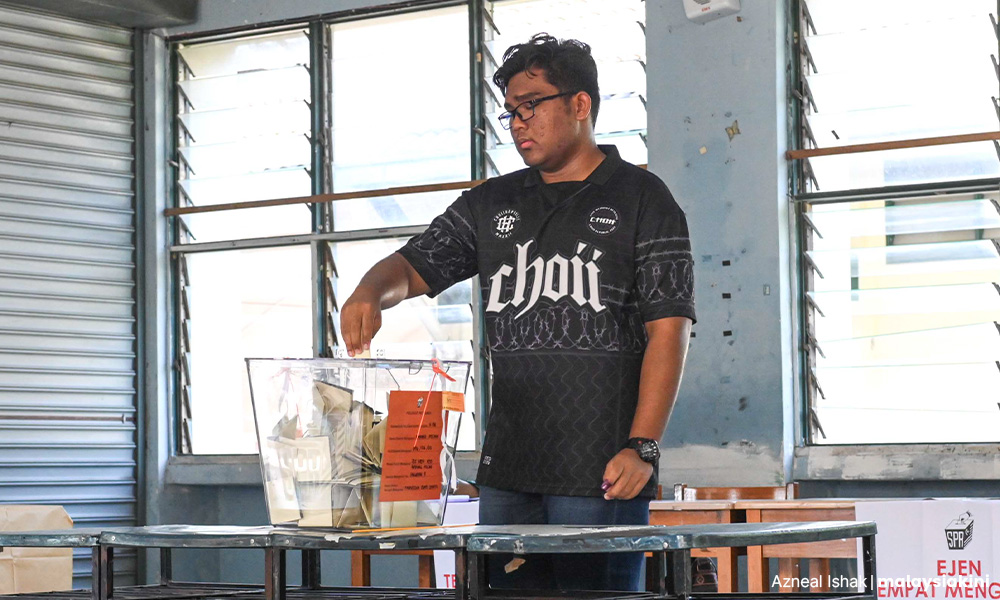
In this regard, Malaysia’s political fragmentation and polarisation work in their favour - one reason that PN’s polarising discourse continues.
Given these conditions, Anwar maintains a support advantage of many of Malaysia’s middle ground in that he compares more favourably among the alternatives, especially as this taps into persistent distrust with the Islamic party PAS.
The question persists - if not Anwar, then who? Despite more of the public not liking any of the leaders on offer, Anwar maintains an incumbency preference by default as the opposition leadership has yet to excite a disenchanted electorate.
A change in strategy
The opposition is adapting to these realities. Despite the importance of political deals and alliances, the opposition has moved away from this myopic focus. It seems to have finally recognised that, after two and a half years of failed attempts to woo MPs to defect, this path is not working.
In recent months, their political strategy has diversified from backdoor deal-making to greater engagement with the electorate. They are aiming to build their popularity despite likeability gaps. The coming polls serve as arenas for political mobilisation.
PN has ratcheted up their political activity through the “Turun Anwar” rally and support for the protests around the tragic death of Zara Qairina Mahathir in Sabah. Their active mobilisation and presence on social media, spotlighting increases in the cost of living and gaps in federal governance, have resonated on the ground.
Thousands have protested – although not in the numbers originally touted by PN leaders for the “Turun Anwar” rally - and in higher than predicted numbers and various locations, including “Justice for Zara” rallies in small towns across Sabah last month. Yet, PN’s mobilisation has largely been narrowly confined to Muslim voters, as the crowds lack multi-ethnic diversity.
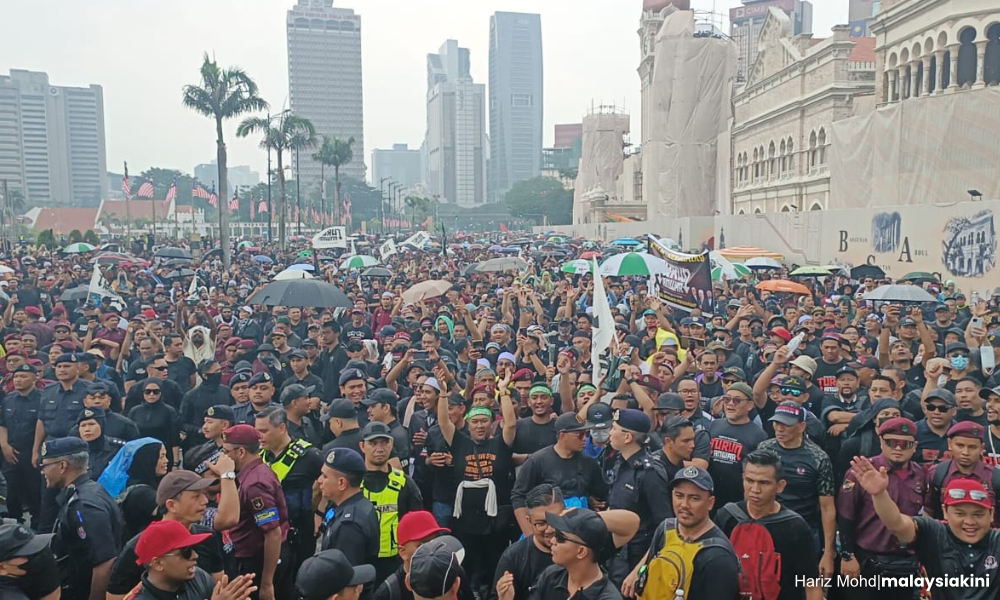
To date, PN’s focus is on building anger as opposed to hope. This is a long-honed opposition approach. Their rhetoric for leading the country is anchored in personal attacks on the Madani government, especially the prime minister.
PN’s call for “reforms” largely falls flat as they have yet to create trust or clarity in their vision of reforms, while the attacks on PMX (10th prime minister) are resonating primarily (although not exclusively) among PN’s base. It remains unclear how PN will offer new solutions to the country’s challenges.
The broader effect of PN’s mobilisation, however, is to feed political polarisation and to keep politics in Malaysia about negative rather than positive forces of transformation.
Change and no change
In many ways, PN’s evolution as opposition is not changing despite the changes that are happening. The coalition faces the problem of pulling new support in its leadership (an issue that Pakatan Harapan faced until 2018 when it embraced Mahathir as PM candidate).
It appeals to a narrow group of Malaysians with their own political and ideological vision for the country and uses the same methods of appealing to emotion and personality-focused attacks. In this way, Malaysian politics is following patterns of the past.
Yet, today’s Malaysia is not the Malaysia of the past. The tools of social media, the younger electorate (many with limited political literacy), and voters fatigued with political power games make for a new context - one in which PN is putting up a good fight to position itself for power despite its clear limitations. - Mkini
BRIDGET WELSH is an honorary research associate of the University of Nottingham’s Asia Research Institute, a senior research associate at Hu Fu Centre for East Asia Democratic Studies, and a senior associate fellow at The Habibie Centre. Her writings can be found at bridgetwelsh.com.
The views expressed here are those of the author/contributor and do not necessarily represent the views of MMKtT.

No comments:
Post a Comment
Note: Only a member of this blog may post a comment.