


Credit where it’s due: Prime Minister and Asean chairperson Anwar Ibrahim succeeded in bringing world leaders together for this year’s Asean Summit.
The setting is dignified, the speeches impeccably worded, the declarations polished to perfection. For a few days, the region’s political elite can bask in the glow of multilateral choreography.
But beneath the shine of summitry lies a truth that no communiqué can disguise: Myanmar is burning, and Asean is pretending not to smell the smoke.
The official line remains unchanged, as if scripted by muscle memory. Elections in Myanmar, we are told, must come after the Five-Point Consensus - a ceasefire, humanitarian access, and inclusive dialogue.
Lofty in principle, but entirely divorced from reality. Since the consensus was announced in 2021, every one of its points has been violated repeatedly, and often in the full glare of Asean’s silence.
A theatre of absurdity
Today, nearly four years later, Myanmar’s conflict has escalated into a full-scale civil war. The junta has lost control of large swathes of territory, resorting to relentless airstrikes against civilians.
Political prisoners exceed 20,000. Entire villages have been torched. Aid convoys are blocked or bombed. And still, Asean’s primary export remains statements: cautious, delayed, and meticulously balanced to offend no one.
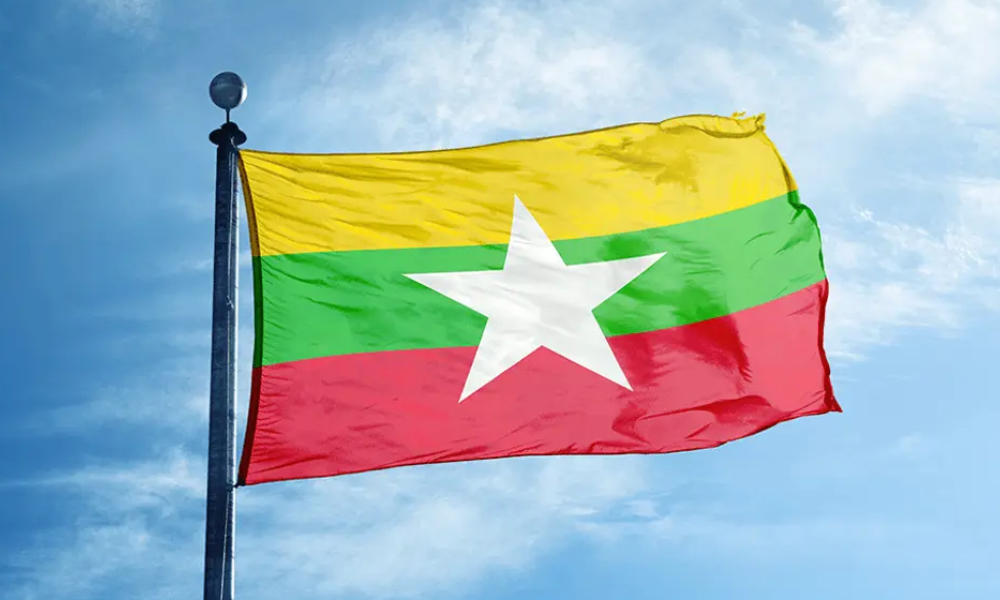
The problem is not that Asean lacks principles. It’s that the bloc has mastered the art of procedural avoidance; treating process as progress, and meetings as moral action.
Every summit produces the same symphony of phrases: “constructive engagement”, “inclusive dialogue”, “peaceful resolution”. But these are now hollow incantations in a region where the junta’s bullets speak louder than Asean’s words.
The upcoming elections planned by the Myanmar military for the end December 2025 will be the final act in this theatre of absurdity.
The generals will call it a democratic transition; the world will call it a sham. And Asean, unless it finds its courage, will call it “an internal matter”.
Let’s be honest: polls cannot possibly be free or fair when opposition leaders are in prison, independent media are criminalised, and the country’s largest ethnic and political movements are excluded or at war with the state.
To call such an exercise “inclusive” would be to mock the very language of democracy.
Betrayal, not neutrality
Here’s a reality Asean leaders might consider between photo ops: once those polls are held, the military will have zero incentive to honour the Five-Point Consensus.
The agreement, already moribund, will be flushed into the same diplomatic void that swallowed previous commitments, from human rights commissions that lack teeth to peace frameworks that never drew breath.
And when Asean insists on “inclusive elections” yet refuses to reject the military’s unilateral one, it doesn’t just look weak. It becomes complicit in legitimising a criminal regime.
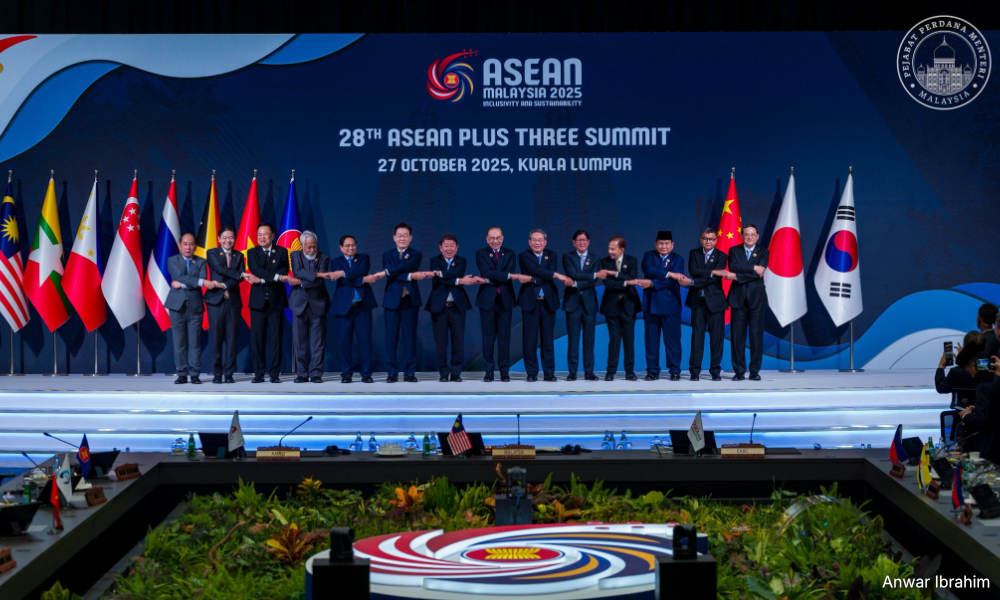
The bloc was founded on principles of regional peace, stability, and respect for fundamental freedoms. Silence in the face of atrocity is not neutrality; it’s betrayal.
For the people of Myanmar, bombed, silenced, and displaced, Asean has become the polite spectator clapping at the wrong moments. Each summit raises hopes, only to extinguish them in a haze of diplomatic euphemism.
“Non-interference” has morphed into abdication, while “consensus” has become a convenient shield for inaction.
Even Asean’s much-touted “centrality” now rings hollow. How central can a body be when it’s unable to take a central stand on the defining crisis of its time?
As member states like Indonesia and Malaysia attempt individual initiatives, the collective remains paralysed, trapped by its own doctrine of unanimity: a rule that effectively grants every authoritarian leader veto power over moral clarity.
It’s not rocket science
What Asean needs to do is embarrassingly simple.
First, issue a clear, collective statement: “We do not recognise the legitimacy of any election conducted by the Myanmar military.”
Second, withhold any endorsement or recognition of such a process, and that means no congratulatory notes, no observers, no seat at the table.
Third, deepen engagement with Myanmar’s legitimate democratic actors: the National Unity Government, ethnic organisations, and civil society that still dare to speak under fire.

This isn’t radical; it’s responsible. Anything less, and Asean’s Five-Point Consensus will remain what it already is: a fig leaf for paralysis.
Critics will argue that Asean’s charter limits what it can do, but norms evolve under pressure, and the bloc has broken precedent before.
It suspended Cambodia in 1997 following Hun Sen’s coup and excluded the Myanmar junta from high-level meetings after the 2021 putsch.
These moves didn’t destroy Asean. They preserved what little credibility it had left.
At a time when global attention is splintered, from Gaza to Ukraine, Southeast Asia cannot afford to be seen as a sanctuary for impunity.
If Asean fails to act, others will fill the vacuum: China and Russia, eager to legitimise the junta and exploit Myanmar’s chaos for strategic gain.
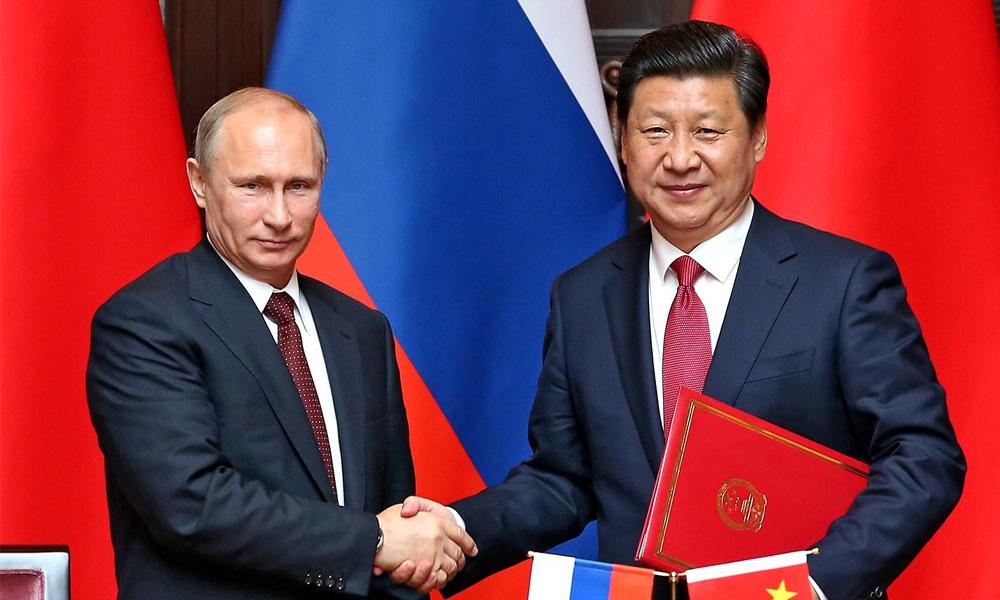
So yes, Anwar has brought world leaders together for dialogue, and that is no small feat. But fine speeches about democracy mean little when the fire next door is still raging and everyone insists the smoke is incense.
Asean likes to call itself a “family.” But a family that watches one of its own being strangled in silence is not a family. It’s an audience.
The art of doing nothing has never been so refined. - Mkini
MAHI RAMAKRISHNAN is a former journalist and now director of Beyond Borders, advocates for refugee rights, fairness, equality, and justice for all. She has little patience for political gimmicks.
The views expressed here are those of the author/contributor and do not necessarily represent the views of MMKtT.

No comments:
Post a Comment
Note: Only a member of this blog may post a comment.