


At a time when a simple plate of fried noodles at a mamak shop can cost between RM7 and RM10, a new social enterprise restaurant in Kuala Lumpur is making Malaysians look twice at what a fair meal should really cost.
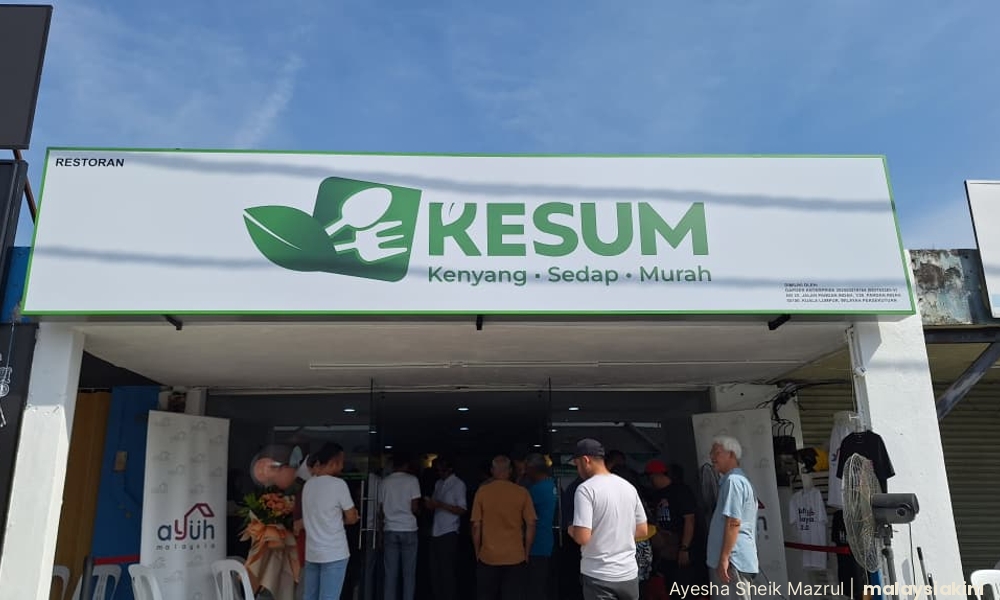
Located in the constituency of Pandan, Kesum, launched yesterday (Nov 8) under the Ayuh Malaysia initiative spearheaded by former economy minister Rafizi Ramli, promises hearty, home-style Malaysian dishes, all capped at a maximum price of RM5.
At Kesum, a plate of nasi lemak with fried chicken costs just RM4.90, fried noodles go for RM3.90, and even buffalo wings come in at RM4.99.
It’s almost a steal in comparison to nearby eateries, where similar dishes typically start at RM6 for basic fried noodles and can climb to RM10 or more with chicken or egg added.
For example, a single serving of ayam goreng kunyit at a popular chain located just next door costs RM12.50, more than double Kesum’s price.
Curious, impressed, and hopeful
For Amilia Abdul Rahman, a 45-year-old home-based food entrepreneur, Kesum’s RM4.90 fried chicken nasi lemak was something she had to see for herself.
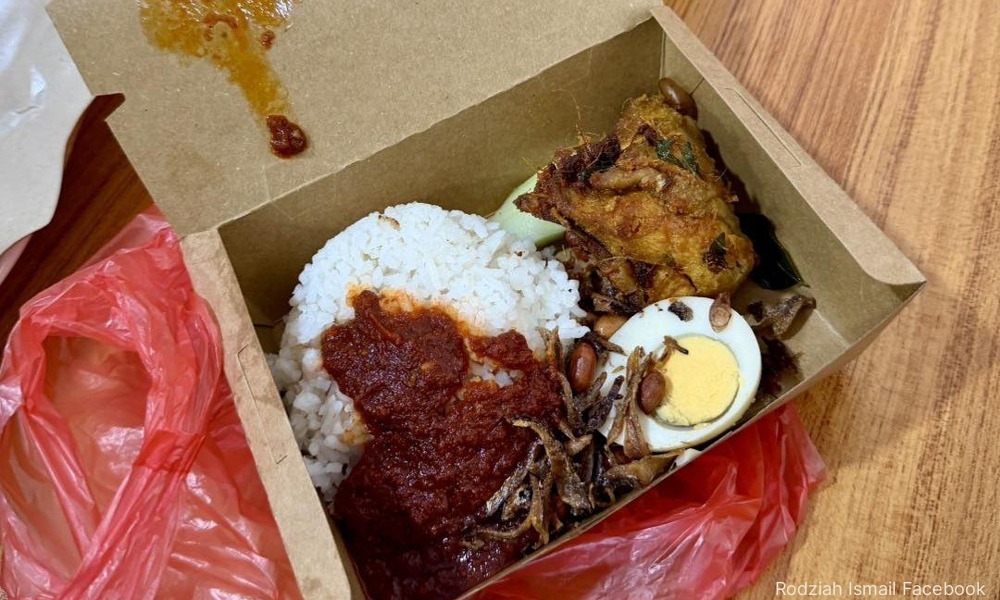
“For the price, it’s actually very reasonable,” she said, adding that the portion provides a balanced, full meal.
She noted that for breakfast elsewhere, she would normally spend RM3 to RM6, depending on portion and drinks, making Kesum’s pricing feel realistic.
But Amilia’s visit wasn’t just about the food, as she also wanted to observe the operations and assess what sets the business model apart.
“Giving low-cost food isn’t something new, so I want to know what the long-term benefit to the community is and whether it truly offers something different for society,” she said.
By the end of her visit, she admitted she was still weighing her impressions.
“It’s hectic and hot, I need time to think it out,” she said with a laugh.
Another customer, Nur Laila Kamaruddin, 63, came all the way from Port Dickson with her husband to try the food after seeing it online.
“Even in Port Dickson, you can’t find food this cheap,” she said.
Laila was utterly impressed by the food, praising the fragrant rice, juicy chicken, perfect sambal, and generous portions.
“I really hope they expand the business to other areas,” she added.
For Fauzi Kamal, 62, a veteran living in Cochrane, Kesum’s approach offers a fresh sense of fairness.
“At the mamak, one plate of rice with chicken and vegetables can easily cost RM7 to RM10.
“Here, chicken is RM1, drinks are RM1.50, plus the system is efficient. It’s good to see local youth running something like this instead of leaving it to foreign traders,” he said.
Fauzi also hopes the initiative grows, noting that affordable options benefit the community.
Behind Kesum’s RM5 model
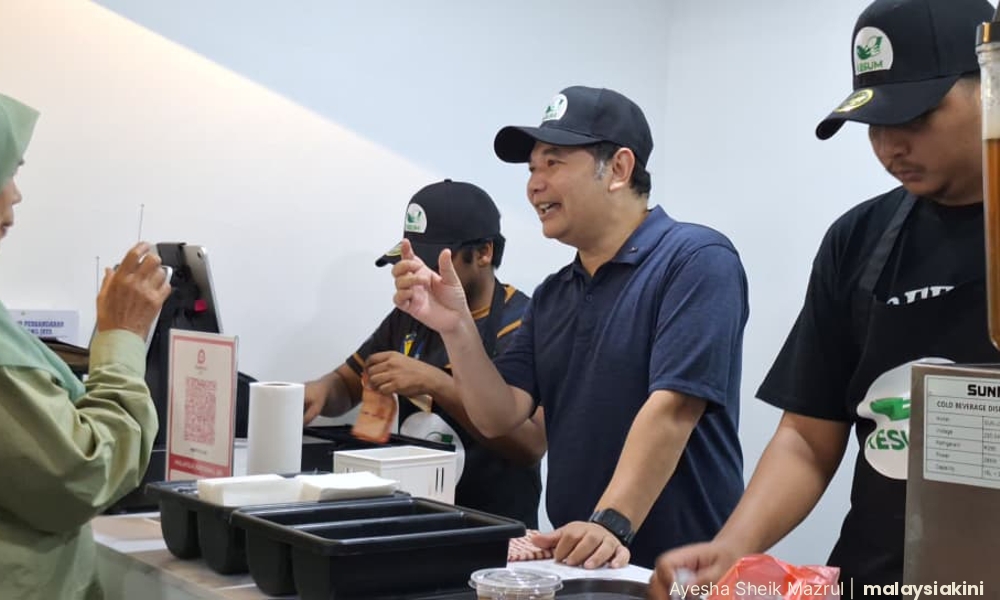
A day before the launch, Haqimi Zamri, 24, a former special officer at the Economy Ministry who now manages operations under Ayuh Malaysia, was orchestrating a final dry run with a team of rookies learning on the job.
“We’re finalising all the little things before our dry run tonight.
“None of the crew had prior restaurant experience, and everyone is learning on the job together,” he told Malaysiakini on Friday.
Haqimi explained that each shift runs with six workers rotating between the kitchen, cashier, and cleaning stations to ensure multi-skill training.
Additionally, the operation partner said that Kesum relies on a retort cooking system, turning the kitchen into a model of “food assembly”, akin to those in fast food restaurants, in order to save time and resources while ensuring consistency.
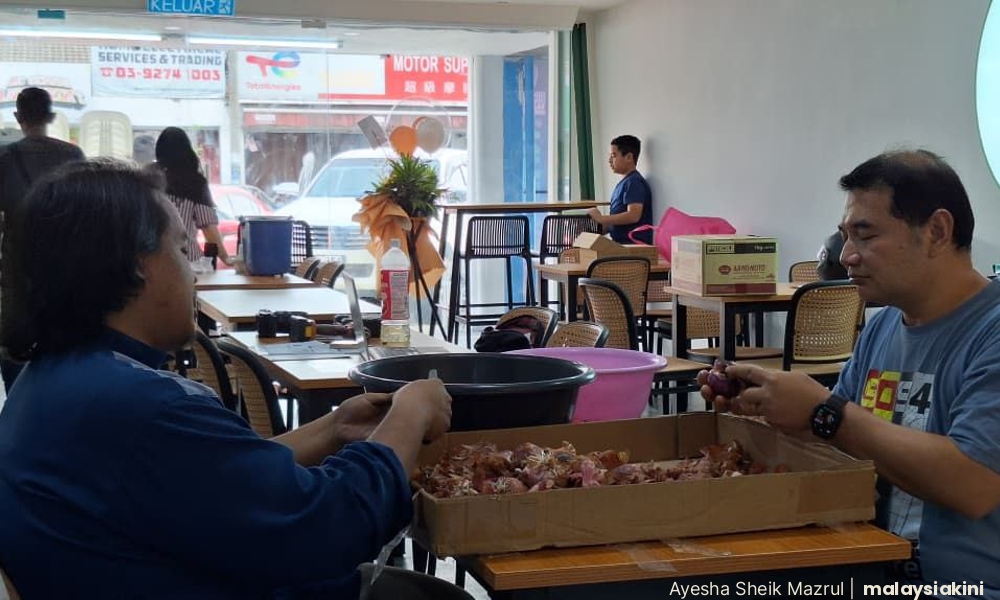
He mentioned that only the fried chicken is cooked fresh to maintain its crispness, a detail that might seem minor but reflects the restaurant’s focus on quality even at a low price point.
Arriving later in the evening, Rafizi moved briskly between stoves and storage shelves to ensure every last detail was ready for opening day.
“We need to make sure that by tonight, by 10pm, everything is ready,” he said while making checks around the store.
Rafizi, also Pandan MP, stated that Kesum’s pricing structure is a deliberate challenge to the idea that cheap food must mean low quality, built on the principle that cost efficiency can make meals accessible to all.
“The purpose is to prove that as a social company, where partners aren’t motivated by profit, we can reduce costs and still sell at this price,” he said, pointing out that the priciest meal at Kesum costs RM4.90, drinks are RM1.50, and water is free.
Rafizi explained that by eliminating private profit and focusing on high sales volume, Kesum can maintain a 20 percent margin, even if the profit per item appears small, thanks to lower operational costs.
“This proves that good food doesn’t need to cost RM10 if you remove unnecessary markups,” he added.
If Kesum’s financial model holds steady over the next three months, Rafizi said the concept could scale up nationwide, offering Malaysians both affordable meals and a new way to think about ownership in the food business.
“It’s not just a cafe, it’s a challenge to the idea that high prices are normal, and a reminder that fair food is possible,” he said.
From Fleximart to Kesum
Rafizi’s social enterprise journey began with Fleximart, a pilot store under Ayuh Malaysia offering affordable meals and groceries while sharing profits with workers and small-scale suppliers.
The store operates on a similar low-margin, high-volume model, which is designed to provide fair prices and create income opportunities for home-based entrepreneurs, while also testing new ways to make quality food and daily essentials accessible to local communities.
At the Fleximart launch, locals lined up to try its RM5 meals, with many praising the concept as practical and community-focused.
The cafe’s offerings, including ready-made meals from vending machines and hot food under RM5, showcased how a social enterprise can combine affordability, quality, and opportunity for small-scale suppliers, setting a precedent for ventures like Kesum. - Mkini

No comments:
Post a Comment
Note: Only a member of this blog may post a comment.