Effects of the govt's pending appeal on Sabah verdict
The federal government’s announcement not to appeal against the High Court’s recognition of Sabah’s 40 percent constitutional entitlement under Article 112C and the 10th Schedule is a welcome and significant development - but one that must be received with cautious optimism.
It marks an important step forward, signalling that Putrajaya now accepts Sabah’s constitutional right to the 40 percent special grant - a safeguard entrenched at the formation of Malaysia.
Yet, the intended appeal on parts of the judgment’s reasoning means the implications must still be watched carefully, particularly as they could affect how past non-compliance and arrears are treated.
According to statements issued by the Prime Minister’s Department and the Attorney-General’s Chambers (AGC), the federal government will not appeal against the High Court’s recognition of Sabah’s 40 percent entitlement.
However, it intends to file an appeal regarding defects in the judgment’s reasoning - particularly the findings of abuse of power and issues surrounding the review orders.
The statements also confirmed that negotiations between the federal and Sabah governments will begin immediately to implement the constitutional review process under Article 112D.
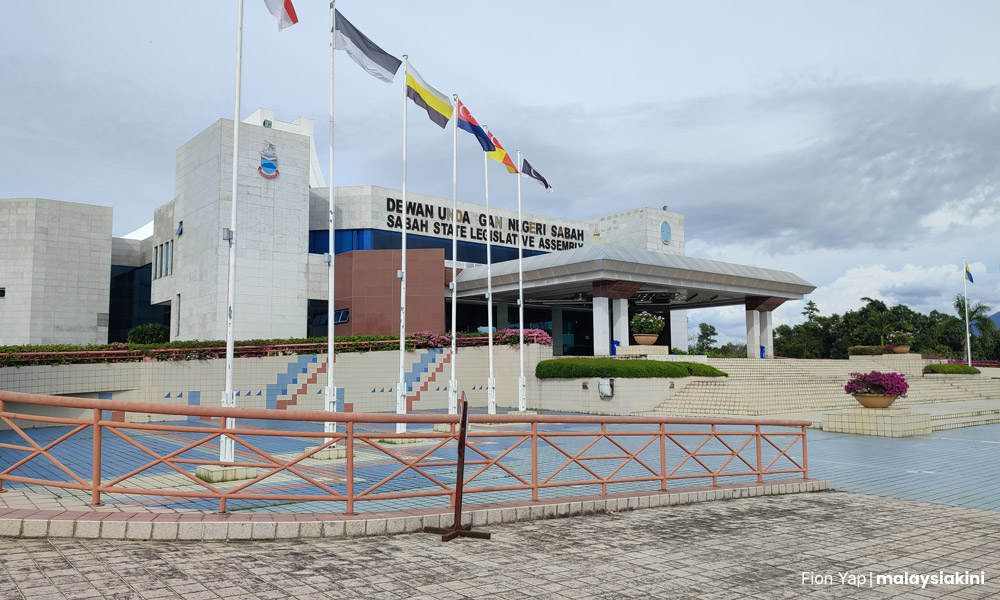
Sabah legislative assembly
The Notice of Appeal has not yet been filed, and until it is lodged, we cannot be certain of the precise grounds of appeal.
Subject to the contents of that Notice, the intended appeal is expected to address:
The court’s declaration that both the federal and state governments acted unlawfully - with abuse of power, illegality, irrationality, procedural impropriety, and disproportionality - for failing to carry out proper constitutional reviews since 1974; and
The court’s finding that the Second, Third, and Fourth Review Orders made under Article 112D were invalid, as they did not comply with constitutional requirements for lawful and periodic financial reviews.
Effect of the pending appeal
If the appeal is indeed limited to those parts of the judgment, the operative portions of the High Court’s decision, which confirmed Sabah’s 40 percent entitlement and directed both governments to review and implement it, remain binding and enforceable.
Practically:
The 40 percent entitlement is not under appeal.
The appeal does not suspend implementation of the 40 percent grant or the duty to begin negotiations.
What is potentially being re-examined is the court’s reasoning on fault and the validity of the review mechanisms, once the Notice of Appeal is filed.
However, if the appellate courts overturn either or both of those findings - the findings of abuse of power and the invalidation of the Second, Third, and Fourth Review Orders - this could affect the High Court’s treatment of the “Lost Years” (1974–2021).
If the review orders are restored as valid, they could be treated as having lawfully modified the 40 percent entitlement, meaning there would no longer be a constitutional gap - and the “Lost Years” might no longer be payable.
Likewise, if the appellate courts set aside the declaration that the federal government acted unlawfully for failing to conduct proper constitutional reviews with the state government of Sabah, that could remove the legal finding of wrongdoing.
The delay in conducting reviews could then be viewed as an administrative lapse rather than a constitutional breach, making arrears for the Lost Years a matter for negotiation rather than a judicial entitlement.
Nevertheless, the 40 percent constitutional right itself remains intact moving forward. The appeal, as stated by the AGC, goes only to the reasoning, not the right.
In summary:
The 40 percent entitlement stands - it is not currently under appeal.
The appeal is expected to be limited, but the exact grounds await the filed Notice of Appeal.
The High Court’s operative orders remain binding.
If the appeal fails, the findings of abuse of power and invalid review orders stand, and the “Lost Years” remain payable.
If the appeal succeeds, the review orders may be restored as valid, and the “Lost Years” may no longer be claimable - though Sabah’s 40 percent right moving forward remains constitutional.
Negotiations must now proceed to give effect to the constitutional grant and restore compliance with Articles 112C and 112D.
By agreeing to commence negotiations immediately, the federal government has, in effect, accepted the High Court’s mandamus order to conduct a lawful and timely review under Article 112D of the Federal Constitution.
This is a moment that calls for clarity, commitment, and constitutional fairness.
While the federal government’s acceptance of Sabah’s 40 percent rights is a step in the right direction, it should be received with cautious optimism.
The forthcoming Notice of Appeal and its handling will reveal whether this commitment is genuine - and whether the constitutional promise to Sabah will finally be honoured in full, not just in words. - Mkini
ROGER CHIN is the immediate past president of the Sabah Law Society.
The views expressed here are those of the author/contributor and do not necessarily represent the views of MMKtT.
No comments:
Post a Comment
Note: Only a member of this blog may post a comment.



No comments:
Post a Comment
Note: Only a member of this blog may post a comment.