


A grassroots activist says the Kadazandusun Murut Rungus are united in their aspirations, but have been fragmented by political rifts over many years.
Speaking on condition of anonymity, the activist said the KDMR people were united in most aspects — especially on matters of culture, heritage, Sabah’s rights, and their own aspirations.
However, he said the splintering of the community into numerous political parties was driven by an older generation of leaders, who repeatedly broke away to form new entities due to squabbles and disagreements.
Referring to a recent video in circulation, he said the senior KDMR leaders seen urging Sabahans to unite behind local parties were the very figures responsible for creating a rift in the community.
These individuals, he said, did little to stop West Malaysian parties from allegedly stripping Sabah of what rightfully belongs to the state, and had even benefitted from it to a certain extent.
“Now they’re talking about uniting and fighting, but fighting against what? As far as I know, they’re just fighting each other, using Malayan parties and the federal government as the bogeymen to win more support.
“They may talk about the unity of the KDMR but it feels like they just want to be warlords. All these KDMR leaders are singing the same song and just want to outdo each other,” he told FMT.
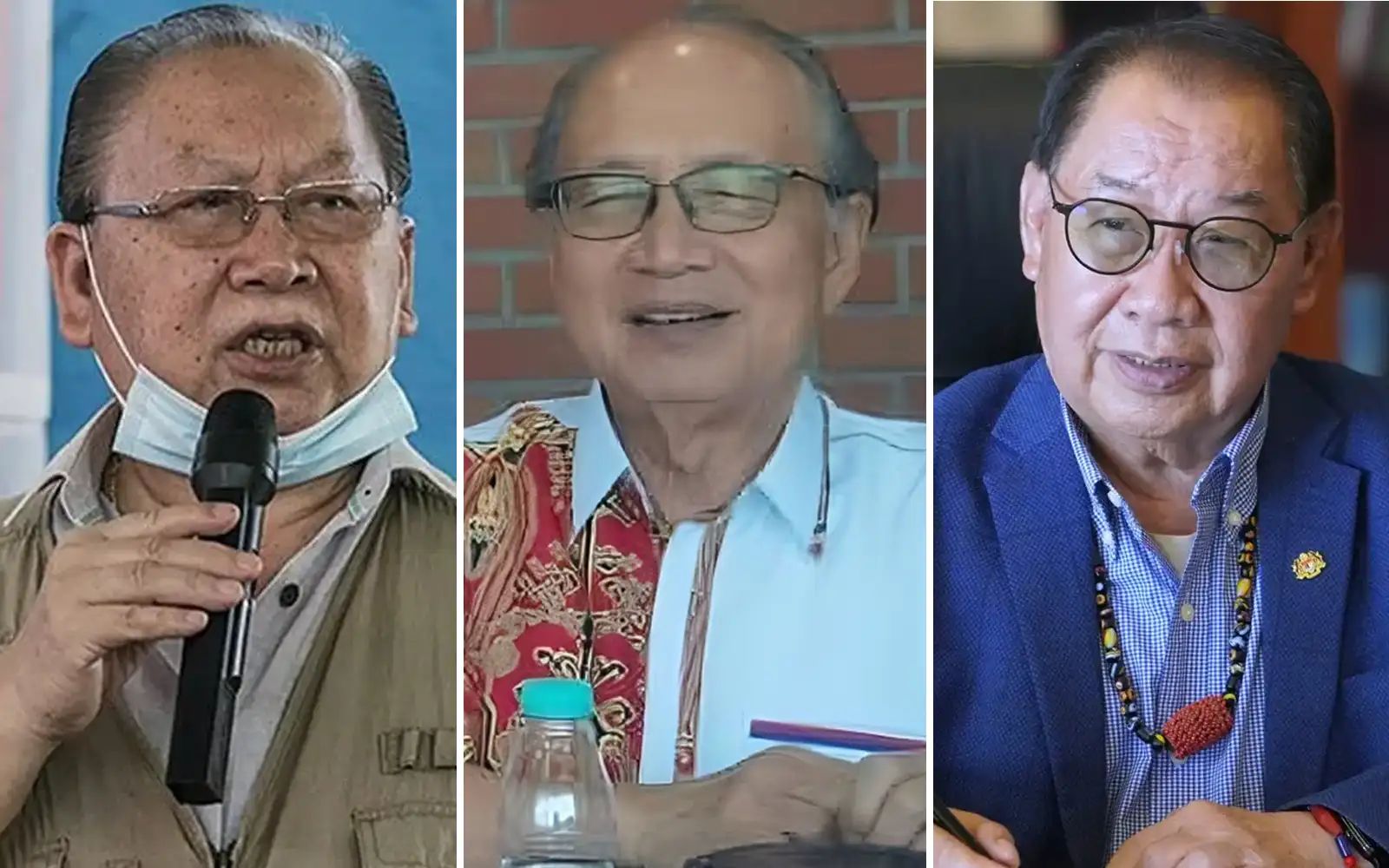
Senior KDMR leaders like Parti Bersatu Sabah (PBS) founder Joseph Pairin Kitingan, Upko founding president Bernard Dompok and Parti Solidariti Tanah Airku (STAR) president Jeffrey Kitingan recently appeared on a video to urge Sabahans to unite and back Sabah-based parties in the Nov 29 state election.
They were also joined by PBS acting president Dr Joachim Gunsalam, Upko president Ewon Benedick and former chief justice Richard Malanjum.
Jeffrey, Ewon and Joachim have all maintained that their KDMR‑based parties share a common vision for Sabah, even as they prepare to face off against one another at the polls. In particular, STAR and Upko are set to clash in more than 20 constituencies.
Upko recently left PH, while STAR quit the Gabungan Rakyat Sabah (GRS) coalition, with both pushing their respective “Sabah First” and “Sabah for Sabahans” slogans.
Pairin founded PBS in 1985 after he broke away from Berjaya, but his party also suffered from rifts that led to the formation of multiple splinter parties, including Upko, Parti Bersatu Rakyat Sabah, the Sabah Progressive Party (SAPP) and the now-defunct Parti Akar.
Malayan hand in KDMR political fragmentation?
Political analyst Lee Kuok Tiung said the fragmentation of the KDMR parties had occurred across generations and has been the reality for many years now.
What has changed, he said, is the rise of local party sentiment — prompting more of these parties to pivot and capitalise on the growing wave.
However, Lee observed that the local parties were themselves divided.
“If they merge and work together, then there might be a significant impact. KDMRs basically share the same spirit and aspirations despite being from different parties,” he said.
Lee, of Universiti Malaysia Sabah, said efforts to pull all the KDMR parties together were not new, with current caretaker chief minister Hajiji Noor managing to bring PBS and STAR under the same umbrella for several years.
Lee said the fragmentation had less to do with politicians grappling for power and positions, and was more about differing approaches to championing Sabah rights.
Lee suggested that this may be partly due to the “Malayan influence”, adding that it may have been the result of a “divide and conquer” strategy adopted in the past.
“In those days, ‘they’ would encourage you to quit your original party, register a new party, and become party president.
“They introduced the chief minister rotation system to please everyone, with each one getting two years in the position each term,” he said.
The rotation system was introduced in 1994 by then prime minister Dr Mahathir Mohamad, with the role shared between leaders from three Sabahan communities: the Christian Bumiputera, Muslim Bumiputera and Chinese.
Local sentiments real, but without frontrunner
According to the anonymous KDMR activist, the local party sentiment is very strong within the community. However, due to political fragmentation, no one party appears to be the frontrunner ahead of the state polls.
That fragmentation could even split the votes, which may benefit other parties in the race, he said.
Lee said that overall, GRS, buoyed by the advantage of incumbency, remains the strongest contender heading into the polls, while Warisan is increasingly emerging as the most talked‑about alternative force.
The analyst said Warisan’s decision to go solo was both ambitious and risky, as Sabahans may question its future plans. Voters, he said, would want to know in advance who its partners would be when seeking to form a government.
Lee acknowledged that Warisan appears to be popular on social media but said this may be more the result of platform algorithms rather than actual sentiment on the ground.
Commenting on the possibility of a hung state assembly, Lee said: “We cannot rule out any possibility at this point. No one should feel complacent with their position but instead work harder to win.” - FMT

No comments:
Post a Comment
Note: Only a member of this blog may post a comment.