


It seems every Tom, Dick, and Harry has been talking about the issue involving the former senior political secretary of the prime minister, who was allegedly implicated in corruption when businessperson Albert Tei reportedly spent almost RM629,000 on him after being purportedly assured that he could recoup the money channelled to politicians in Sabah.
Such a juicy narrative was then followed by another bombshell via the revelation of a subsequent video alleging that Prime Minister Anwar Ibrahim was also aware of Tei’s plan to secretly record Sabah leaders in connection with the mining scandal.
A DAP leader cum MP reportedly disputed the authenticity of the aforesaid video and claimed such a piece of evidence has been “doctored”, hence it cannot be used as proof. Some people have asked me, “Is he an expert?” or “Is there any admission that the video was ‘doctored’?”
In the meantime, a woman accused of being a proxy to Shamsul Iskandar Akin denied the matter revealed in the published video.
Nonetheless, she admitted to meeting Tei and, in turn, accused him of spreading lies and slander against her.
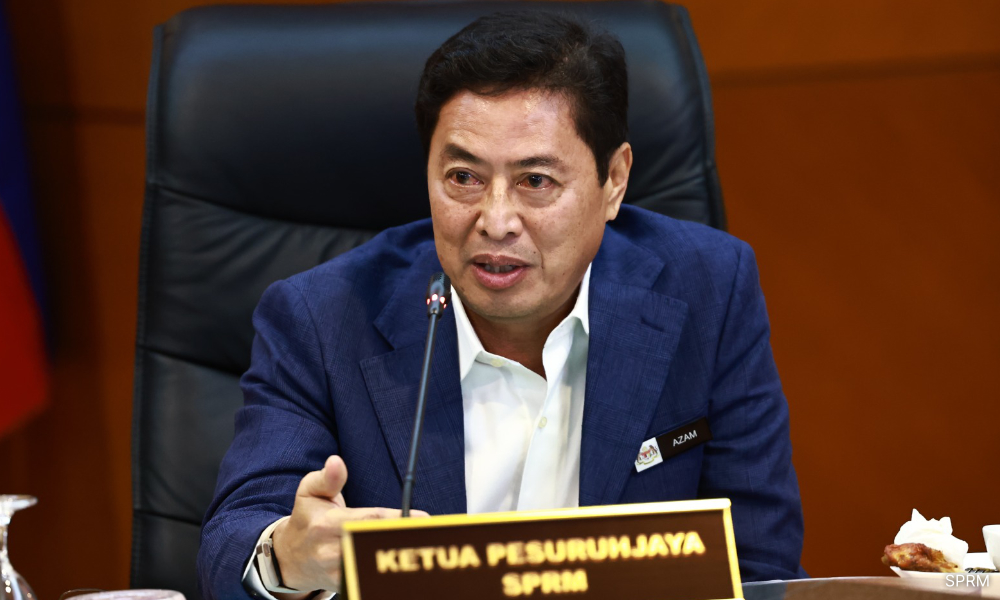
As expected, the PAS information chief jumped onto the bandwagon by insisting the MACC chief, Azam Baki, be recused from the probe on Shamsul after it was found out that Shamsul had discussed Tei’s case with Azam in another explosive video.
Truth be told, I am a bit reluctant to comment on this issue despite being constantly bombarded with many calls asking for my legal and political views on the issue.
As usual, I am only interested in the legal issues. In this note, my sole aim is to merely highlight some pertinent legal issues which might arise when some statements are made by some people about the issue.
In politics, people tend to judge this kind of issue based on perceptions; hence, suspicions alone are sufficient to create a negative perception.
In law, on the contrary, impunity and culpability are primarily governed by a branch of law known as the law of evidence. As a general rule, any presented evidence ought to be relevant and admissible for the same to be duly taken into account. Thereafter, the consideration of the weight of such evidence follows.
Anyway, any relevant evidence ought to have a considerable probative value, and in court, the implicated person has every right to ask the court to exclude any evidence if the prejudicial effect of such evidence to him or her is found to have outweighed its probative value.
Burden of proof shifts again
In the present case, Tei seems to bear the burden of proof in proving his allegation against Shamsul. So far, he has adduced some evidence to prove his case in the court of public opinion. Whether such evidence would be relevant, admissible, and in turn carry considerable weight in the court of law remains to be seen.
How about the video? When there is a claim that the video has been “doctored”, the evidentiary burden is now shifted to the maker of the claim that the video was “doctored” or tampered with.
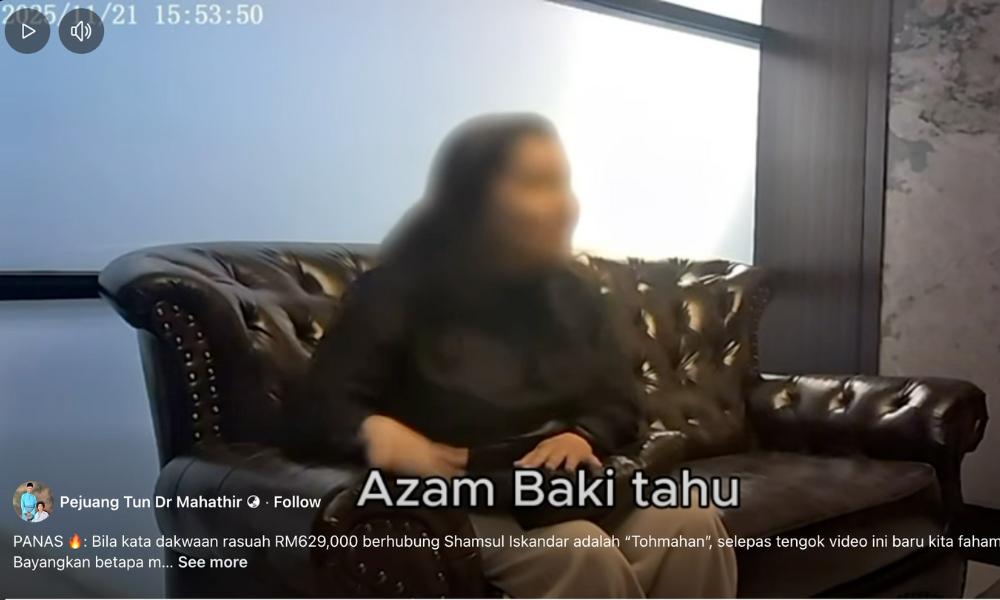
It is interesting to note here that the lady who appeared in the video never disputed her meeting with Tei, even though she had no knowledge that the meeting was clandestinely recorded in a video.
Assuming such a clandestine video recording was unlawful or illegal, what is the legal status of such evidence? Interestingly, there are many court judgments which held that such illegally obtained evidence would be admissible if the same is relevant based on the oft-cited case of R v Kuruma.
Key figures may face questioning
Since there is an allegation that Anwar was also aware of Tei’s plan to secretly record Sabah leaders in connection with the mining scandal, legally speaking, Anwar might become a potential witness too.
Perhaps MACC needs to record his statement, too. Otherwise, the investigation might be incomplete.
The same goes for Azam, as he was alleged to have had a discussion with Shamsul, too. Azam’s statement needs to be recorded, too.
As pointed out earlier, all the aforesaid points are the possible legal points that might be raised on this new explosive episode. - Mkini
HANIPA MAIDIN is a former deputy minister of law.
The views expressed here are those of the author/contributor and do not necessarily represent the views of MMKtT.

No comments:
Post a Comment
Note: Only a member of this blog may post a comment.