


PARLIAMENT | The government should consider imposing mandatory fines for those who forward false information, suggested Dr Zulkafperi Hanapi (Independent-Tanjong Karang) in Parliament today.
Zulkafperi urged the implementation of “graduated enforcement guidelines” as a deterrent to social media misinformation, similar to those outlined in other countries, such as Australia’s Online Safety Act and the EU Digital Services Act.
“The issue of spreading fake information on social media affects everyone regardless of age. Children, adults, and senior citizens often forward messages without any malicious intent.
“The majority of these cases are also categorised as ‘low harm misinformation’, which may not necessarily require a police investigation to be conducted.
“So my question is, will the government be willing to consider these mandatory compounds as a pre-enforcement deterrent, before any police investigations or legal action can be taken?” Zulkafperi (above) asked, in a supplementary question during the minister’s question time in the Dewan Rakyat.
In response, Deputy Communications Minister Teo Nie Ching said that the ministry would consider weighing in on his suggestions.
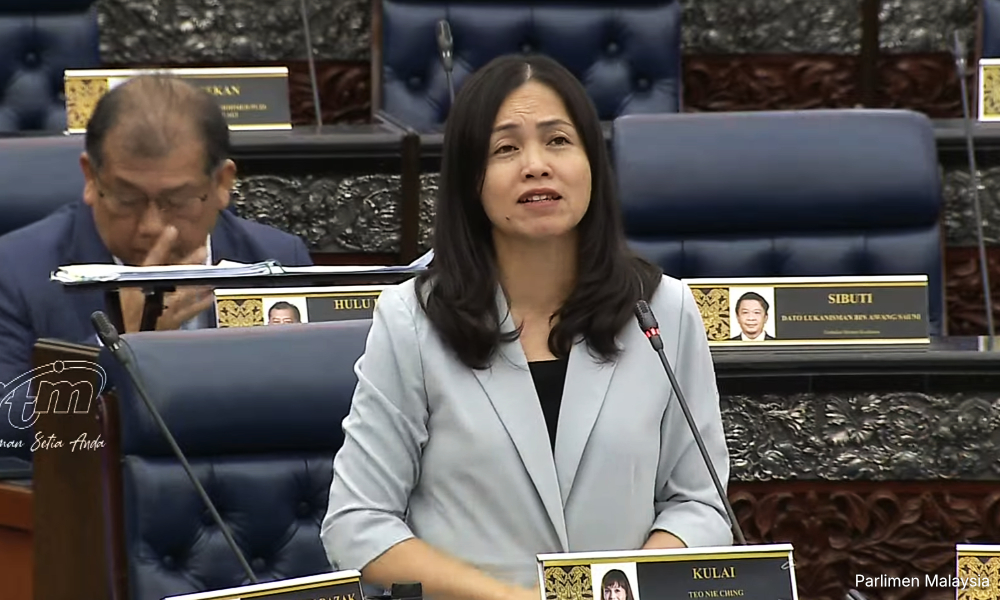
She said that under the Communications and Multimedia Act (CMA), such compounds can already be imposed for spreading misinformation.
“I will ask the MCMC to re-evaluate if existing mechanisms under CMA are similar to what was suggested by Tanjong Karang.
“I also believe that when MCMC or the police want to take action, prior approval from the AGC is very important. It is the AGC that makes the decision on whether such cases should be issued compounds, or if someone should be brought to court for prosecution,” she said.
People must play their part
Alongside government regulations, Teo also stressed that Malaysians should not act irresponsibly by simply forwarding false information on social media.
“The rakyat must remain digitally savvy, so we do not simply forward random information that we receive. Because otherwise, it could unnecessarily cause public panic,” she added.
In Malaysia, WhatsApp is the most widely used messaging platform, with at least 25 million users.
The messages on the app are end-to-end encrypted, meaning the government would not be privy to the messages sent between users. Thus, any proposed enforcement on forwarded messages would have to rely on reporting by message recipients.
Likewise, WhatsApp does not have mechanisms to trace the source of forwarded messages. Instead, the app only notifies users if messages have been frequently forwarded.
However, despite encryption, WhatsApp does collect and store various forms of metadata, including who sent messages and to whom, just not the content of said messages.
Teo also emphasised that it was still important to improve digital literacy among all age groups, and said that so far in 2025, the government had conducted digital literacy campaigns across 8,000 schools nationwide.
M’sia not first to restrict social media for minors
Regarding Malaysia’s new laws restricting social media use for children under 16, Teo also reminded that Malaysia was not the first country to implement such regulations.
She cited how the Australian government had conducted assessments with platform providers, and beginning next month, will attempt to shut down accounts belonging to underage users.

“However, for now, the Malaysian government suggests that we use MyDigital ID as a tool and mechanism to detect the age of social media users.
“So this is something we will discuss further with platform providers so we can ensure those below 16 do not have social media accounts,” she said.
Yesterday, Communications Minister Fahmi Fadzil said Malaysians below the age of 16 will not be allowed to sign up for social media accounts from next year as part of the government’s efforts to strengthen online safety for children.
Fahmi said they expected platform providers to be ready to implement eKYC systems by next year, using official documents such as MyKad, passports, and MyDigital ID to verify users’ ages.
Earlier this year, the cabinet raised the minimum social media age from the earlier proposed 13 to 16. These regulations are part of broader protections under the Online Safety Act, effective on Jan 1, 2026.

No comments:
Post a Comment
Note: Only a member of this blog may post a comment.