


SABAH POLLS | As Sabah moves deeper into its election campaign, Joseph Pairin Kitingan has delivered one of his most pointed interventions in recent years, warning that the state is “sick”.
He stressed that the political “disease” weakening Sabah must be identified and removed before it worsens.
Speaking at a roundtable broadcast by North Borneo TV and Sabah Way Forward, the former chief minister was arguably the most senior figure at the table.
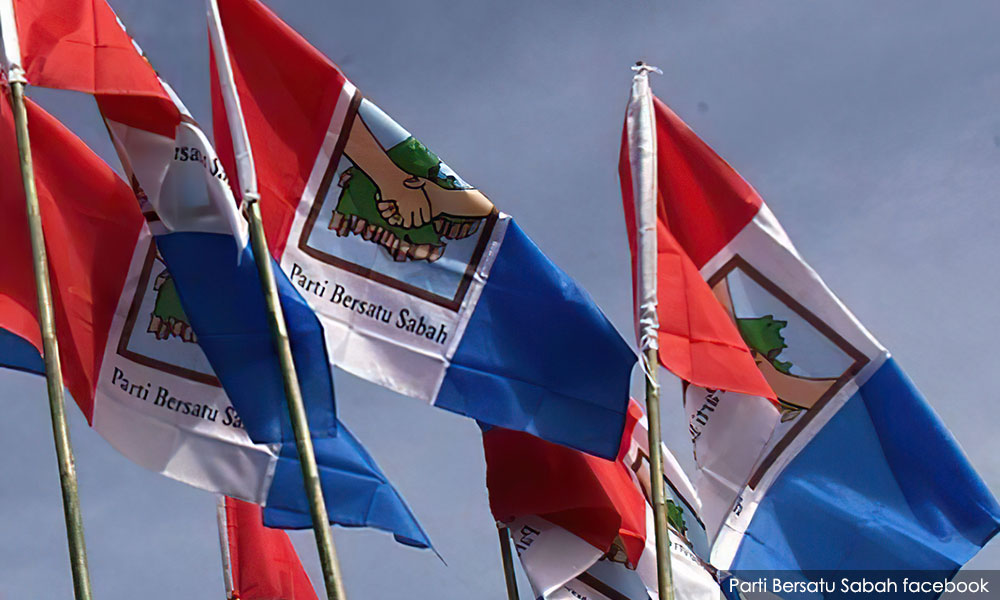
Pairin (above), founder of Parti Bersatu Sabah (PBS), presided over a party from which several leaders later charted their own paths, including Bernard Dompok, who went on to form Upko.
The session brought together political personalities with roots in PBS’ early era.
Alongside Pairin were Bernard, Richard Malanjum, Jeffrey Kitingan, PBS acting president Dr Joachim Gunsalam, and Upko president Ewon Benedick.
While the discussion remained civil in tone, Pairin’s remarks carried an undercurrent of unease, targeting both federal influence and the direction his own party has taken under newer leadership.
Pairin anchored his intervention with a medical analogy that framed the discussion.
“In medical terms, if something needs to be thrown away, throw it away. Sabah is sick,” he stressed.
He recalled telling Prime Minister Anwar Ibrahim: “You are the medicine. Help solve Sabah’s problems.
“But there was no answer,” he said.
His analogy suggested that Sabah’s chronic political issues - from federal-state tensions to stalled development - have long gone untreated. It also implied that addressing them may require removing the elements of the system that continue to cause harm.
Red flags and coded signals
At several points, Pairin drew attention to the political landscape of the campaign.
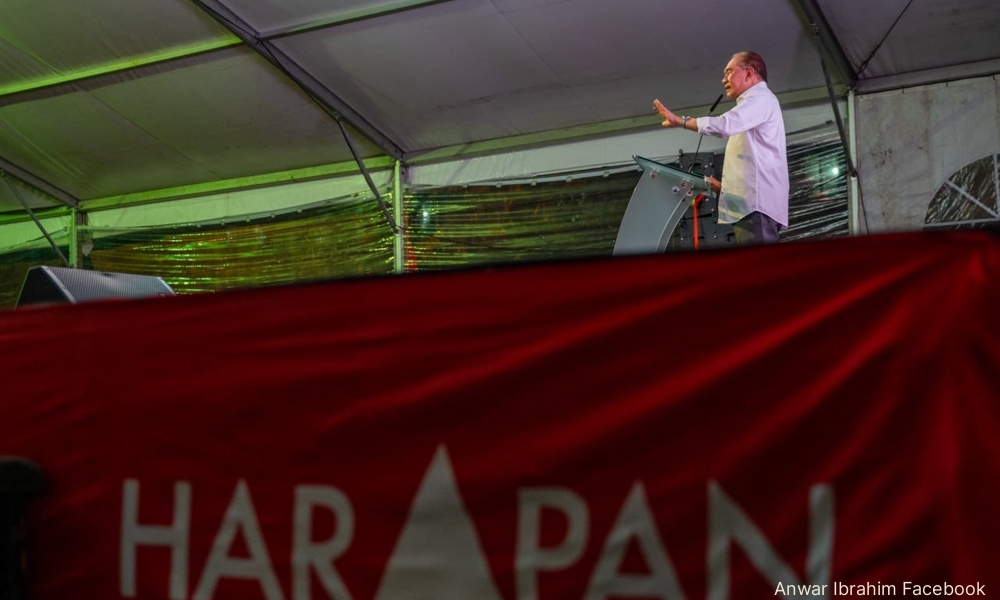
“You see a lot of red. Who is red? (Pakatan) Harapan. Madani. Federal power. They want to continue controlling us,” he said.
The symbolism was deliberate. Harapan, a national coalition contesting against Sabah-based parties, has increased its presence in the state through Gabungan Rakyat Sabah, an alliance that includes PBS.
Pairin’s remarks, occasionally punctuated with sharp glances at Joachim, appeared to signal discomfort with PBS’ close alignment with the federal bloc.
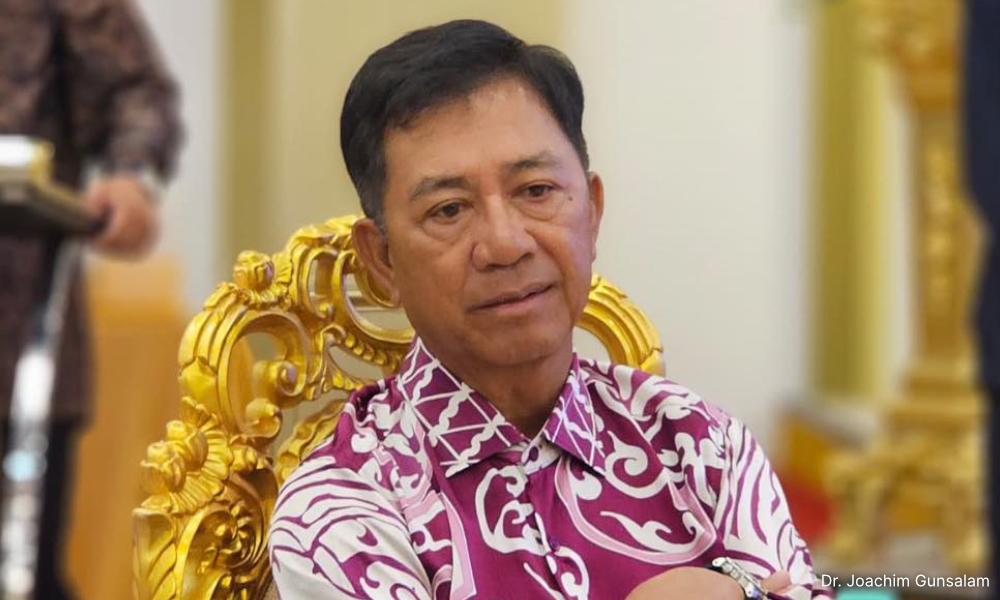
While he did not name Joachim directly, his references to external control and internal vulnerability suggested a veiled critique of the current leadership of the party he founded in the mid-1980s.
Founder speaks to the heirs
The room’s dynamics reflected Sabah’s wider political history. PBS was once the state’s most influential multiracial party.
From it emerged divergent paths: Jeffrey’s Parti Solidariti Tanah Airku (Star), Bernard’s Upko, and a generation of leaders now heading other parties.
These parties, which enjoy significant support among Kadazan-Dusun and Murut communities, are widely recognised as fragmented, with numerous factional groups like Parti Kesejahteraan Demokratik Masyarakat (KDM) still active today.
As the founder, Pairin’s words carried the weight of a patriarch addressing a family that has grown in different directions. His call for unity and clarity was both a general appeal and a reminder of PBS’ founding mission: defending Sabah’s autonomy.
“Political parties aside, we must unite. If we do not, we will be easily controlled like puppets,” he cautioned.
Pairin argued that Sabah’s constitutional position has weakened over time.
“We entered Malaya’s control. We do not have our own army. They continue to control us, and that has weakened us,” he said.
He contrasted Sabah’s gradual progress with Sarawak’s more assertive approach to reclaiming state rights, citing a recent High Court ruling that favoured Sabah’s interpretation of its 40 percent revenue entitlement.
Yet he questioned the federal government’s response.
“They say they will not appeal the 40 percent entitlement, only other parts, but to me, this is camouflage - ‘silap mata’ (magic) to delay and disillusion us,” he said.
He added, gesturing toward Upko’s Ewon: “Our own friend here left the federal cabinet over this.” - Mkini

No comments:
Post a Comment
Note: Only a member of this blog may post a comment.