


Tomorrow, Sabah goes to the polls in what will be remembered as the first state election where the battle lines are unmistakably clear: Sabah-based parties versus Malayan parties.
Gone are the days when the distinction could be blurred with clever branding, joint logos, or promises of “one big happy Malaysian family”. This time, the voter can see exactly who answers to Kota Kinabalu and who still takes instructions from Putrajaya or the party warlords in Kuala Lumpur. The masks are off.
This clarity did not appear overnight. It is the direct consequence of the “40 percent revenue verdict” delivered by the Federal Court in 2023 and the federal government’s immediate decision to appeal it (although they deny it).
For decades, Sabahans were told that the Malaysia Agreement 1963 (MA63) was a sacred document that the 40 percent special grant on net revenue was an inalienable right, and that any federal government - be it BN, Pakatan Harapan, Perikatan Nasional, or the unity government - would honour it in letter and spirit.
When the court finally ruled in Sabah’s favour, the people expected the federal government to comply gracefully. Instead, Putrajaya appealed, confirming in the most public way possible that when push comes to shove, federal interest will always trump Sabah’s rights. Trust, already threadbare, snapped completely.
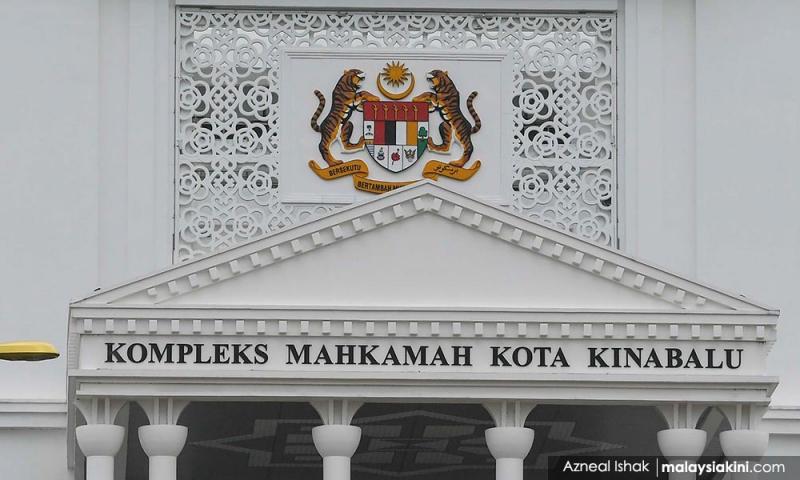
The appeal was not just a legal manoeuvre; it was a political declaration that Sabah remains a resource colony whose claims can be postponed indefinitely.
That betrayal has fundamentally changed the way Sabahans think about the federal government. The old reflex of “We send MPs to Kuala Lumpur to fight for us” is dying.
People now understand that no matter how many Sabah ministers sit in the federal cabinet, no matter how many deputy prime minister posts are dangled, the moment Sabah demands what is rightfully hers- oil royalties, revenue rights, control over education, health, land - the federal core will close ranks.
The 40 percent appeal drove the point home with brutal clarity: the federal government does not see itself as a partner; it sees itself as the owner.
This realisation has inevitably turned eyes towards the Sarawak model. Sarawak, with Gabungan Parti Sarawak (GPS) firmly in control since 2018, has shown that a state ruled exclusively by local parties can extract concession after concession from Putrajaya without ever surrendering the state government itself.
GPS negotiates as an equal, not as a supplicant. Sabahans are asking themselves: if previous models - Berjaya, Parti Bersatu Sabah (PBS) pairing with BN, United Sabah National Organisation (Usno), PBS stand alone, BN’s rotating chief ministers, Warisan-Harapan, Gabungan Rakyat Sabah (GRS)-PN, GRS-Harapan - have all failed to secure Sabah’s rights permanently, why not try the one model that is actually working just next door?
Not Sabah v Malaya
At the heart of this election lies the Kadazan-Dusun and Murut community. For decades, the community vote has been split, and its leaders have jumped to whichever Malayan coalition offers the best personal deal. The result? A divided community that punches below its demographic weight.
If their votes remain fractured tomorrow, the window for genuine Kadazan-Dusun and Murut political unity may slam shut for another generation. Malayan parties understand this perfectly; that is why they pour money and promises into keeping multiple Kadazan-Dusun and Murut parties and candidates alive. A divided one guarantees continued proxy rule.

The Chinese community is facing the same dilemma. This election provides them with a clear choice - Malayan parties or local parties. If they vote as a bloc, they will probably decide the outcome of up to a dozen seats.
Let us be very clear about what this election is not. Despite the noise from cybertroopers and certain Peninsular Malaysia commentators, this is not a “Sabah v Malaya” tribal war. The real question is far more practical: which coalition or party is capable of representing Sabah’s interests to the maximum at the federal level?
Sixty years of history provide the answer with depressing consistency. Every single time Sabah leaders joined Malayan parties, the pattern repeats itself. They roar in Kota Kinabalu, they whisper in Putrajaya, and when the chips are down, they fold. All Sabah leaders eventually compromised when federal pressure was applied.
The distortion peddled online, that voting for local parties equals extremism or separatism, is deliberate disinformation. The real extremism is the continued extraction of Sabah’s oil and gas, the poverty rates that remain among Malaysia’s highest, the lack of control over federal grants, the systematic underdevelopment of the interior, and inadequate security on the east coast.
Voting for local parties is not hatred of Malaya; it is the rational response of a people who have tried every other formula and been betrayed every single time.
Not about race or religion
Taken collectively, the choice tomorrow is remarkably simple. Sabahans must vote for local parties and install a state government composed exclusively of Sabah-based parties.
Anything else guarantees that the next time Sabah demands its 40 percent, or control over its continental shelf, or the return of Labuan, the chief minister will once again be forced to back down because his coalition partners in Putrajaya hold the real power.
Malayan parties, even when led by Sabahans, can never place Sabah first. Their national leadership, their funding, and their future ambitions are all tied to the peninsula base. History has shown, again and again, that when Kuala Lumpur says “Jump”, Sabah leaders in Malayan parties ask “How high?” on the way up.
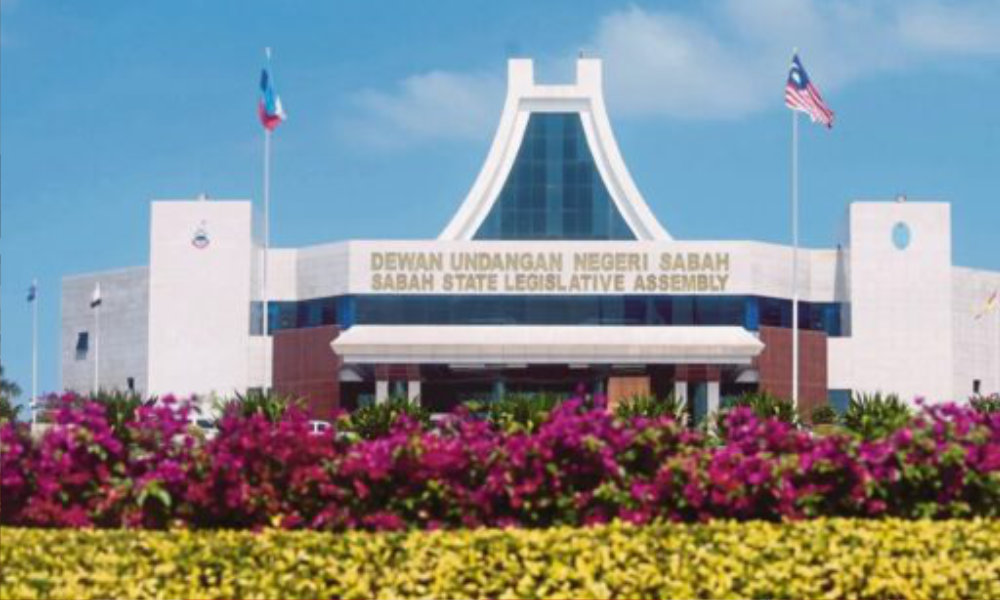
This is not about race. It is not about religion. It is about power and who wields it on behalf of whom. Sarawak has proven that local rule works. The 40 percent appeal has proven that federal goodwill is a myth. The Kadazan-Dusun and Murut and the Chinese communities stand at a historic crossroads.
Tomorrow, Sabahans have the chance to do what Sarawak did: take back their state, install a government that answers only to the rakyat of Sabah, and negotiate with Putrajaya from a position of strength instead of perpetual subservience.
The lines have never been clearer. The stakes have never been higher. This may be the last realistic opportunity in a generation to break the cycle of proxy rule.
Sabah’s future begins with a simple act: vote local, vote Sabah. - Mkini
JAMES CHIN is a professor of Asian Studies, University of Tasmania, and is widely regarded as the leading scholar of contemporary Sabah and Sarawak.
The views expressed here are those of the author/contributor and do not necessarily represent the views of MMKtT.

No comments:
Post a Comment
Note: Only a member of this blog may post a comment.