


The 14-day official campaign period will finally end tonight. But the truth is, Sabah has been living in campaign mode since Oct 6, when the state assembly was dissolved.
By the time Sabahans walk into school halls tomorrow morning, they will have gone through 54 straight days of rallies, videos, claims, counterclaims, and carefully choreographed outrage, the longest election period, official or otherwise, in Sabah’s history.
For journalists, it has been punishing.
It meant early mornings before the sun warmed the hills, and writing until the light from the laptop was the only thing left awake. It meant rushing from one district to another through long, dark stretches of road while trying to file three stories in between signal drops.
One dawn, driving back from Lahad Datu in the early hours, the rain was so heavy the plantation road turned into a mudflow.
The car skidded under it, sliding sideways in the dark. For a few seconds, I saw nothing outside the headlights except moving earth. That could have been my last moments, covering the state election.
It felt like a metaphor for this campaign. The deeper you travel, the more the ground keeps shifting under your wheels.
And those conversations in the far interior often reveal truths the ceramahs try their best to avoid.
Thick with heat, thin on truth
These past 54 days have shown one thing clearly. Sabah is drowning in noise but starving for facts.
Even a federal minister joined the fray with slick videos, including GRS’ Armizan Ali, where he fired accusations built on selective timelines and constitutional shortcuts. Several local outlets ran his claims without so much as a basic fact check.
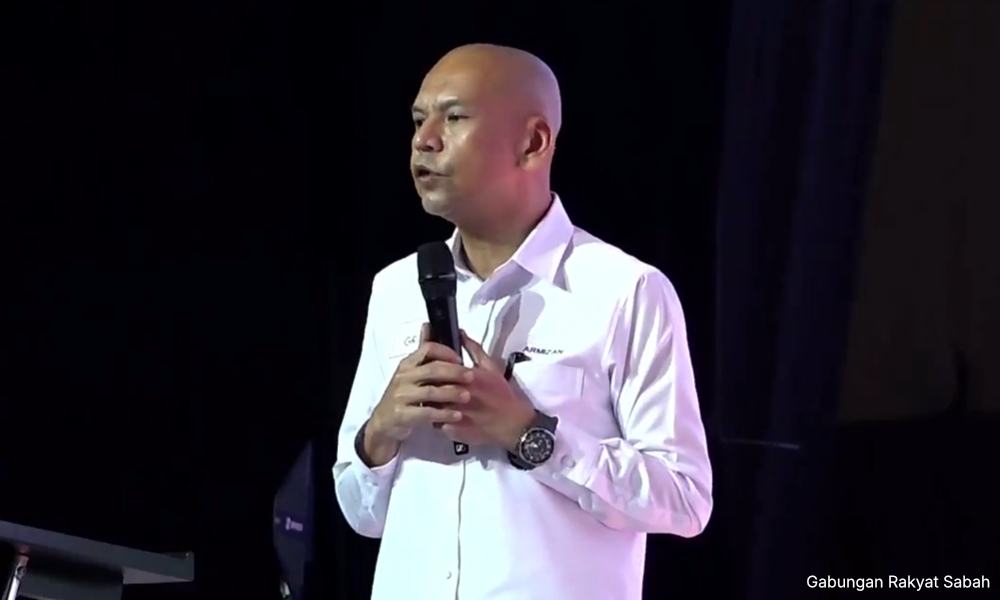
These include his claim that Warisan president Shafie Apdal “flip-flopped” on the anti-hopping law.
The timeline tells a different story. The federal amendment only came into force in October 2022, crafted to halt the Sheraton-style trading that destabilised Malaysia for years. Sabah harmonised its state constitution only in May 2023.
Ignoring that sequence does not just distort the issue, it sanitises the crisis that forced the reform into existence.
Then there is the claim that Article 112C and Article 112D are the same. They are not.
One defines how much Sabah is constitutionally entitled to. The other dictates how and when that entitlement must be reviewed and paid. Blurring them lowers public expectations before the settlement process begins.
What makes this troubling is how easily such statements spread. In 2025, when digital tools can scan the Constitution and court rulings in seconds, Sabahans deserve better than unverified talking points delivered as truth.
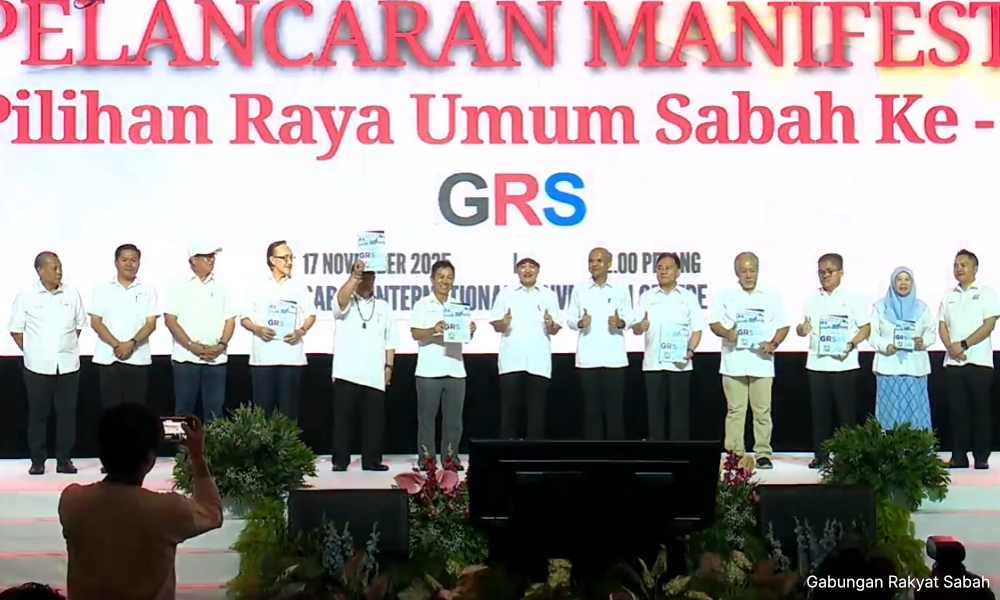
And the uncomfortable question lingers. Is this the sort of misinformation GRS leaders expect voters to swallow before the 40 percent settlement is finalised?
A broken radiator’s lesson
Campaigns are often judged from podiums, but the truth is sometimes found in the smallest of places.
Somewhere between chasing candidates and filing stories, my car radiator finally gave way. At the workshop, I spoke to the mechanic, a quiet 50-year-old man with coolant-stained hands, who told me he was driving back to Sindumin to vote.
“Hafez Yamani (Musa) very popular bah,” he said, tightening a clamp. “But his votes are not going to DAP.”
It struck me because DAP is not even contesting in Sindumin.
But the meaning was unmistakable. Pakatan Harapan’s support is not transferring. Hafez’s personal goodwill is not migrating to the coalition brand he stands under.
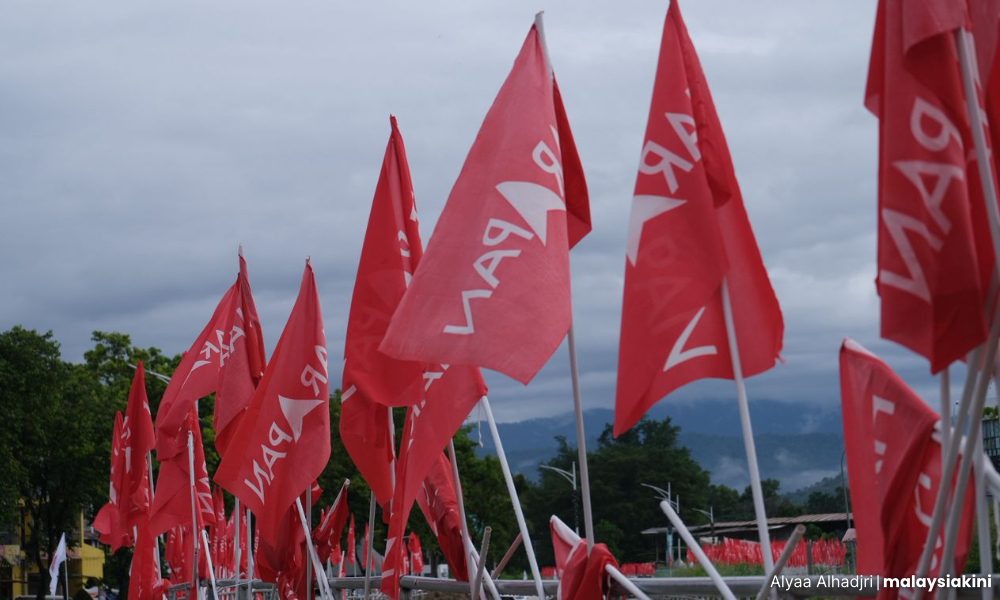
Across Long Pasia, Sipitang, and Sindumin, I heard variations of the same sentiment. Voters separate personalities from their parties. Harapan may have strong individuals, but its banner is arriving in Sabah frayed.
Scandals, whispers, and the pot that keeps boiling
It is not just the 40 percent appeal weighing on voters. It is the corruption cases tied to past political figures. It is decades of broken promises that Sabahans still recite like familiar verses. It is the entire stew of unresolved grievances simmering for too long.
Then came the mining-related videos, edited clips blending insinuations, rumours and anger. One viral video placed Harapan at the centre of a mining scandal, a claim impossible to verify yet powerful enough to travel from Keningau to Kudat overnight.
And yet, despite the scandals, many voters do not detect a trust deficit between GRS and Harapan. On the ground, people shrug and say, “Mereka partner bah.”
Once voters accept that two parties stand side by side, one party’s scandals stain the other, fairly or unfairly. In Sabah, association is accountability.
Poster boys and the cost of compromise
Tomorrow’s vote is not a popularity contest. It answers a deeper question. Who will represent Sabah when the bill for the “lost years” is settled?
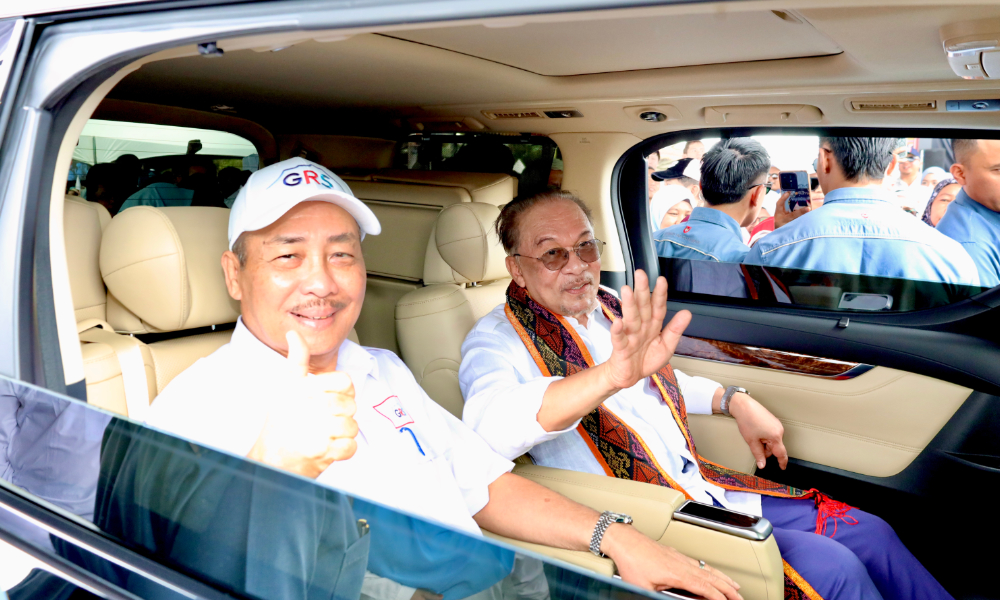
If Hajiji Noor remains chief minister under a GRS and Harapan partnership, he will sit across the table from the same federal leadership he depends on.
Prime Minister Anwar Ibrahim cannot risk bankrupting his administration. Hajiji cannot risk embarrassing his federal allies. That is a political equation built for compromise, not firmness.
Sabah Umno chief Bung Moktar Radin promises to fight for Sabah. But if a BN-led government relies on Harapan for stability, he too faces the silent pressure of federal ties that discourage confrontation.
Harapan itself has credible names like Ruji Ubi and Hafez, but no obvious centre of gravity. A Harapan-led chief minister negotiating Sabah’s settlement with his own national leadership is caught in the narrowest corridor imaginable.
If he pushes too hard, he weakens the federal government. If he pushes too little, he betrays Sabah. Neither of these is a comfortable position.
Local parties - Clarity vs chaos
Local parties argue they are the only ones free from federal strings, but the picture is far from simple.
Parti Solidariti Tanah Airku (Star) president Jeffrey Kitingan speaks forcefully on Sabah rights, but he is viewed in Putrajaya with deep caution. That perception risks silent resistance, bureaucratic delays, withheld cooperation, and meetings that lead nowhere.
Upko president Ewon Benedick brings sincerity and technical understanding of the Malaysia Agreement 1963, but his party’s seat count limits its ability to lead.
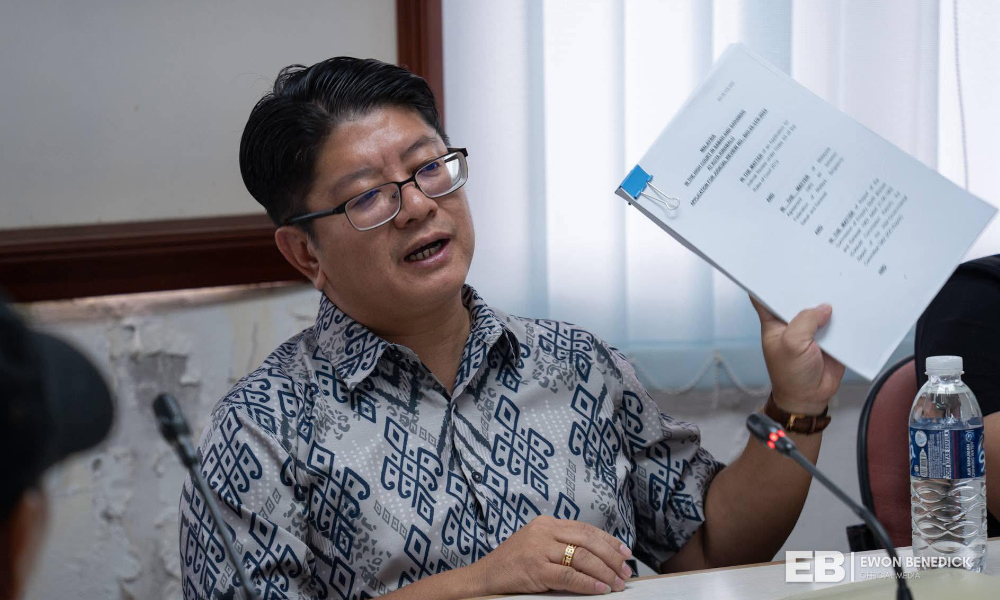
Any government he anchors becomes a coalition with many moving parts. In a settlement process that must reach finality within 180 days, too many moving parts may become too many compromises.
Coalitions can govern, but they struggle to make decisions.
The Warisan factor
This brings us to Warisan and Shafie, perhaps the favourite of hundreds of people I met covering this election.
Shafie’s decision to contest all 73 seats alone is a gamble, but it delivers one critical advantage - coherence. A Warisan-led government speaks with a single voice.
It does not need to negotiate internally before negotiating externally. It does not need to dilute its stance to keep coalition partners happy. Shafie is not anti-federal; he has said so repeatedly, and his brother serves in the federal government.
His position is not hostility; it is firmness. He rejects the erosion of Sabah’s rights, not Malaysia.

In the settlement of the “lost years”, clarity matters. In the audit of what was withheld since 1974, discipline matters. In dealing with federal technocrats who play for time, a single, consistent voice matters.
Warisan’s advantage is not its size; it is its singularity.
Sabah must choose its negotiators carefully
The High Court has already spoken. Sabah’s entitlement exists. The failure to review it since 1974 was unlawful. The “lost years” must be resolved through a formal settlement, not a negotiation, within 180 days of Oct 17.
When the Treasury opens its books, the truth will finally sit in black and white. What was collected from Sabah, what Sabah should have received, what Sabah actually received, and what remains unpaid.
The numbers will not lie, but the negotiators might, and Sabah must choose who its negotiators will be.
At some point in the fog of this campaign, when the slogans began to repeat themselves and the videos blurred into each other, I sought the view of someone who has spent a lifetime interpreting the Constitution rather than bending it - former chief justice Richard Malanjum.
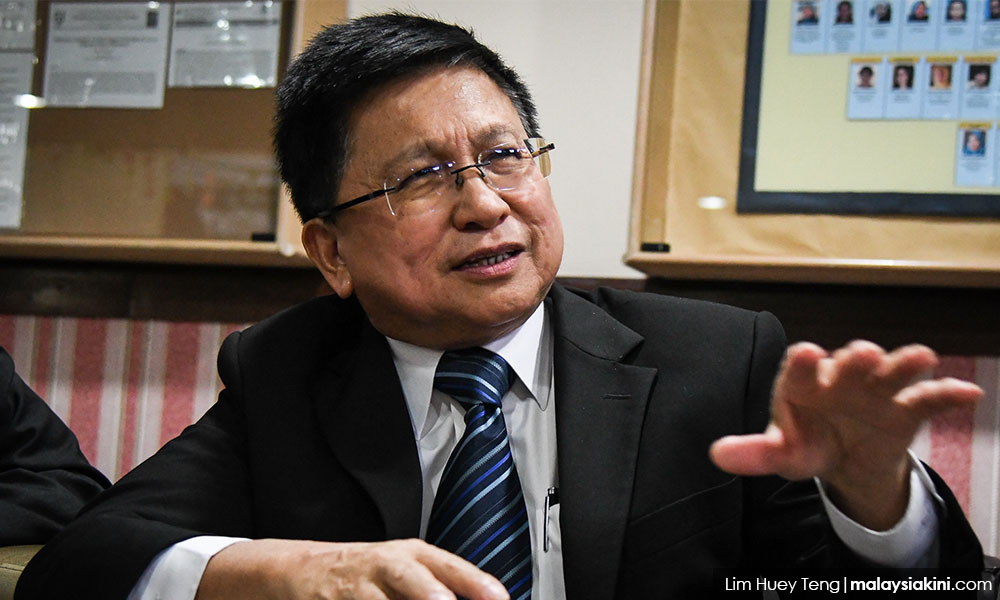
He told me that this election is not simply about forming a government; it is about choosing who Sabah sends into the room when the settlement of the “lost years” is finalised.
In his view, Sabah stands on the edge of a pivotal decision. If Sabahans elect leaders tethered to Malayan political machinery, then Sabah’s future will continue to be shaped elsewhere, and the dream of a true Borneo bloc that demands constitutional respect will remain aspirational.
Richard emphasised that the “lost years” are not up for renegotiation.
The High Court has ordered that they must be accounted for. What Sabah faces now is a settlement, not a debate, and the greatest risk lies not in the unforgiving numbers but in the leaders tasked with interpreting them.
Send the wrong people into that room, he warned, and Sabah may once again walk away with less than what the Constitution promises.
His caution was quiet but sharp - Sabah’s window to reclaim what was lost is narrowing.
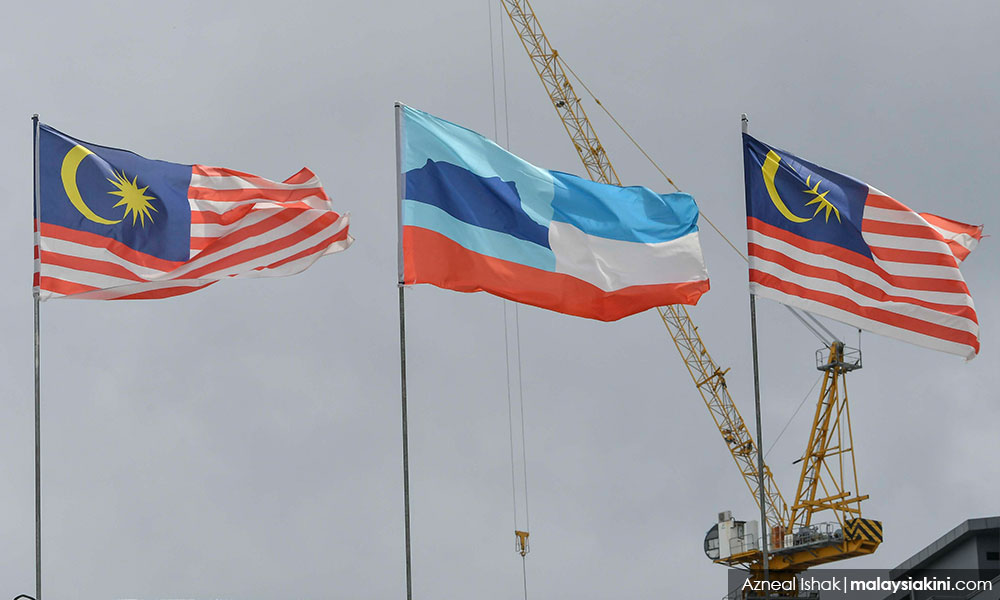
After 54 days of noise, slogans, scandals, broken radiators, skidding cars, and quiet conversations from the interior to the coast, tomorrow’s vote comes down to one decision.
It is not between who shouted the loudest and who printed the most posters, but who has the spine to sit at the table and say: Sabah’s “lost years” must be settled in full.
That is the decision Sabah makes tomorrow. - Mkini
JASON SANTOS is a journalist and contributor to Malaysiakini.

No comments:
Post a Comment
Note: Only a member of this blog may post a comment.