


Domestic water tariffs will not be raised solely to meet the demands of data centre development, the Dewan Negara was told today.
Deputy Energy Transition and Water Transformation Minister Akmal Nasir said the government has decided that costs related to upgrading electricity and water grid infrastructure to support data centres will be fully borne by the developers.
This is to ensure that there will be no additional financial burden on consumers, particularly domestic users.
He said the development of data centres and the projected rise in electricity demand in Peninsular Malaysia, require significant grid enhancement works under the Fourth Regulatory Period (RP4), scheduled from Jan 1, 2025, to Dec 31, 2027.
This follows the committed demand of over 7,000 megawatts (MW) already secured through Electricity Supply Agreements (ESA), between data centre operators and Tenaga Nasional Berhad (TNB), in addition to completed projects, as of September 2025.
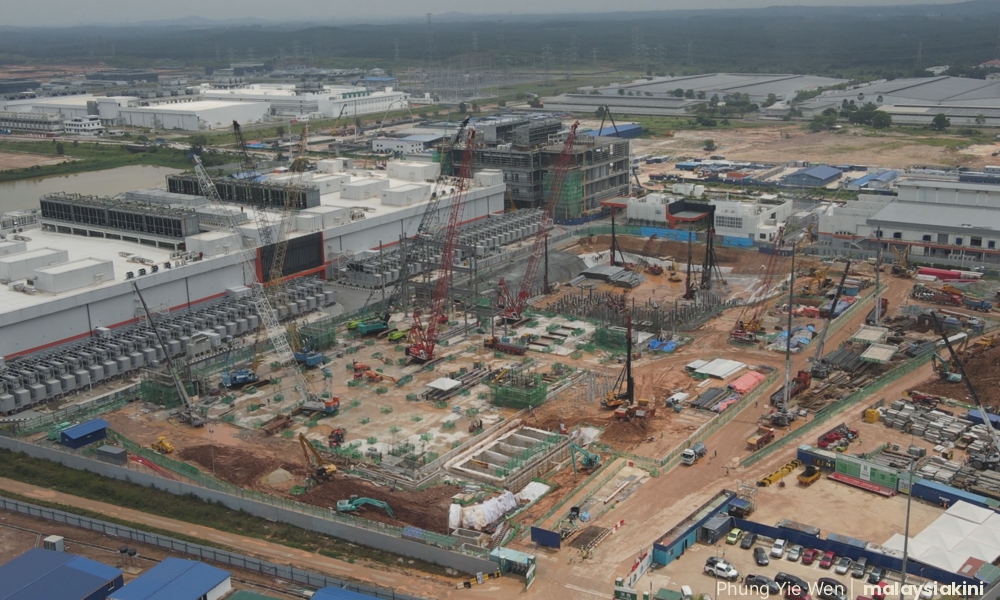
“In this regard, the government has introduced a ‘user pays’ approach under the new tariff structure, whereby data centre operators are required to bear the additional costs of strengthening grid infrastructure.
“This measure ensures that such expenses are not passed on to other consumers,” he said during the oral question session at the Dewan Negara today.
He said this in his reply to a question from Senator Rosni Sohar, who asked for the government’s assessment of the impact of the growing number of data centres on national energy and water consumption.
She also sought assurances that electricity and water tariffs would not be raised in a way which would burden the public or negatively affect the well-being of the domestic economy.
Akmal said the government has also introduced a dedicated ultra-high voltage (UHV) tariff category for data centres operating at high and extra-high voltage levels to ensure a stable and sustainable electricity supply for their operations.
Sustainable management strategy
He added that water consumption for cooling systems and server operations has also risen in tandem with the growth of large-scale data centres.
To address this, the government is implementing a sustainable water supply management strategy to ensure that the sector’s increasing demand does not affect domestic users or other industries.
He said that the National Water Services Commission (Span) has also introduced the Water Supply Guidelines for Data Centre Development, effective Sept 1, 2025.

The guidelines outline the technical requirements which must be followed, from the planning stage through to operational phases, including adherence to relevant standards issued by the International Organisation for Standardisation (ISO) and the International Electrotechnical Commission (IEC).
“Data centre operators are also encouraged to adopt green technologies, including high-efficiency cooling systems, reusable water applications, rainwater harvesting and water recycling through the Cycle of Concentration, to reduce reliance on treated water and support the country’s sustainability agenda,” he said.
Responding to a supplementary question from Senator Jufitri Joha, regarding public concerns over groundwater usage for a data centre project in Port Dickson, Akmal said groundwater extraction falls under the jurisdiction of the state government, and any objections or issues should be directed to the relevant state authority.
- Bernama

No comments:
Post a Comment
Note: Only a member of this blog may post a comment.