



HEALTHCARE in Malaysia is divided into public and private systems. Public healthcare, which is available to Malaysians, is funded through taxpayers’ money.
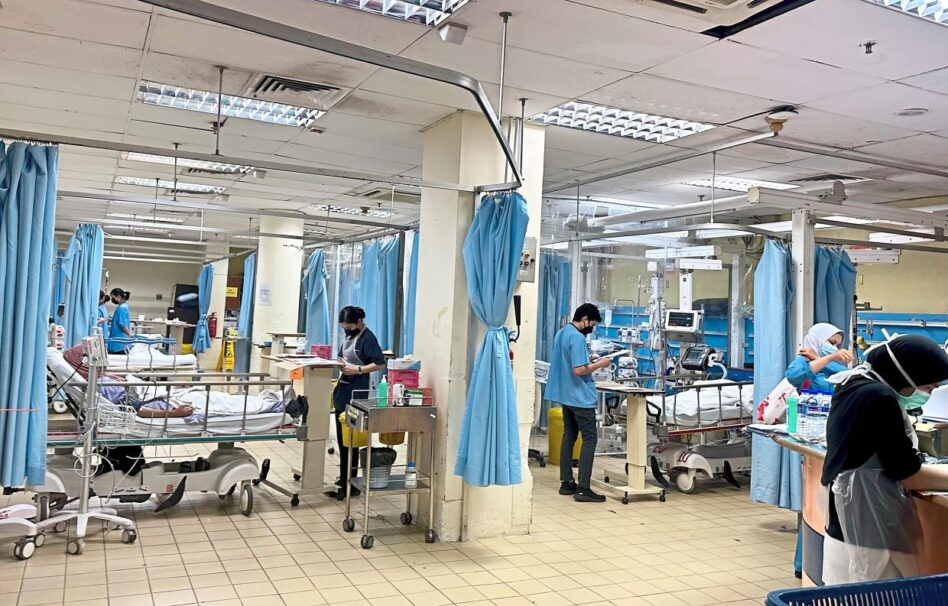
Public healthcare is more affordable and accessible to all, but it is under-resourced, overcrowded, and patients are subjected to longer waiting time for procedures. Given that public healthcare caters to a large volume of patients, there are many areas requiring immediate attention.
A recent news report highlighting that more than 200,000 individuals will be left in the lurch due to inaccessible palliative care (PC) by 2030 is indeed worrying.
Palliative care is defined as the approach that improves the quality of life of patients facing life-threatening illness by providing relief through pain and symptom management.
Malaysia is on the course of becoming an ageing nation, with more than 15% of the people above 60 years old by 2030. The question is whether our public hospitals are equipped with the necessary equipment, trained specialists, knowledge experts, and staff to oversee the PC?
The National Palliative Care Policy and Strategic Plan NPCPSP 2019‒2030 highlighted that Malaysia lacks effective PC services to meet the needs of an increasing population.
PC is not limited to the hospital setting alone, but expands into community-based care centres, home-based approaches, and hospice centres.
A PC specialist at a private medical centre revealed that the cost of a PC may go up to RM5,000 per day. How prepared is Malaysia to integrate PC within the healthcare system by 2030?
That brings to my next point about the facilities in the public hospital wards, with most third-class wards lacking even basic facilities.
Take a walk around the oncology wards, respiratory wards, and palliative care units. These places often paint a gloomy picture. In April 2024, Prime Minister Datuk Seri Anwar Ibrahim said that the government will expedite the third-class ward facilities in HKL.
What has been done so far to improve the conditions in these wards? The term “third-class” itself is degrading and condescending. Generally, the first-class and second-class wards are allocated to the higher-ranking civil servants.
For most people who cannot afford to pay for the higher-class wards, third-class wards are the only option left. Surely, the government can channel the taxpayers’ money to revamp the facilities in these wards to improve the well-being of the patients.
Thirdly, it is common knowledge that it takes longer waiting time for patients to undergo medical procedures, surgeries, and scans in public hospitals. To get an appointment with a specialist would take much time, sometimes a couple of months.
Then, if there is a need for a biopsy or an MRI scan, there is another waiting period. In situations requiring immediate diagnosis, every minute delayed may only worsen the condition of the patient.
There are patients from Ipoh and Kota Kinabalu who travel to private hospitals in the Klang Valley to get their scans (MRI, PET, etc) done, due to inadequate accessibility in these cities.
This is one area of healthcare that requires the cooperation of all stakeholders. Building partnership programs between the Health Ministry and the private sector would speed up the diagnosis, consultation, and medical procedures for patients.
Next, patients with referral letters from private specialists need to go to the nearest Klinik Kesihatan (KK) first to get the medical officer (MO) in charge to rewrite the letter, failing which the patient would have to pay higher fees for specialist treatment in a public hospital.
Accordingly, specialist clinics in government hospitals are accessible to civil servants. The rest of us must get a letter from the KK. Why is there the hassle of getting a MO to reproduce a private specialist letter?
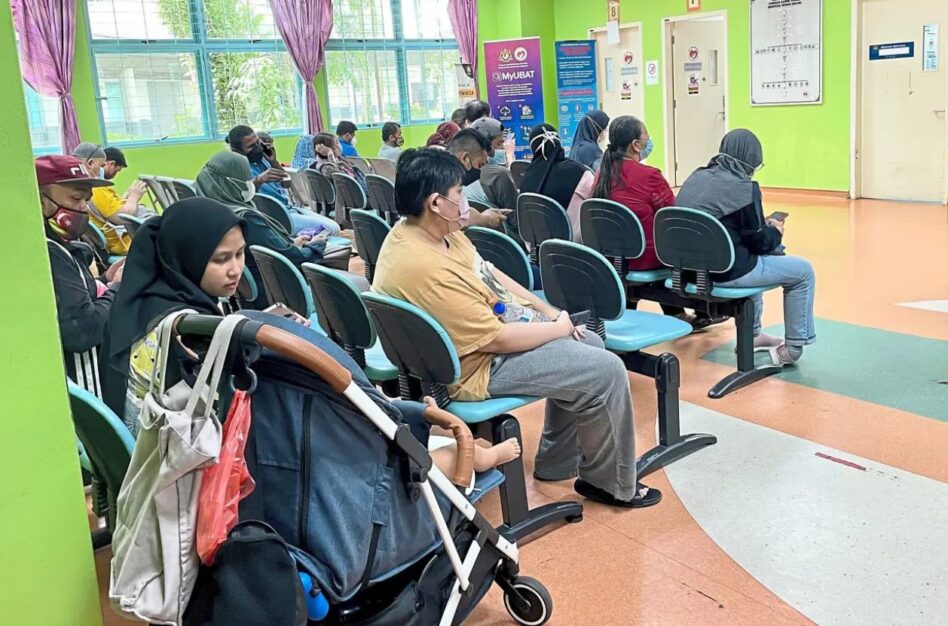
If a patient brings a letter from a private specialist, a digital assessment of their MyKad is sufficient to prove that the patient is a Malaysian, entitled to the right to seek specialist consultation in public hospitals.
Undoubtedly, the number of nursing homes and elderly care centres in Malaysia is mushrooming, especially in the Klang Valley, with fees ranging from RM3,000 to even RM8,000 per month depending on the needs of the patient.
However, according to one of the operators of a nursing home in Petaling Jaya, there are only a few with proper licensing and complying with the regulated laws.
The rest are without proper licensing, and this may lead to the compromise of the quality of care provided, as they may not be fully accountable to their clients.
This is a major area which requires serious attention, as many families depend on these nursing homes to care for their elderly loved ones while they are at work. Regulating nursing homes under a ministry with a proper binding agreement and healthcare act would help to restore the public’s confidence.
If you walk into the lobbies of most private hospitals, you will be forgiven for mistaking them for five-star hotels. One can find a large aquarium, grand pianos or opulent furnishings displaying extravagance.
It goes without saying that the operational cost would be passed down to the patients, increasing their bills and insurance claims. The disparity between public and private healthcare is poles apart.
But, let us not forget that both systems exist to cater to the healthcare needs of the country’s population.
Integrating a holistic, comprehensive healthcare framework which employs a whole-of-society approach and strategic partnerships between the two systems is pertinent to address the growing healthcare needs. After all, isn’t healthcare the basic right of every Malaysian?
Dr S. Mathana Amaris Fiona, PhD
Puchong, Selangor
The views expressed are solely of the author and do not necessarily reflect those of MMKtT.
- Focus Malaysia.

No comments:
Post a Comment
Note: Only a member of this blog may post a comment.