


Veteran lawyer Gurdial Singh Nijar has warned that Prime Minister Anwar Ibrahim’s supposed disregard for established judicial appointment procedures underscores a growing threat to the rule of law.
Addressing a forum in Kuala Lumpur today, Gurdial criticised the prime minister for allegedly bypassing the Judicial Appointments Commission (JAC), a body established to ensure the meritocracy and integrity of judges prior to their appointments or elevations.
The legal eagle highlighted that the JAC was introduced “to evaluate the quality of judges from a variety of perspectives to make sure the right person with the right attitude gets appointed.”
“But, under our beloved Madani government, this process is being negated. For example, (former chief judge of Malaya) Hasnah Hashim - she was appointed without going through the JAC.
“She was appointed just like that - the prime minister recommended a name to the king, and they got appointed…When the prime minister recommends a name, he seems to think… they take on themselves that they can do whatever they want to do,” Gurdial said.
Hasnah had held the position of the chief judge of Malaya since Nov 12 last year. She reached the mandatory retirement age for judges in Malaysia when she turned 66 on May 15 this year.
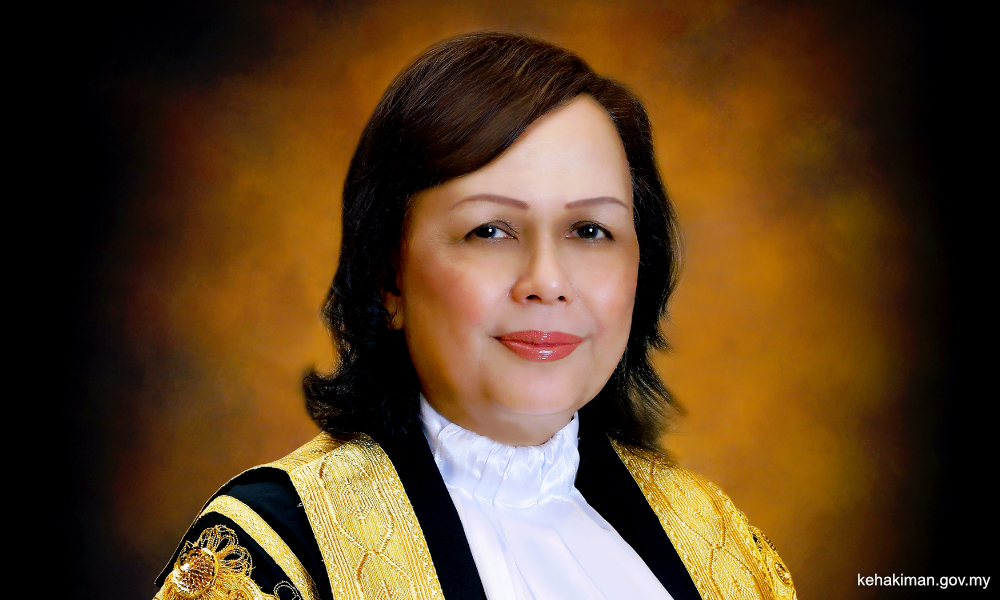
However, her tenure was extended by six months to Nov 15. Court of Appeal Judge Hashim Hamzah has since been sworn in as her replacement.
Previously, nine PKR MPs had raised a laundry list of outstanding issues for the consideration of Chief Justice Wan Ahmad Farid Wan Salleh, who also serves as the JAC chairperson.
Among the matters highlighted by the lawmakers are ensuring judicial appointments follow the proper processes under the Federal Constitution and the JAC Act 2009, so that appointments are made based on merit and seniority.
They also argued that the prime minister should be required to provide official reasons, either to the JAC or Parliament, for rejecting candidates vetted by the commission.
Unauthorised discretion
Gurdial today likened the government’s supposed snubbing of the JAC to the behaviour of foreign political leaders who seem to sidestep institutional safeguards to exercise unauthorised discretion.
“This seems to be the trend. Trump does that also,” he said, referring to United States President Donald Trump.
“One Afghan person shot two guards, and now he (Trump) says 170,000 Afghans must leave the country. There’s no due process behind how they leave - grab them, put them in a van, and send them off. No due process.”
The lawyer, who was speaking at a public forum titled “Justice for the Disappeared,” was addressing a query from a forum attendee who questioned how the attorney-general can be held accountable in cases which violate human rights.
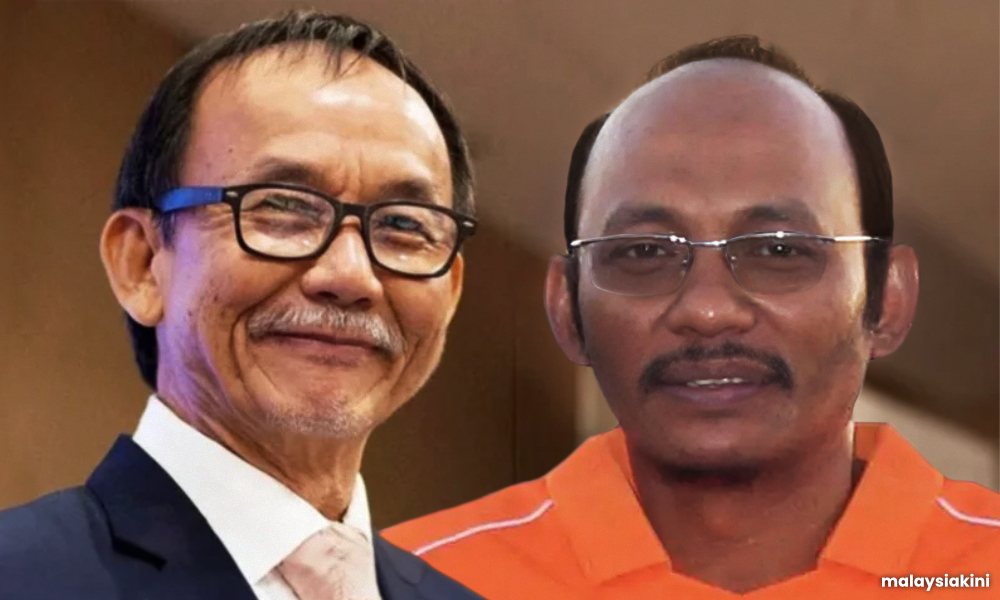
The event, held at the Malaysian Bar’s auditorium and organised by the National Human Rights Society (Hakam), featured discussions on the disappearances of Pastor Raymond Koh and social activist Amri Che Mat.
Respect due process
Stressing that due processes should be respected in all cases, Gurdial, who represented Koh’s wife in her lawsuit against the government, emphasised that the rule of law principle is enshrined under the Federal Constitution.
“If you feel that Koh or Amri (were) doing something wrong from your perspective, you must go through due processes… If you feel someone is proselytising, which is forbidden by the Constitution, then you must go through the processes.
“You don’t get Mais (Selangor Islamic Religious Council), Jais (Selangor Islamic Religious Department) to go (carry out) raids, or put bullets in the postbox of Koh’s house, or abduct him,” the lawyer said.
He also expressed concern over a perceived worrying trend in Malaysia over the past decade, where legislation increasingly grants the state powers to curtail individual rights, often accompanied by “ouster clauses” that prevent judicial reviews.
“They have been enacting laws which, more and more, are negating the rights of private individuals…these are being enacted in Parliament (at) various levels.
“There’s a very real danger that this country is sliding into an authoritarian democracy, (which will) affect the rights of people, even beyond (the cases of) Koh and Amri. We have to safeguard ourselves against that,” he added.
Amri, an alleged Shia follower and proselytiser, vanished on Nov 24, 2016, in Kangar, Perlis. His wife had testified that on May 12, 2018, a Special Branch officer from Perlis, Shamzaini Daud, told her the division was responsible for the abduction.
The year after Amri’s disappearance, Koh, who is said to have been proselytising Muslims, was abducted in broad daylight in Petaling Jaya. CCTV footage believed to have captured the incident showed at least 15 men and three black SUVs involved in the operation.
In 2019, Suhakam concluded that both Koh and Amri were victims of enforced disappearance carried out by Special Branch members from Bukit Aman.

On Nov 5, Kuala Lumpur High Court judge Su Tiang Joo affirmed the commission’s findings, ruling that the government and police are liable for Koh and Amri’s disappearances.
Respect freedom of religion
Also present at the forum today was former appellate court judge Mah Weng Kwai, who chaired the Suhakam inquiry into both cases.
Elaborating on the recommendations included in the Suhakam report on the disappearances, Mah stood firm in calling for authorities to respect freedom of religion as a fundamental human right in Malaysia, as stipulated under Article 11 of the Federal Constitution.
He also called for a clear separation between the activities and scope of work for police and religious authorities, noting that the cases investigated by Suhakam both bore similar themes.
“Given the facts of the situation in Koh and Amri's cases, you can see there is a link, a thread between these cases: the religious factor. Anyone who says (the cases) have nothing to do with religion is burying their heads in the sand.
“I don’t know when our police started policing morals and religions… suddenly, you will see the Special Branch giving talks and all kinds of statements on religious activities,” he said.
He noted that while such powers typically cite “security concerns” when executing such tasks, a firm demarcation between police and religious authorities will aid in resolving relevant issues. - Mkini

No comments:
Post a Comment
Note: Only a member of this blog may post a comment.