


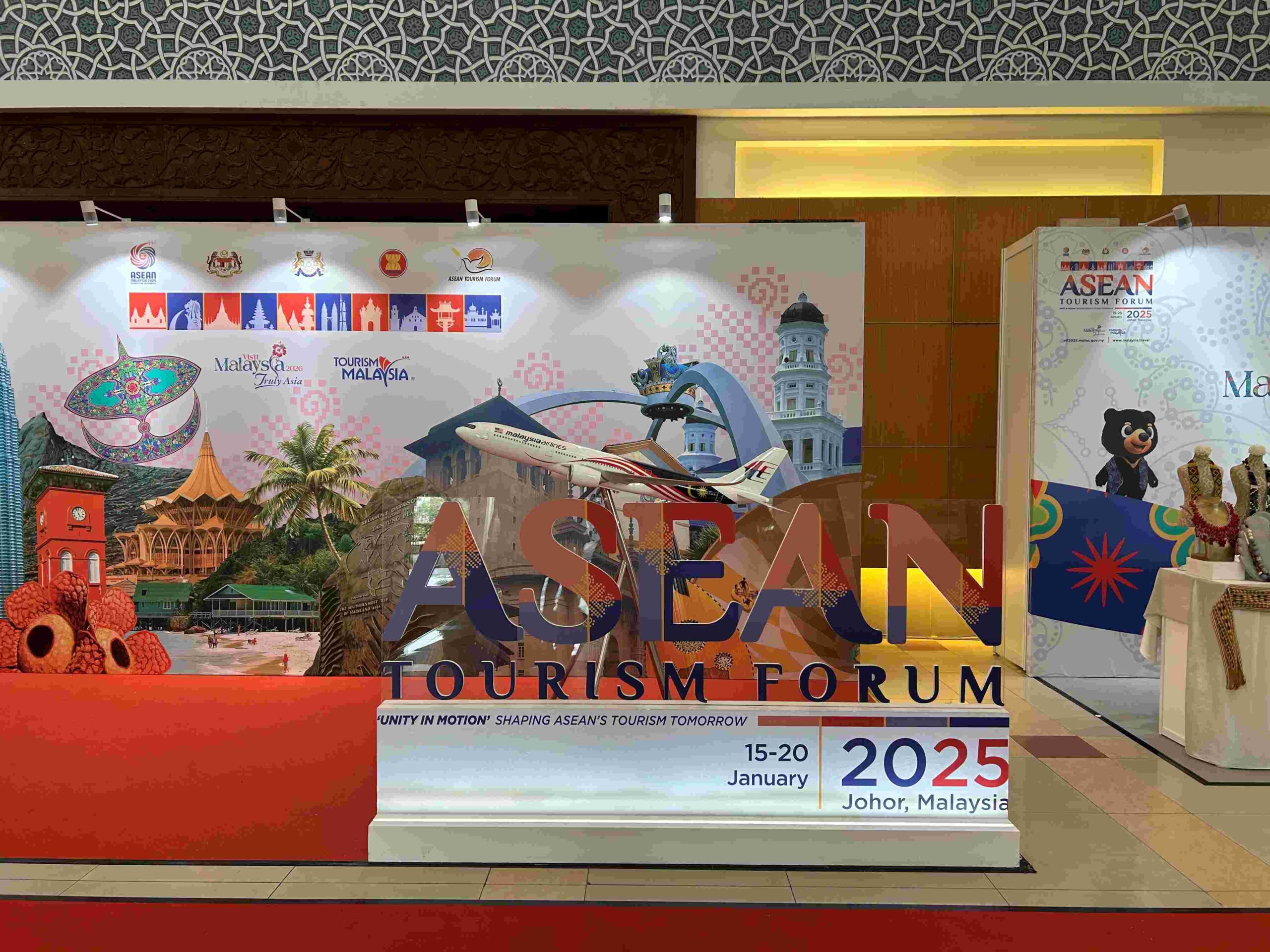
HIGH-level forums such as ASEAN Tourism Forum (ATF) are organised annually in the country holding the overall ASEAN chairmanship. As Malaysia is the ASEAN chair for 2025, this year’s ATF was held at Johor Bahru from January 15‒20.
Attendance included Deputy Prime Minister Datuk Seri Fadillah Yusof and Johor Menteri Besar Datuk Onn Hafiz Ghazi.
There were other forums such as the Community-Based Tourism (CBT) Conference & Expo 2025 held at Kota Kinabalu from June 28‒29. It was organised by the Sabah Tourism Board (STB) in collaboration with the United Nations Development Programme (UNDP) Malaysia.
High-level forums are indeed important and should continue, but they largely serve the role of top organisations and officials. They may share policies, issues, trends and macro views of the entire tourism industry. However, many sectors and industry players may not be able to do much or benefit significantly from the key takeaways.
Hence, lower-level forums are needed for specific businesses, and they are best organised by trade associations with adequate resources, such as the Malaysian Association of Tour and Travel Agents (MATTA) for travel and tour operators, in collaboration with the relevant government ministries and departments.
Government agencies are limited to publicising and promoting natural sites and man-made attractions, but they are similar to ingredients needed for cooking. Like master chefs who can turn raw foods into gourmet dishes, innovative tour operators can create value-added packages that are seamless, safe and highly enjoyable.
Over the past four decades, I have attended many trade industry forums, although they were few and far in between. This is because they were run the traditional way with poor outcomes and little effect on the industry. After the official speeches, some of the audience, unable to articulate well, tend to shout out their frustrations.
The traditional way to conduct forums is similar to training seminars, where speakers are eager to impress the audience with facts and figures which are mostly not useful for application. Instead, it should be audience-centred or focused on the current issues, challenges and opportunities for industry players, not academic theories.
Instead of guessing, assuming or telling, organisers should notify in advance that each participant is allowed five minutes to offer proposals or share ideas using slides, which must be submitted at least a week before the forum. They may choose to touch on any topic in their presentations, to be followed by another five minutes for Q&A.
This will ensure speakers have crystallised their thoughts, condensed them into slides and then explain them in an organised and structured manner so that the audience could follow and later get a PDF copy in their phones. There will also be a slot to ask impromptu questions or for comments without disrupting the flow of the forum.
Most Malaysians are poor in communication skills. In many forums and seminars, participants asking a question or speaking their mind are not only long winded, they also beat around the bush instead of going straight to the point before explaining or elaborating. They often leave the audience wondering what they are trying to say.
When conducting training, I would tell participants who wish to speak to state the point first for it to be written and displayed on the whiteboard, so that everyone is focused on the same thing. If not, many speakers would veer into other unrelated matters and waste much precious time and attention.
In any case, there is no need to argue over who or what is right. Even ridiculous proposals can spark brilliant ideas for those who are open, flexible and prepared for change. It is up to the facilitator to manage group discussions, which should be encouraged, instead of regurgitating common knowledge or iterating narratives.
Forums are the best way to engage with many players and get them involved in the development of the industry or destination. They will be more committed by contributing ideas instead of being told top down.
Most of all, it requires both public and private sectors to work in unison to develop tourism of a destination to the next level.
YS Chan is master trainer for Mesra Malaysia and Travel and Tours Enhancement Course and an Asean Tourism Master Trainer. He is also a tourism and transport business consultant.
The views expressed are solely of the author and do not necessarily reflect those of MMKtT.
- Focus Malaysia.

No comments:
Post a Comment
Note: Only a member of this blog may post a comment.