


Former economy minister Rafizi Ramli expressed his belief that Malaysians need to prepare to become a trilingual society.
He said this while commenting on the issue of recognising the Unified Examination Certificate (UEC) and the importance of the Chinese language in the national education system.
“The world is moving towards mastery of Mandarin as a language of knowledge and trade, and Malaysia’s younger generation needs to be ready to face this change. We cannot pretend that Mandarin is not important,” said Rafizi, referring to the Chinese language’s most common form.
“The country’s leadership needs to acknowledge that we are entering the era of a trilingual society,” he said on his “Yang Berhenti Menteri” podcast last night.
The Pandan MP stressed that this issue cannot be ignored as China is expected to overtake the United States within 10 to 15 years in terms of economic power and global influence.
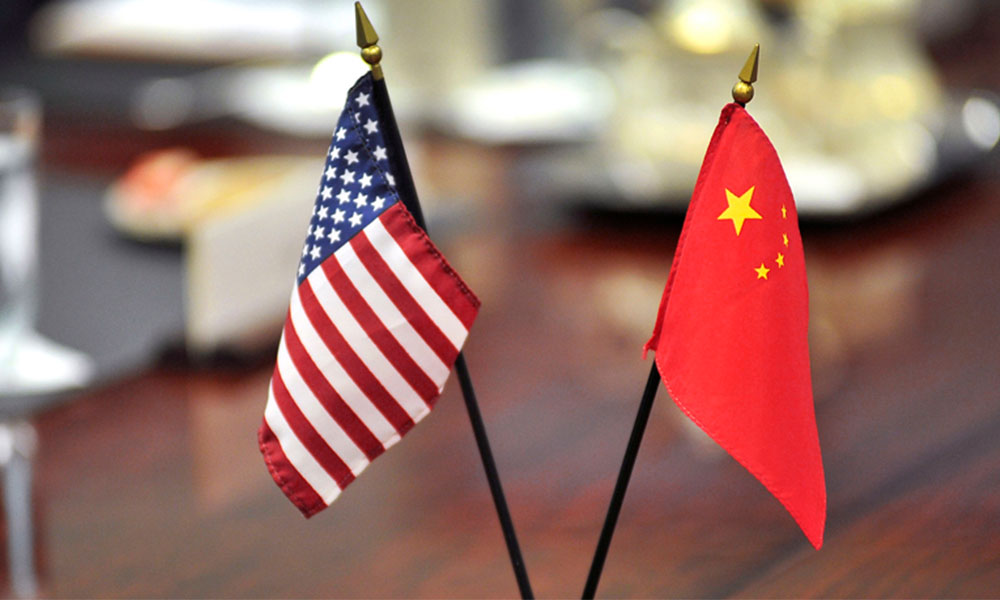
“Malaysia’s younger generation born today needs to master all three languages - Malay, English, and Mandarin - to ensure that they are not left behind in the era of globalisation.
“In 20 years’ time, if we do not master Mandarin, our generation will face difficulties because the language will overtake English as the language of knowledge.
“Without mastery of Mandarin, we will be left behind in the next 20 years. This is the reality that needs to be accepted,” he added.
The UEC debate was reignited when DAP deputy chairperson Nga Kor Ming announced that his party would seek a meeting with Prime Minister Anwar Ibrahim on UEC recognition, drawing sharp criticism from Umno.
On social media, Malay circles reacted strongly, ranging from racially charged remarks to claims that recognising the UEC would make Anwar subservient to DAP - a perception both the prime minister and the party have been careful to avoid since the formation of the Madani government.
Yesterday, Anwar weighed in on the UEC debate, reminding all quarters of the constitutional status of Bahasa Malaysia, signalling that DAP may face an uphill battle.
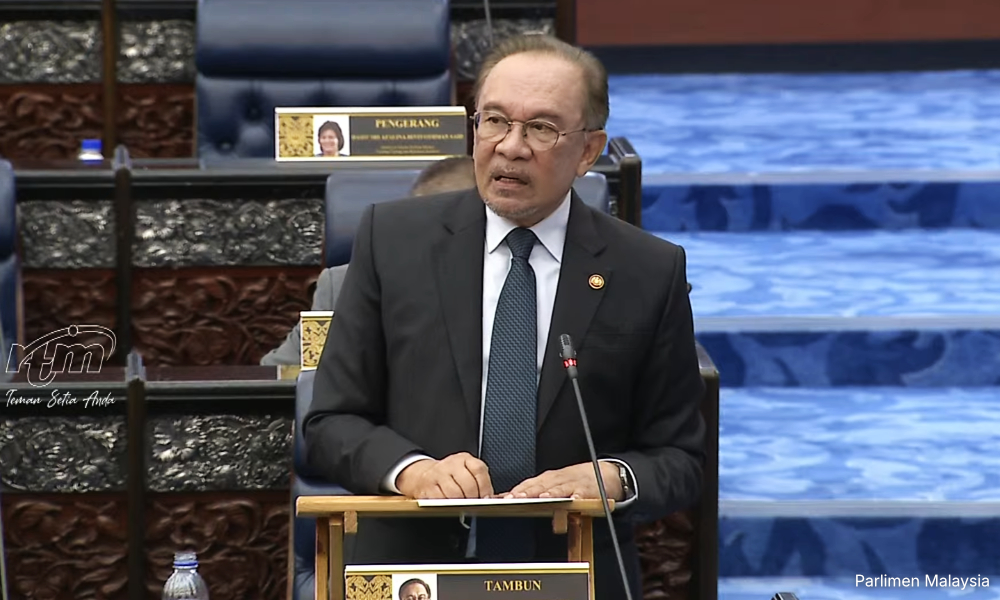
However, this contradicts his 2018 statement, where he said that recognition of the UEC would not undermine the national language.
‘Inaccurate’ that UEC undermines national system
Commenting further, Rafizi emphasised that the UEC issue is often used as “political dopamine” by political parties, including DAP, Umno, and PAS.
He also stressed that the perception that the UEC undermines the national education system is inaccurate.
“The reality is that only a small number of Chinese students in Malaysia take this exam. Out of 400,000 Chinese students in secondary schools, only about 90,000 take the UEC. That is only about 20 percent.
“A total of 80 percent of Chinese students still go through the national system, while UEC is just a small stream that provides additional education opportunities in Mandarin.
“The UEC issue is often sensationalised by politicians as a big issue, when in reality it only involves a small number of students. This matter needs to be clarified so that UEC does not continue to become a political issue that divides society,” he said.
DAP raised the issue after its crushing defeat at the Sabah polls, where it lost all eight seats it had contested, signalling a decline in Chinese support - traditionally its core voter base.
The party has since vowed to move forward with a reform agenda, with one of its main issues being the recognition of UEC.
However, Umno Youth chief Dr Akmal Saleh quickly blocked DAP’s efforts by directing his criticism at Nga and stressing that his party will not compromise.
Previously, BN also attempted to woo Chinese voters with the UEC, with former prime minister Najib Abdul Razak promising to consider recognition if the coalition won a strong mandate.
‘Issue needs to be managed wisely’
Meanwhile, Rafizi said that recognition of the UEC needs to be viewed objectively, not merely based on political sentiment, as it is not only about an examination, but also the history and efforts of the Chinese community in education.
But the government cannot ignore the importance of the Malay language, he added.

“Integrating elements of the Malay language and Malaysian history into the UEC curriculum can be a meeting point between the government and the Chinese community.
“This can ensure that the younger generation understands their identity as Malaysians while mastering a second and third language.
“If we begin by understanding the importance of the Mandarin language, the UEC issue can be viewed from the perspective of national development, not merely as a political issue.
“Recognition of the UEC and mastery of the Mandarin language are not a threat to national unity if managed wisely. This is an opportunity to build a more competitive society and a trilingual society,” he said. - Mkini

No comments:
Post a Comment
Note: Only a member of this blog may post a comment.