


The misanalysis of Section 403 of the Penal Code by the Court of Appeal has led to Syed Saddiq Syed Abdul Rahman’s acquittal from a funds misappropriation charge in June this year, the Federal Court heard today.
Deputy public prosecutor Ahmad Akram Gharib submitted that the Court of Appeal’s judgment involving the section was wrong from the start, given that it analysed the offence as “conversion of funds for own use” instead of “funds misappropriation”, as spelt out in the provision.
This, he added, infected the appellate court’s entire reasoning and distorted both the actus reus and mens rea under the Section, leading to a miscarriage of justice.
“The Court of Appeal recast the entire charge as one of conversion for own use and held that because the funds were intended for (Syed Saddiq’s) election campaign, (and therefore) it belonged to him.
“That reasoning not only altered the legal character of the charge, but also contradicted the statutory structure and long-settled authorities interpreting the section.
“By analysing the charge as ‘conversion’, the Court of Appeal effectively changed its legal nature (as) conversion involves asserting ownership over property, whereas misappropriation involves breach of trust regarding property held for another.
“(Therefore) the Court of Appeal’s finding that the ‘appellant converted the RM120,000 to his own use’ described a different offence, not the one (he was) charged with,” Akram submitted, in pleading for the highest court to correct the Court of Appeal’s “mistake”.
Misappropriation, money laundering
Before his acquittal, Syed Saddiq was charged under Section 403 of the Penal Code for misappropriating RM120,000 from Bersatu Youth Enterprise’s Maybank Islamic Bhd account by making Rafiq Hakim Razali dispose of the funds between April 8 and 21 in 2018.

Rafiq was Bersatu Youth’s former assistant treasurer, who is also the prosecution’s key witness in this case.
Apart from this, Syed Saddiq was also previously charged under Section 406 of the Penal Code for abetting Rafiq, who was entrusted with Bersatu Youth’s funds amounting to RM1 million, to commit criminal breach of trust (CBT) on March 6, 2020.
The Muar MP was also previously charged with two counts of money laundering via transactions of RM50,000 each from his Maybank Islamic Bhd account into his Amanah Saham Bumiputera accounts on June 16 and 19 in 2018.
His money laundering charges were framed under Section 4(1)(b) of the Anti-Money Laundering, Anti-Terrorism Financing, and Proceeds of Unlawful Activities Act 2001.
During the case trial in the High Court, Syed Saddiq defended himself by saying that the funds transferred into his ASB accounts, which were raised during two separate fundraising events, were reimbursement for his political campaign in the 14th general election at that time.
‘Syed Saddiq never informed anyone of the funds’
However, Akram submitted today that Syed Saddiq’s claims of the funds being a reimbursement were never informed to anyone who was in charge of managing his campaign’s financial aspect, including Rafiq, given that his plea to the public at that time, via social media, had clearly stated that he needed money to fund his election campaign.
Akram added that the trial judge had correctly applied Section 403 in convicting Syed Saddiq of misappropriating funds, given that the money was raised in Bersatu Youth’s account and transferred into Syed Saddiq’s personal accounts days before the official campaign period began.
“(The High Court correctly found that) there was no legitimate reason for moving the funds from Bersatu Youth’s account to a personal account, as campaign expenses could have been paid directly from Bersatu Youth.
“If the Court of Appeal’s interpretation were upheld, any person such as a political figure like (Syed Saddiq) could lawfully transfer campaign donations into a private account and later claim them as their personal money.
“That would render the offence of dishonest misappropriation nugatory and legitimise personal enrichment through entrusted funds; (therefore) the integrity of campaign financing and by extension public confidence in electoral processes would be gravely compromised,” he said, in submitting to the panel led by Court of Appeal president Abu Bakar Jais and Federal Court judges Che Ruzima Ghazali and Collin Lawrence Sequerah.
Appeals court finds prosecution failed to prove case
Syed Saddiq was acquitted of all charges on June 25, following the Court of Appeal panel’s unanimous finding that the prosecution failed to prove its case against the former Muda president.
The panel at that time, chaired by judges Zaidi Ibrahim, Azman Abdullah, and Noorin Badaruddin, also found that the High Court had erred in not fully evaluating the entirety of Syed Saddiq’s defence, which led to his conviction.
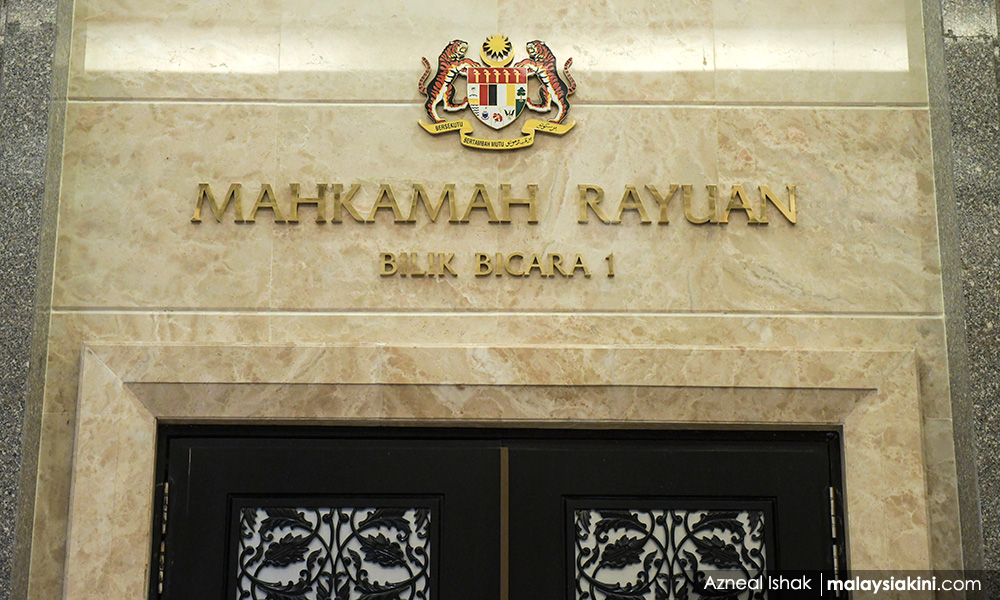
He was previously charged in the Kuala Lumpur Sessions Court with CBT and misappropriation of assets charges, while the other two money laundering charges were at the Johor Bahru Sessions Court and were later transferred to the Kuala Lumpur Sessions Court.
On Nov 25, 2021, Syed Saddiq was allowed to transfer the case from the Sessions Court to the High Court.
His case trial began on June 21, 2022, and the High Court ordered him to defend himself against the charges on Oct 28, the same year, before convicting him of the offences and sentencing him to seven years in jail, two strokes of the rotan, and a RM10 million fine on Nov 9, 2023.
Syed Saddiq’s team of defence lawyers will be replying to the prosecution’s submission tomorrow. - Mkini

No comments:
Post a Comment
Note: Only a member of this blog may post a comment.