


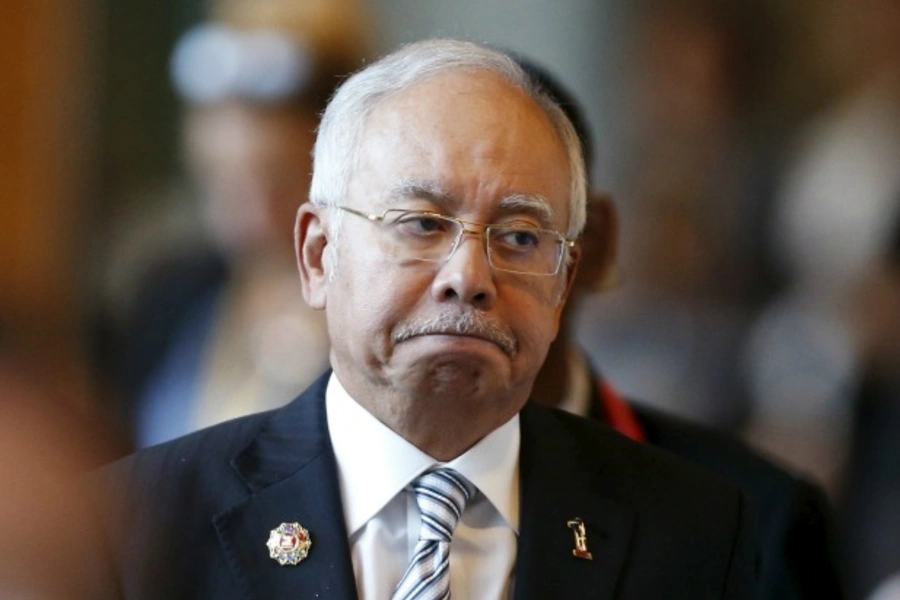
THE recent court decision in the Datuk Seri Najib Razak 1MDB case sends a clear and unmistakable message to the nation. This conviction is not merely a legal outcome; it is a powerful signal that abuse of power can be challenged, exposed, and judged.
Power does not place anyone above accountability. This outcome was not gifted by the system—it was forced into existence by years of pressure, exposure, and the rakyat’s insistence on truth.
This moment belongs to the people who refused to forget, refused to be distracted, and refused to accept impunity as normal.
Unsung heroes

In addition to the unwavering commitment of the the Malaysian Anti-Corruption Commission (MACC) who pursued this case over many years despite pressure, resistance, and repeated attempts to undermine accountability, perhaps also deserving special mention are Xavier André Justo and Clare Rewcastle Brown.
Justo, a former employee linked to PetroSaudi International Ltd, came into possession of internal data after falling out with his employers. History often turns not on pure motives, but on access and timing.
The information he held was authentic and explosive. It revealed the internal mechanics of transactions that would otherwise have remained opaque.
Without this data, allegations surrounding 1MDB would have remained speculative rather than evidential. His disclosures provided the raw material that made denial increasingly untenable.
Clare Rewcastle Brown, through Sarawak Report, demonstrated credibility, persistence, and courage in publishing and verifying this information. Her work involved connecting financial transactions across multiple jurisdictions and continuing publication despite legal threats, intimidation, and political pressure.
Journalism does not deliver verdicts but without exposure, there can be no investigation, and without investigation, there can be no justice.
The core transactions linked to 1MDB began as early as 2010–2011. For years, they attracted little sustained scrutiny not because the sums were small, but because the structure was deliberately complex and cross-border.
Oversight institutions were politically constrained, and questioning the scheme carried professional and legal risks. In such an environment, silence is not accidental; it is engineered.
At a time when most mainstream Malaysian media were constrained by ownership structures, licensing laws, and political pressure, Sarawak Report operated outside domestic censorship. This external position was crucial.
When Sarawak Report and later The Edge began publishing detailed investigations, the public could finally see the scale, intent, and design of the scheme. Without this exposure, the truth may never have reached daylight.
This case also highlights the importance of international law-enforcement cooperation. Authorities from the US, UK, Switzerland, Singapore, the Netherlands, and Barbados played critical roles in supporting Malaysia’s anti-corruption efforts—reinforcing the message that corruption has no safe haven.
A reminder to those in power

This outcome reminds us that justice is not automatic—it is demanded. Institutions, journalists, and citizens each have a role to play. When the rakyat remain vigilant, accountability becomes unavoidable.
Without leaked data, foreign-based investigative journalism and independent domestic media willing to take risks, this affair might have joined the long list of buried scandals.
Long before courtrooms delivered verdicts, journalism exposed facts that those in power tried to bury. The presumption of innocence must always be respected courts decide guilt, not public opinion.
But leaders do not govern on legal technicalities alone. They govern on trust, and trust is destroyed by secrecy, arrogance, and abuse of power.
To those still shielded by position, delay, or political convenience: do not mistake the absence of conviction for the absence of scrutiny. The rakyat remember. Records exist. History is patient. The people are watching.
This is not the end of reform, but a warning and a reminder. Impunity thrives only when citizens grow tired. We must not. Accountability must be demanded relentlessly without fear and without compromise.
Peter John Jaban is the founder of Saya Anak Sarawak and the deputy president of Global Human Rights Federation (Malaysia).
The views expressed are solely of the author and do not necessarily reflect those of MMKtT.
- Focus Malaysia.

No comments:
Post a Comment
Note: Only a member of this blog may post a comment.