

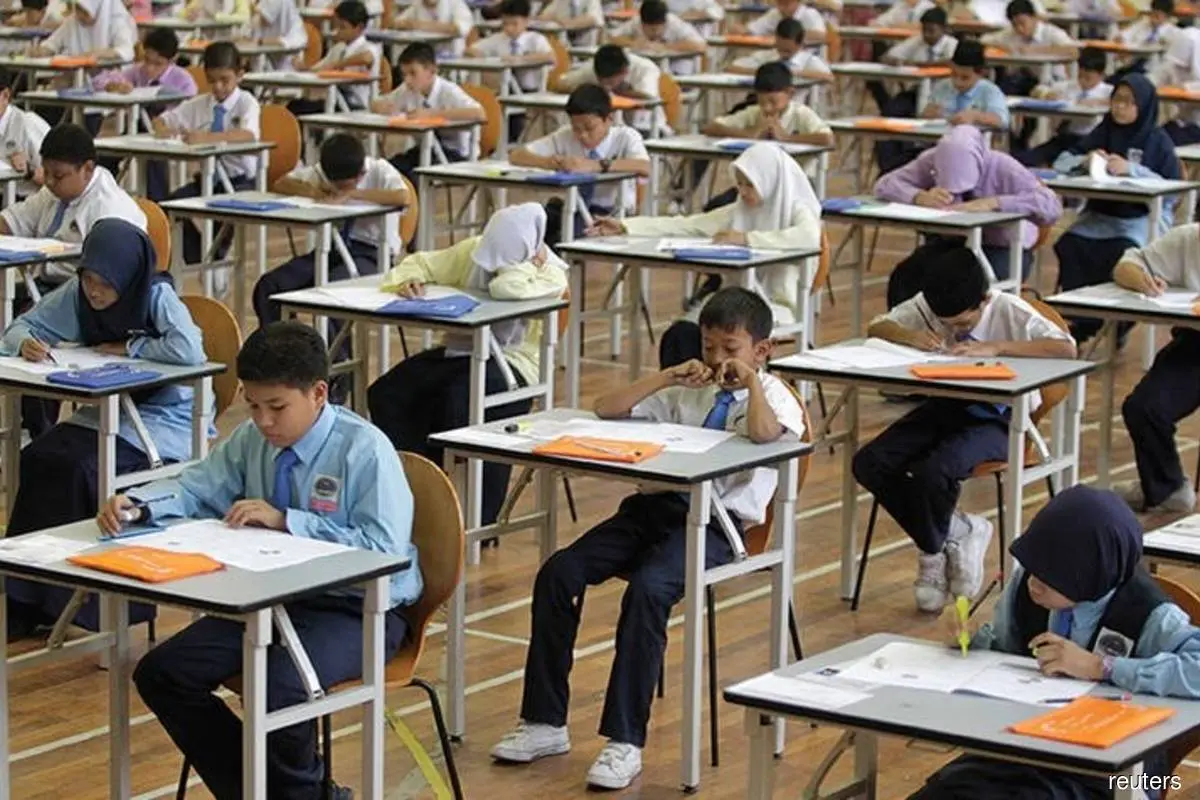
A SUDDEN shift in policy allowing children to enter Standard One at age six starting 2027 without a carefully staged transition risks creating chaos in schools that are already stretched thin, warns a Parti Sosialis Malaysia (PSM) leader.
The party’s Dengkil branch chairperson Dr Darren Ong said this in response to Prime Minister Datuk Seri Anwar Ibrahim’s recent announcement that parents will have the choice of enrolling their six-year-old children into Standard One effective next year.
According to news reports, the change is linked to the National Education Blueprint 2026‒2035, with entry at six described as an option rather than a blanket mandate.
“One practical problem is capacity. If the policy is executed abruptly, schools could end up with an unusually large Standard One intake which effectively combines two cohorts in a single year, depending on how eligibility dates are set,” Ong said.
“That would balloon class sizes, strain staffing, and reduce the attention each child receives, precisely at the age when close guidance matters most.
“The public also raised concerns about using a diagnostic or assessment test as a gatekeeping tool for early entry; notably, the government has since moved away from that idea after concerns it could be discriminatory and psychologically harmful.
“This is the right direction: testing six-year-olds to decide whether they are “fit” for Standard One invites stigma for children who do not pass, and it encourages an anxious, exam-driven culture at an even younger age.”
According to Ong, one straight-forward way to achieve the same long-term goal of lowering the entry age without overloading schools or labelling children is to phase in the change gradually over 12 intakes by making each Standard One intake cover births across a 13-month window (instead of the usual 12 months), shifting that window forward by one month each year.
“Concretely, if we begin in 2027, Primary One could include children born January 2020 through January 2021 (a 13-month cohort). In 2028, it would be February 2021 through February 2022. In 2029, March 2022 through March 2023,” he elaborated.
“This continues until 2038, when the intake would be December 2031 through December 2032. Then, starting 2039, we return to normal 12-month intakes, now aligned to the new rule of enrolling children who turn six within that calendar year.”
Describing the approach as “far more manageable than a sudden surge”, Ong said schools can then plan for a modest, predictable bump with a few additional classes, temporary classrooms where needed, targeted teacher postings and caredul redistribution across nearby schools.
He said most crucially, the move avoids creating “winners and losers” through an entry test at age six.
“Children develop at different rates; readiness should be supported through classroom practice and early intervention, not turned into a pass/fail label that follows a child from their very first day of school,” he stressed.
“If Malaysia wishes to change the schooling age, it should do so in a way that protects children and respects the realities on the ground.
“A gradual, 12-year transition via 13-month intakes is a policy design that is simple, fair, and operationally realistic. This gradual transition gives the Education Ministry, schools, teachers, and parents time to adjust without turning Standard One into a bottleneck.” ‒ Focus Malaysia

No comments:
Post a Comment
Note: Only a member of this blog may post a comment.