

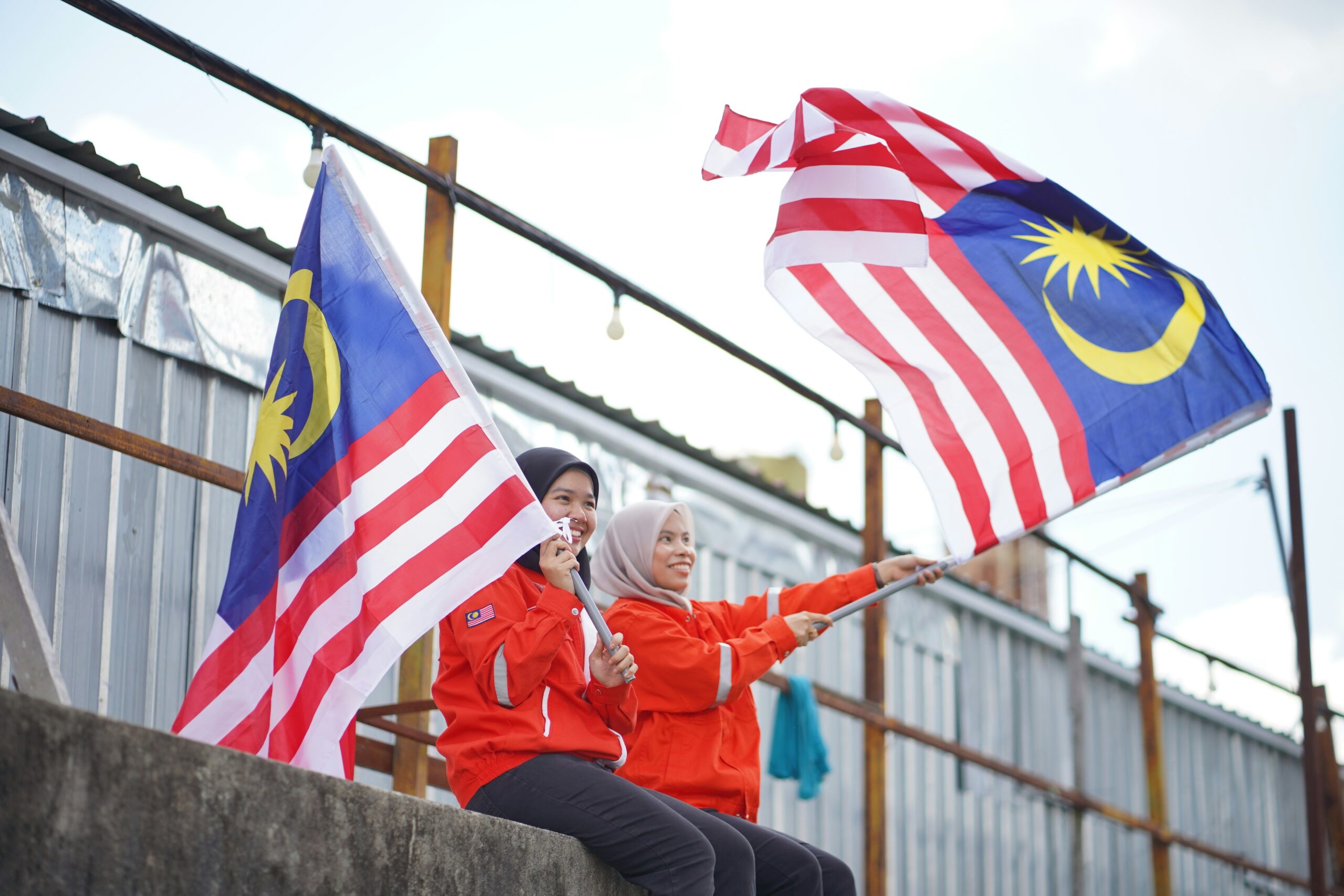
LET’S be honest: “nationalism” is a tricky thing. It can be the glue that holds a country together, or it can be the thing that quietly pulls it apart.
For a country as wonderfully mixed as Malaysia, the way we understand nationalism right now will decide if we move forward as one people, or drift further and further apart.
Think about it. At its best, nationalism is a beautiful idea. It’s that feeling of shared purpose. It’s the spirit that makes people want to build a school, not a barrier.
It’s the quiet voice that tells every Malaysian, no matter if you’re Malay, Chinese, Indian, or from any of our indigenous communities: “You have a place here. This future is yours, too.”
But there’s a darker side to it. This other kind of nationalism doesn’t build; it divides. It feeds on fear, creating a simple “us vs. them” story, often along racial or religious lines.
It brings up old wounds to stay relevant, turns our differences into weapons, and promises to protect us while actually tearing us apart from the inside. It might feel powerful for a moment, but it leaves us weaker in the long run.
Right now, Malaysia is standing at a fork in the road.
We have such a strong foundation for the good kind of nationalism. We’re a country literally woven from different threads—Malay, Chinese, Indian, and Indigenous cultures.
Our diverse celebrations, languages, and ways of life aren’t a weakness; they’re the very fabric of who we are. The dream of a true “Bangsa Malaysia” isn’t some naive fantasy. It’s the next logical, necessary step for our country to grow up.
But we can’t ignore the cracks. Sometimes, our public conversation gets stuck in a cycle of racial suspicion and religious tension. Complicated issues get boiled down into simple, angry slogans.
It’s easy for politicians to reach for the identity card when they don’t have better answers. When that happens, the bad kind of nationalism starts to creep in. It’s not always loud, but it’s steady, and it quietly eats away at the trust between us.
And this has real costs. It’s the awkward hesitation to connect with someone from a different background. It’s the trust that slowly fades away. It’s the brilliant collaboration that never happens because we’re staying in our own lanes.
A country that’s busy being divided at home just can’t compete in the world. It can’t innovate, and it can’t build a stable, lasting future.
So how do we choose the right path? How do we make that positive nationalism more than just a nice phrase? It comes down to a few things we can all work on.
First, we need to let “being Malaysian” mean more. It’s time we see our identity as being rooted in shared values—things like fairness, mutual respect, and caring for our common good.
This doesn’t mean forgetting our own cultures; it means celebrating them within a bigger, shared story.
Second, we need to move beyond just ‘tolerating’ each other. Tolerance is fine, but it’s not enough. We need to create real chances for genuine understanding.
Spaces where we can actually listen to each other, learn about each other’s beliefs and traditions, without fear or judgment. Let’s make that normal.
Third, our leaders need to lead, not divide. This goes for politicians, religious leaders, community leaders, all of them. Real leadership doesn’t light fires; it brings people together to solve problems.
It doesn’t scream simple answers; it asks us to be mature and think things through. The tone of a nation is set by its leaders, but it’s carried by all of us.
Fourth, our young people are the key. They’re growing up in a world of instant information and constant change. We need to give them more than just facts.
We need to help them build wisdom—the ability to tell the difference between what’s true and what’s just trying to manipulate them, to know unity from division. Let’s give them our hopes, not our fears.
Finally, we all need a little courage. It takes courage to stand up to a divisive narrative, especially when it’s popular. It takes courage to speak up for fairness when it’s easier to stay quiet.
And it definitely takes courage to believe that unity is actually possible, even when our differences feel huge.
Malaysia’s future isn’t going to be decided by some grand announcement in a hall. It’s being shaped right now, in our classrooms, in our places of worship, in conversations at our dining tables, and in the small, daily choices each of us makes.
So, the question for all of us is simple, but it’s urgent: What kind of Malaysia do we want to leave to our kids?
If we choose the path of fear and exclusion, we might get some short-term wins, but we’ll lose the very soul of our nation.
If we choose the path of inclusion and unity, it won’t always be easy, but we’ll build a Malaysia we can all be proud of—a Malaysia that’s strong, respected, and genuinely united.
We’re at the crossroads. The choice is up to us.
KT Maran
Seremban, Negri Sembilan
The views expressed are solely of the author and do not necessarily reflect those of MMKtT.
- Focus Malaysia.

No comments:
Post a Comment
Note: Only a member of this blog may post a comment.