


The Pahang Orang Asli community appealed to the state ruler, Sultan Abdullah Sultan Ahmad Shah, to reconsider his statement denying the existence of customary land in the state.
The community, backed by nearly 50 civil society organisations, argued that the correction is vital to ensure that the rights of the Orang Asli community are recognised morally and legally instead of being questioned.
As such, the community said it is humbly seeking an audience with the sultan, alongside lawyers and experts in Orang Asli land rights, to "explain" the position of customary land within the nation's legal system.
Such a session, they added, would enable the ruler to receive explanations based on historical facts, custom, and law, "thereby clarifying any confusion".
They also said the audience could assist the state administration in making decisions consistent with international legal principles.
"We respect the royal institution as the protector of the state. However, respect cannot be interpreted as agreement with the denial of rights that have been recognised by law.
"We will continue to defend our customary land peacefully, grounded in law and the principles of justice, for the dignity of the indigenous community in Malaysia and future generations," the community said in a statement yesterday.
Last month, Sultan Abdullah reportedly decreed that there is no such term as customary land or heritage land that grants rights to any party to occupy land freely in this state.
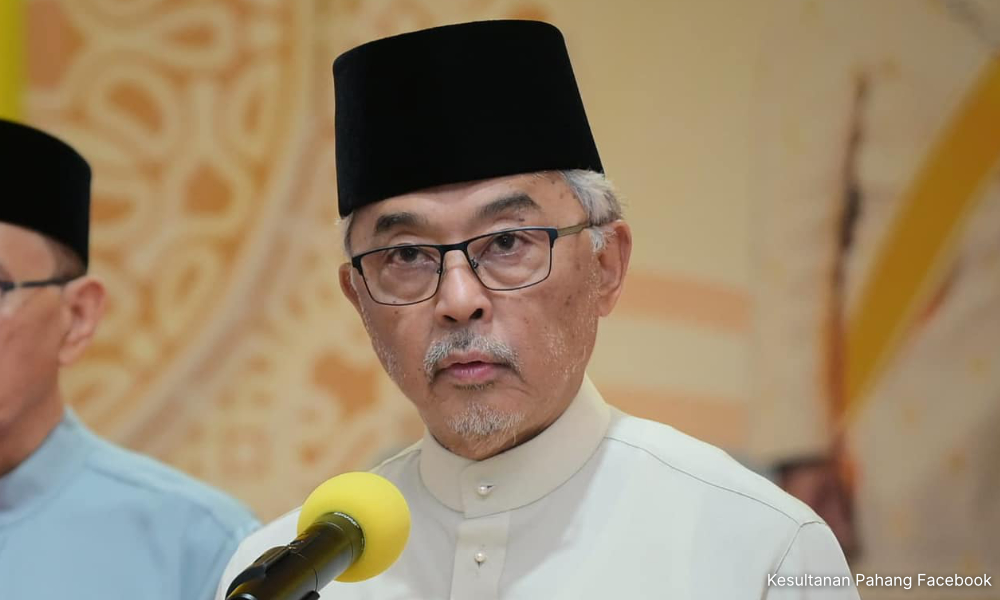
The ruler instead affirmed that the right to occupy land by the Orang Asli community only exists through official gazettement by the government, as provided under Section 6 and Section 7 of the Aboriginal Peoples Act 1954.
PahangMedia reported the ruler as saying that any occupation, exploration, or control of land without written permission is a serious offence under the law.
"In maintaining the sovereignty of this state so that it remains peaceful, prosperous, and harmonious, I wish to stress that the issue of land encroachment is not a small matter to be taken lightly, nor is it a seasonal issue that is temporarily hot.
"It is a deeply rooted cancer, destroying the land administration system, challenging the rule of law, and oppressing the rights of the state and its people," he was quoted as saying.
On Feb 9, Malaysiakini reported that police had detained 21 Orang Asli villagers from Kampung Jemeri in Rompin, Pahang, for alleged trespassing.

A villagers’ representative, Azman Idom, 36, told Malaysiakini that those detained, who are from the Jakun tribe, were attempting to dismantle a barricade erected at the entrance to what they claimed as their customary land.
‘Hurtful statement’
Meanwhile, the Orang Asli representatives said that while they do not deny Sultan Abdullah's expression of commitment to safeguard the well-being of their community, the ruler's statement denying the existence of customary land has "deeply hurt" the community.
"We are of the view that confusion regarding the term 'customary land' may stem from the failure to recognise the mapping process of Customary Land and Territory developed based on community knowledge, traditional boundaries, and ancestral occupation history.
"The Customary Land and Territory plans prepared based on community knowledge are often not taken into account or translated into permanent gazettement by the authorities, even though the courts, in cases brought by the Orang Asli, have accepted community-prepared maps," they added.
The group lamented that such shortcomings have "repeatedly resulted" in the Orang Asli community being labelled as “encroachers” or regarded as unlawfully occupying land, when in fact, it is they who have long protected, preserved, and defended the ecosystems, forests, and natural resources in relevant territories.
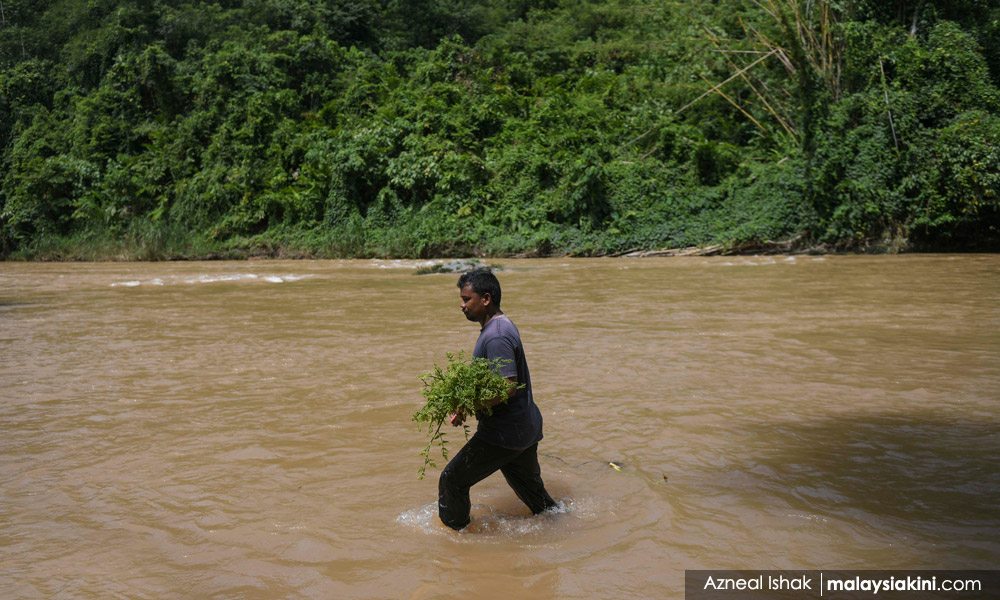
"The land we occupy is not foreign to us, but land inherited, managed and sustainably preserved according to custom and traditional knowledge.
"We believe that the earlier statement (from Sultan Abdullah) may have been made without fully taking into account the community’s occupation history and the legal principles recognised by the courts.
"Therefore, we hope that space for dialogue can be opened so that clarification may be given directly, professionally, and based on facts," they urged.
They also expressed confidence that with "comprehensive clarification”, the sultan's commitment to the welfare of the Orang Asli can be more thoroughly translated.
More needs to be done
They also referenced Sultan Abdullah's decree that 27 villages, involving 7,706 hectares, have been gazetted as Orang Asli settlement areas in Pahang.
However, the community highlighted that 83 villages are still in the process of being surveyed, and 18 villages have yet to undergo gazettement application - involving 24,532 hectares, while 61 villages, covering 16,253 hectares - have yet to be surveyed.
The group cautioned against the situation, rendering the Orang Asli community victims of "state government’s negligence”, pointing out that the gazettement applications were made "long ago," but have yet to be fully implemented.
The gazettement process since the 1970s was meant to serve as a mechanism to protect customary land rights, they said, arguing that its absence should not affect the rights or lives of a community who have continuously safeguarded and preserved their ancestral lands.
They also asserted that if there are areas yet to be gazetted as Orang Asli Reserves, the matter "reflects weaknesses and failures" on the part of the state government and the Orang Asli Development Department (Jakoa) in carrying out their responsibility to gazette comprehensively and systematically.
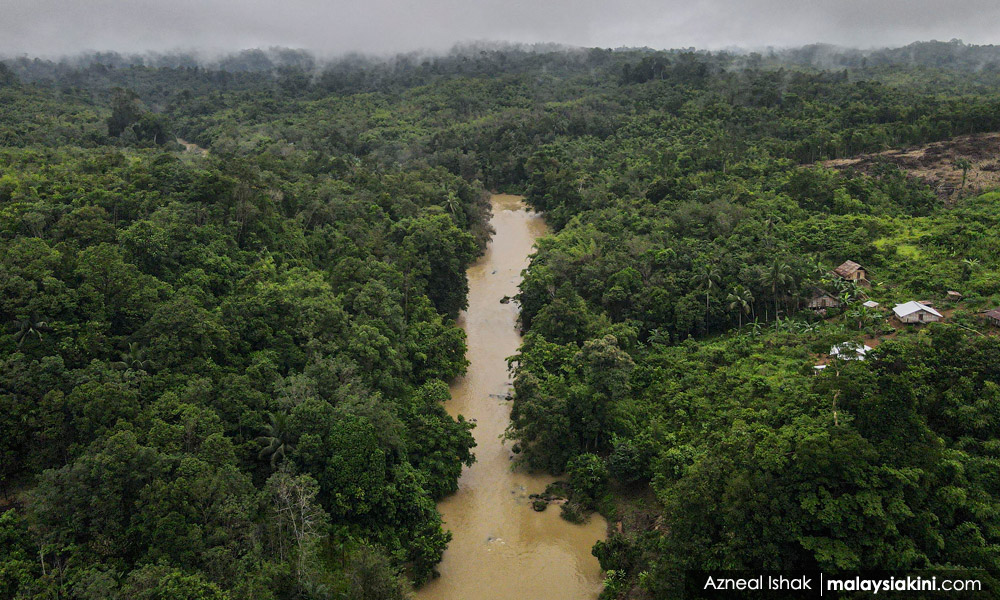
"Customary rights do not arise from gazettement. Gazettement should serve as a protective mechanism for customary land rights that have long existed.
"To state that customary land does not exist merely because it has not been gazetted is an interpretation that contradicts legal principles recognised by the highest courts of the country," they claimed.
The community also noted that the courts have recognised the principle that indigenous communities possess customary rights or native title over their lands based on long-standing occupation.
In particular, they referenced the case of Sagong Tasi & Ors v Kerajaan Negeri Selangor (2002), in which the High Court ruled that the Orang Asli community has customary rights over land they traditionally occupy, even if the land has not been gazetted as an Orang Asli reserve.
They also pointed to the legal precedent set in Adong bin Kuwau & Ors v Kerajaan Negeri Johor (1997), which saw the court recognising that Orang Asli have rights over their traditional territories, including the right to compensation if the land is acquired by the government.
In the case of Mohamad bin Nohing & 5 Ors v Pejabat Tanah & Galian & 3 Ors (2015), the community said the Court of Appeal confirmed that Orang Asli customary rights may exist and be recognised - even if the land had been gazetted as Malay Reserve Land since 1923. - Mkini

No comments:
Post a Comment
Note: Only a member of this blog may post a comment.