


When Attorney-General Dusuki Mokhtar invoked Article 145(3) of the Federal Constitution to close Deputy Prime Minister Ahmad Zahid Hamidi's case, he was, on paper, well within his rights.
However, the decision has since laid bare a far deeper problem.
Who truly decides when a directive can be ignored, how transparent must that decision be, and what precedent does it set for those who come after?
A potential defence of Dusuki's actions lies in Public Prosecutor Direction No. 2/2019 itself, where it acknowledges that "nothing in this direction shall affect or prejudice the discretion of the PP (public prosecutor) to decide personally on any of these matters, pursuant to Article 145(3) of the Federal Constitution".
Under Article 145 (3), the AG has absolute authority to initiate, conduct, or discontinue any criminal proceedings for offences, excluding those before a syariah court, a native court, or a court-martial.
Dusuki invoked precisely this constitutional power, telling reporters he had used his authority to close Zahid's case.
This raises a critical question: Can the AG, through constitutional discretion, override his own office's procedural directives?
In theory, yes. Article 145(3) grants the AG absolute discretion over prosecutions. In practice, however, this creates a disturbing paradox. If an AG can issue directives to safeguard prosecutorial integrity, and a successor can simply invoke constitutional discretion to ignore those directives, what purpose do they serve?
Former attorney-general Tommy Thomas' directive was meant to provide institutional consistency transcending individual AGs. If each AG can disregard predecessors' directives at will, the system reverts to precisely the ad hoc decision-making the directive sought to prevent.
Weighing in on the matter, lawyer Nizam Bashir said that although the law may grant a public authority discretionary power, that power is never absolute or beyond limits.
“It must always be exercised lawfully, reasonably, and for the proper purpose intended by law,” Nizam told Malaysiakini.
He said that this was established in Pengarah Tanah dan Galian Wilayah Persekutuan vs Sri Lempah Enterprise (1979), when the then-Supreme Court affirmed that even when the law grants a public authority discretion, that power is never absolute and remains subject to legal limits and court review if exercised improperly.
Former MACC chief commissioner and human rights lawyer Latheefa Koya noted that, regardless of Dusuki’s justification, the fact remains that credible evidence exists to establish every element of the corruption offence, and this remains an unrebutted fact.
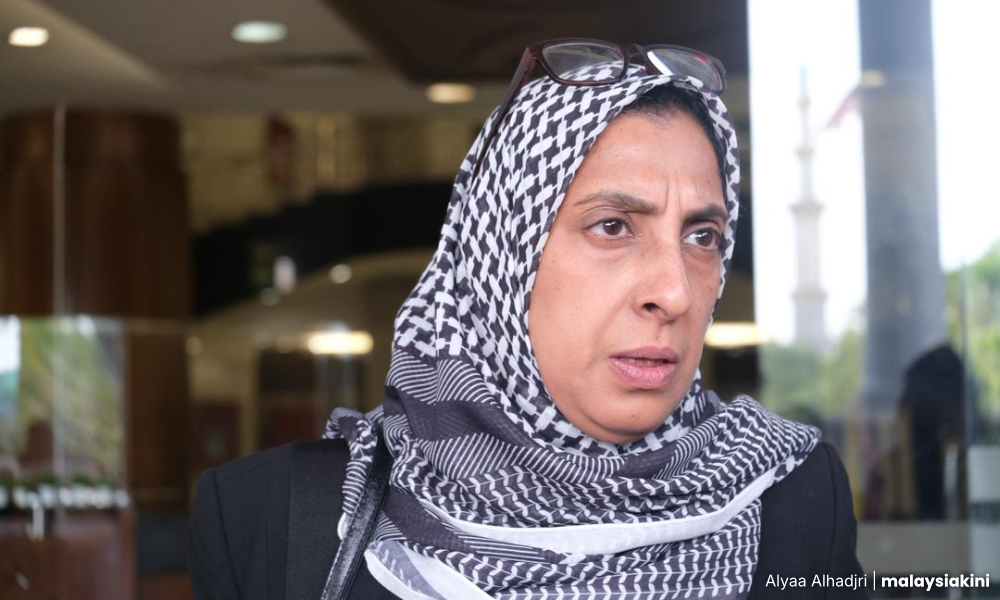
“So, when the AG then publicly pronounces NFA (no further action) before presenting his further investigation to the court, it betrays not only the directive but also the possibility of a well-coordinated plan to ensure that this time Zahid be granted a discharge amounting to acquittal (DAA).
“Otherwise, it would be absurd as the AG had already withdrawn the charges earlier for further investigation.
“One needs to remind the AG that the charges were withdrawn pursuant to the letter of representation from Zahid to the AG, and this was done despite the fact that on Jan 24, 2022, the Kuala Lumpur High Court had found that a prima facie case had been established.
The establishment of a prima facie case denotes that the prosecution has adduced credible evidence proving each ingredient of the offence, which, if unrebutted or unexplained, would warrant a conviction.
This is clear by virtue of Section 173(h)(iii) of the Criminal Procedure Code (CPC).
Transparency deficit
Perhaps most troubling is the lack of detailed justification for the NFA decision. The Attorney-General’s Chambers’ (AGC) statement claimed the decision was made "taking into account the interests of justice, the integrity of the prosecutorial process, as well as the need to ensure certainty and transparency."
Yet as the former deputy minister in the Prime Minister's Department (Law and Institutional Reform) Ramkarpal Singh observed, the AGC’s statement "clearly lacks substance and amounts to a mere general statement that it is now satisfied that the matter ought not to be proceeded with."
The Bukit Gelugor MP also noted that the AGC’s statement did not indicate whether it had reviewed the High Court’s 2022 prima facie findings before deciding not to pursue Zahid’s case.
Dusuki's public comments that the case was diluted based on money flows and that investigations were comprehensive were merely his opinions, rather than substantive explanations.

What specific evidence was diluted? How did further investigations negate testimony already given under oath? What fresh information emerged that couldn't have been discovered before 99 witnesses testified?
These questions matter because Public Prosecutor Direction No. 2/2019 was fundamentally about transparency and consistency in prosecutorial decision-making.
A directive issued to restore public confidence in the integrity of the country's prosecutorial system loses all meaning if crucial decisions can be made behind closed doors with only vague public justifications.
The political dimension
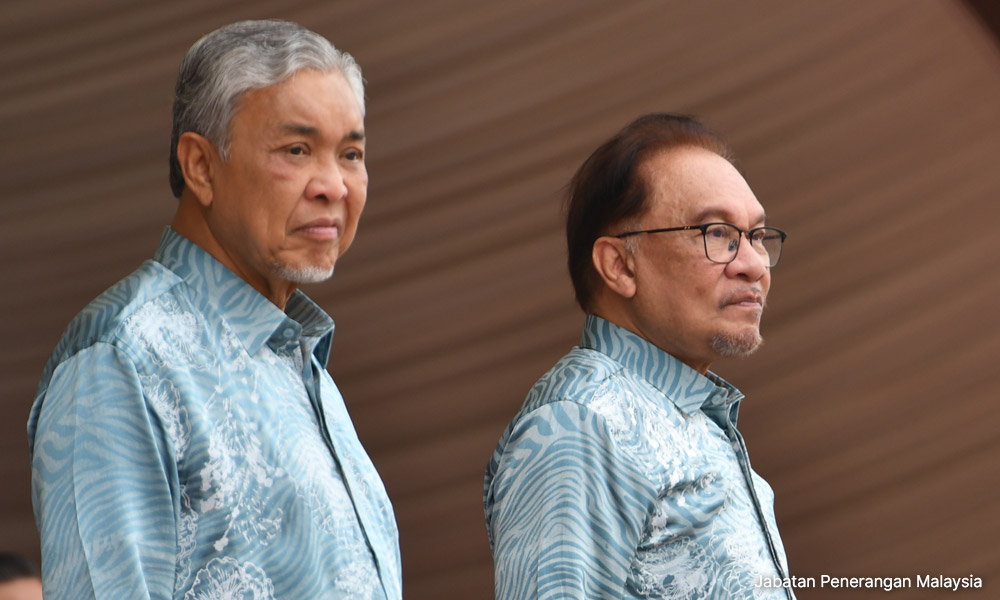
The issue here is that the political context cannot be entirely ignored in this situation. Zahid played a pivotal role in forming the current government.
His 30 MPs from BN provided crucial support to Prime Minister Anwar Ibrahim following the 2022 general election.
The directive's very existence reflected public concern that prosecutorial decisions might be influenced by improper considerations. By establishing clear procedural requirements-multi-layered review, written decisions, continuance of commenced trials-the directive sought to insulate prosecution decisions from political pressure.
When those procedural safeguards are set aside in a case involving a sitting deputy prime minister, the perception of political interference becomes unavoidable, regardless of whether such interference actually occurred.
Precedent problem, how other AGs fared
Legal systems depend on precedent and consistency, and Dusuki's approach to Zahid's case now creates a troubling precedent.
The directive stated that only in "very exceptional cases" should discontinuance occur after trial commencement.
If Zahid's case-trial involving 99 witnesses, 53 days of proceedings, and a comprehensive prima facie finding -qualifies as such an exception, it's difficult to imagine what case wouldn't. The exception threatens to swallow the rule.
Dusuki, however, is not the first AG who may have sidestepped the directive. His predecessors, Idrus Harun - who was appointed after Thomas resigned in 2020, and Terrirudin Salleh - may have unwittingly done the same.
Idrus’ most controversial decision came in June 2020, when he discontinued all 46 corruption and money-laundering charges against former Sabah chief minister Musa Aman, citing the unavailability of documents from Hong Kong banks and the absence of witnesses under the Mutual Legal Assistance in Criminal Matters Framework.
Whilst the trial had not yet commenced, the High Court had scheduled Sept 14, 2020, for the trial to start.
It must also be noted here that there was no prima facie established in Musa's case.
However, the decision to withdraw charges after they had been preferred again appears to contradict the directive's principle that due respect and weight must be given to the decision to prosecute, originally made by an authorised prosecutor.
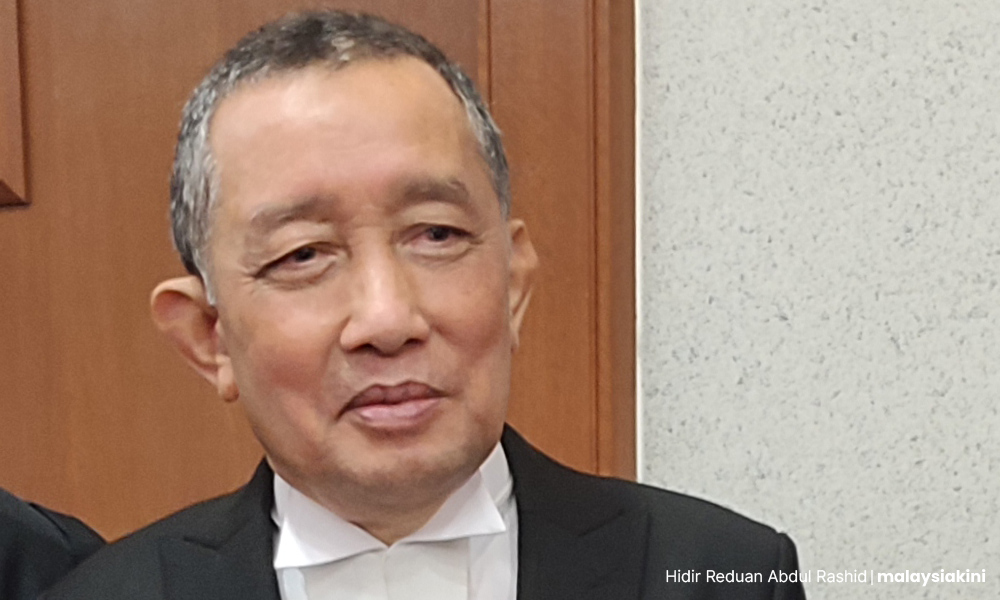
Idrus also relied primarily on an affidavit from former attorney-general Abdul Gani Patail, who had decided in 2012 not to charge Musa. This is despite the directive requiring material changes in circumstances to justify discontinuance.
Perhaps more significantly, Idrus granted a discharge not amounting to acquittal (DNAA) to Riza Aziz, stepson of former prime minister Najib Abdul Razak, on May 14, 2020, for five counts of money laundering involving US$248 million (RM1.08 billion) linked to 1MDB.
Letters of representation were submitted in Riza's case, with his solicitors, Messrs Scivetti & Associates, writing to the AGC on Nov 18, 2019, to seek a review of all five charges. Further representations followed thereafter.
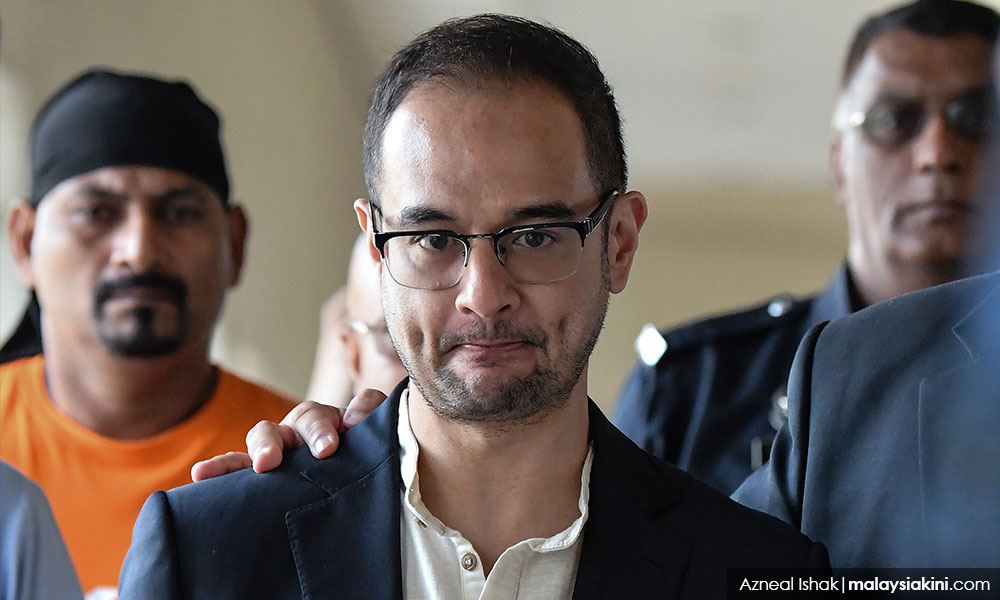
Significantly, the original hearing dates were vacated following the first representation, which appears to run counter to the directive's explicit prohibition against postponing trials merely because representations had been submitted.
That multiple representations were made is equally notable, as the directive had specifically anticipated such a practice, mandating that subsequent representations be declined unless fresh or compelling reasons were advanced.
Idrus had stated that he acted upon the advice of his predecessor, Thomas, whom he claimed had agreed to the settlement terms “in principle”.
In a statement the same day the DNAA was granted, MACC said that the plea bargain between the prosecution and Riza was achieved during Thomas' stint as AG.
Thomas, however, branded this as a "lie" and stressed that his only role in the case was to appoint former federal court judge Gopal Sri Ram to lead the prosecution in the case.
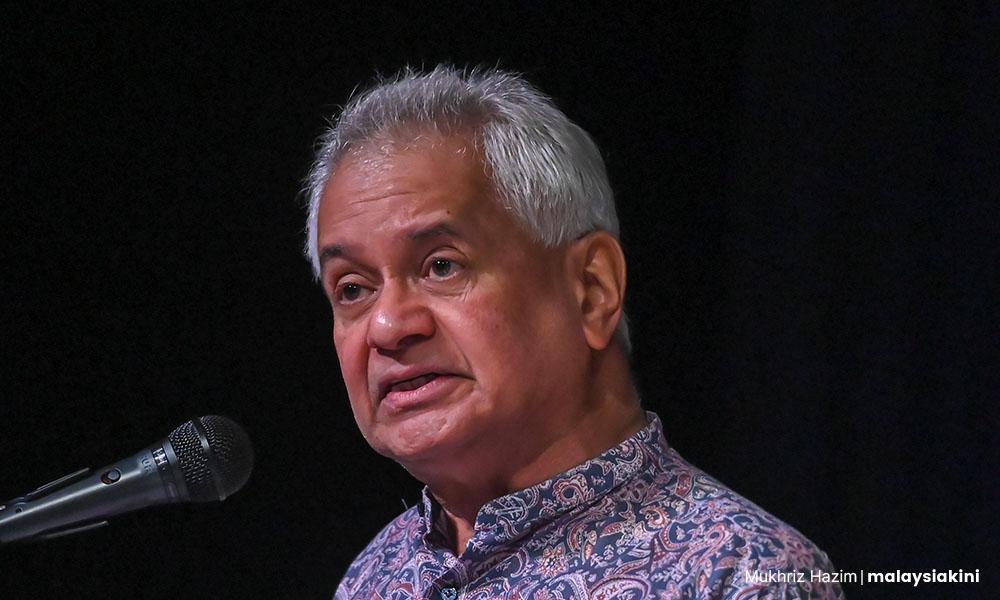
It must be noted that there was no prima facie established in Riza Aziz's case.
However, Thomas publicly condemned the DNAA as a "sweetheart deal" for Riza, stating he would never have approved the agreement and that he had a very strong case to establish the ingredients of the offences.
However, the most glaring potential violation of the direction under Idrus' tenure is still the DNAA granted to Zahid in Sept 2023, just days before he left office.
Terrirudin’s role, by contrast, was more straightforward. Upon taking office on Sept 6, 2023, just two days after the DNAA was granted, he staunchly defended the decision, emphasising that charges against an accused may be withdrawn at any time before judgment is delivered, and that such action can be taken even once a prima facie case has been established.

More tellingly, in January 2024, Terrirudin asserted that as public prosecutor, he was not duty-bound to furnish a reason to anyone on why criminal charges are made or why trials in court are dropped midway.
This position appears to be fundamentally at odds with the direction's emphasis on transparency and procedural safeguards.
Terrirudin, however, did not personally order any documented NFAs after prima facie findings during his 14-month tenure.
Malaysiakini had approached Dusuki, Idrus and Terrirudin for comments on both stories, but none received as of press time.
Siti Aishah: The Kim Jong Nam precedent
On March 11, 2019, the Shah Alam High Court granted a DNAA to Indonesian national Siti Aisyah, who had been accused of murdering Kim Jong-nam, the estranged half-brother of North Korean leader Kim Jong-un, in 2017.
The DNAA followed an application by the prosecution under Section 254(1) of the CPC to withdraw the murder charge. At the time, Thomas was serving as AG.
It is also crucial to note that the directive was issued two months after the charge was withdrawn.
One might wonder: Did Thomas breach his own ground rules by discontinuing the case after a prima facie finding?
One thing to note is that Public Prosecutor’s Direction No. 2/2019 is an internal guideline designed to prevent routine or casual discontinuance of prosecutions. It does not curtail the constitutional discretion of the public prosecutor, particularly where the AG acts personally.
In Aishah’s case, the charge was withdrawn by Thomas himself, who was the final decision-maker, as contemplated by the directive. The CPC expressly permits such a withdrawal, resulting in a DNAA. - Mkini

No comments:
Post a Comment
Note: Only a member of this blog may post a comment.