


In the democratising global landscape of the 21st century, many nations have established statutory term limits for heads of government.
As the name implies, once a leader reaches the term limit, they are disqualified from remaining in office.
The primary rationales for this system are the avoidance of excessive concentration of power and the prevention of political corruption, while promoting leadership turnover to safeguard democracy and social stability.
In Malaysia, calls to limit the prime minister’s tenure emerged as early as 2019, though Parliament ultimately failed to pass the draft bill proposed by Pakatan Harapan administration.
Upon returning to power, the Madani government tabled a bill in Parliament on Feb 23, 2026, seeking to amend Article 43 of the Federal Constitution to restrict the PM’s tenure.

Briefly, the new provisions propose, among others:
The PM’s tenure shall not exceed 10 years, whether consecutive or not;
The PM must step down along with their cabinet upon reaching the 10-year mark; and
The outgoing PM and cabinet shall remain in office in a caretaker capacity until a successor is appointed.
Undeniably, Malaysian society’s wariness toward long-term rule has a deep context and historical precedent.
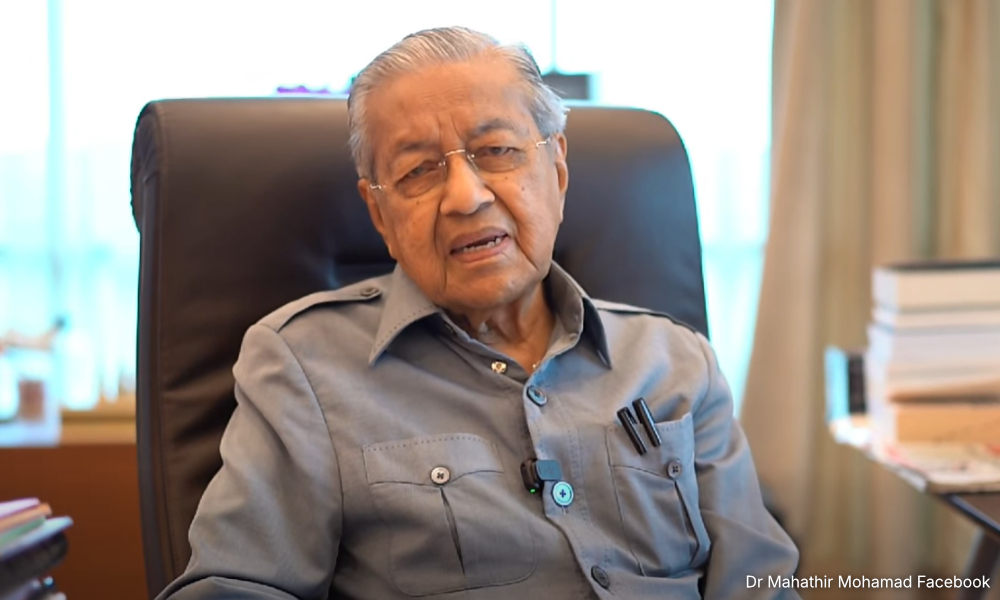
Following former prime minister Dr Mahathir Mohamad’s 22-year era of iron-fist politics, the appeal of this reform is extraordinary.
However, from a comparative constitutional perspective, countries that adopt term limits, such as the United States, Taiwan, and Egypt, almost exclusively adopt presidential or semi-presidential systems.
In contrast, nations practising Westminster or parliamentary democracy, including the United Kingdom, rarely impose term limits on the head of government.
The fact that term limits exist primarily in presidential systems rather than parliamentary democracies is no coincidence.
One should ask: what is the reason for this phenomenon, and can term limits be successfully transplanted into a parliamentary democracy?
To discuss this, the ideas and principles of parliamentary democracy are not to be ignored.
Source of PM’s power
Unlike a presidential system, the PM’s power in a parliamentary democracy does not come directly from the voters, but from the majority support of members of Parliament (MPs).
During a general election, voters only cast ballots for candidates in their respective constituencies, hoping their preferred candidate wins and subsequently nominates the PM.
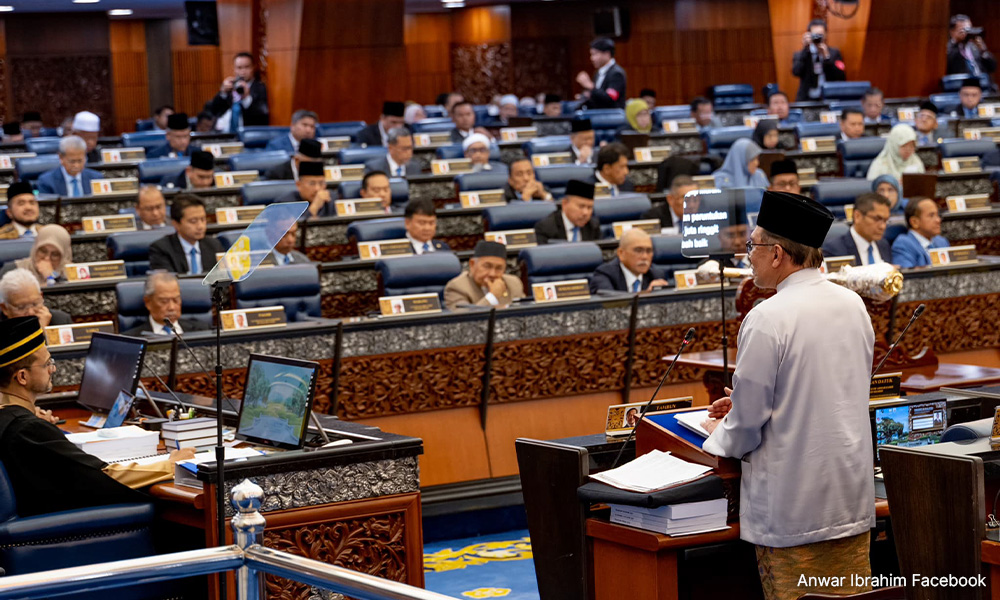
Under this idea, the legitimacy of the PM’s appointment is built on the foundation of parliamentary confidence. Introducing a rigid 10-year limit essentially severs this democratic mandate from Parliament.
Accordingly, even if a PM retains the steadfast support of the majority of the Dewan Rakyat, the law would forcibly remove them from office, potentially handing the role to a less capable MP.
Notably, the bill targets only the tenure of the head of government, which means the opposition leader is not subject to such constraints.
This could create an asymmetric competition, where an opposition leader can accumulate political capital indefinitely, while the ruling party is forced into periodic leadership changes.
Separation of powers: Parliamentary vs presidential
This disparity extends to the relationship between the executive and the legislature.
In a presidential system, the executive and the legislature are highly segregated.
The president is not directly accountable to congress; their term is fixed and difficult to terminate due to the extremely high threshold for impeachment, usually requiring serious illegal acts (eg, treason or bribery).
Consequently, legislators in presidential systems must seek constitutional tools like term limits to curb potential power expansion or dictatorial tendencies.
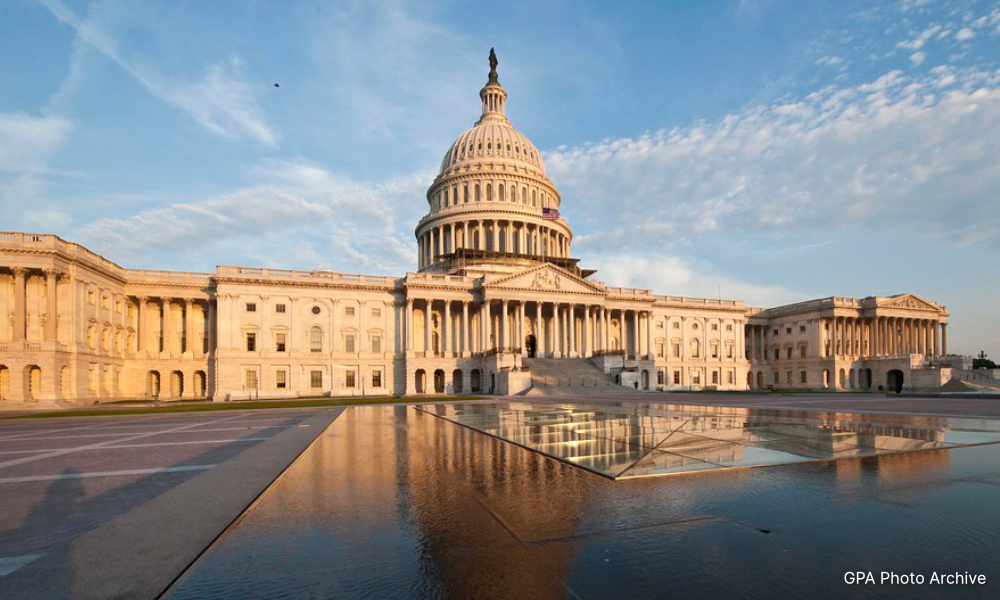
In the US, for instance, while the house needs only a simple majority to impeach, it requires a two-thirds majority in the senate to convict and remove a president.
Under such high standards, no US president has ever been successfully removed via impeachment, reflecting the stability of the office.
Similarly, in Taiwan, a president can only be impeached for constitutional violations. The process requires a proposal by half of the legislative yuan, approval by two-thirds of all legislators, and a final ruling by two-thirds of the justices in the constitutional court.
However, the idea of parliamentary democracy is fundamentally different. The executive and legislature overlap significantly.
The PM and cabinet members must be MPs (the PM must specifically come from the Dewan Rakyat) and remain responsible to Parliament at all times, allowing the legislature to hold the executive directly accountable.
Furthermore, a PM is much easier to replace than a president. In Malaysia, any MP can table a motion of no confidence against the PM, and if it receives a majority vote, it passes.
Having said that, we must face the reality that Malaysia’s no-confidence mechanism is incomplete as it is not explicitly written into the Constitution or Standing Orders.
However, a motion is not the only way to prove a loss of confidence. Under Westminster conventions, if a government’s budget or other major bills fail to pass, it signifies a loss of majority support, functioning similarly to a no-confidence vote.
For instance, in 1979, then Canadian PM Joe Clark resigned after his budget was defeated.
In short, the difference is that a president must break the law to be removed, while a PM’s position is in jeopardy the moment they lose political confidence.
Who is more secure: PM or president?
Following the previous point, a PM’s position is inherently less secure than a president’s.
As mentioned, parliamentary democracy uses an indirect election system. If MPs shift their stance, the PM can lose majority confidence and be removed.
In other words, a new PM, or even a new ruling party, can take over without dissolving Parliament or holding a general election.
Malaysian politics provides a textbook example. Between 2020 and 2022, during the Covid-19 movement control order, Parliament was not dissolved, yet three different MPs served as PM: Mahathir (2018-2020), Muhyiddin Yassin (2020-2021), and Ismail Sabri Yaakob (2021-2022).
The “Sheraton Move” of February 2020 was pivotal. When Bersatu and a faction of PKR MPs exited the Harapan coalition to form a new alliance with PAS and others, the sitting government lost its majority.
Consequently, the administration was replaced by Perikatan Nasional without a general election.

This chain of events shows the underlying idea of parliamentary democracy, where the government’s survival depends on continuous parliamentary confidence, not a fixed term.
A PM does not govern until a fixed expiration date. Instead, they govern only as long as they maintain the House’s trust. Once that trust collapses, power transfers immediately.
The presidential system is different. A president is directly elected by the people, deriving legitimacy from a national mandate rather than ongoing legislative confidence.
Once elected, they hold executive power for a fixed term, theoretically unswayed by political shifts within the legislature.
Even if the president’s party loses its majority in congress, the president remains in power, facing governance hurdles rather than forced resignation.
History is full of “divided governments”. In the 2024 Taiwanese presidential election, Lai Ching-te from the Democratic Progressive Party won the presidency, while Kuomintang became the largest party in the legislature
In the US from 2023 to 2025, Democrat Joe Biden served as US president while Republicans controlled the house.
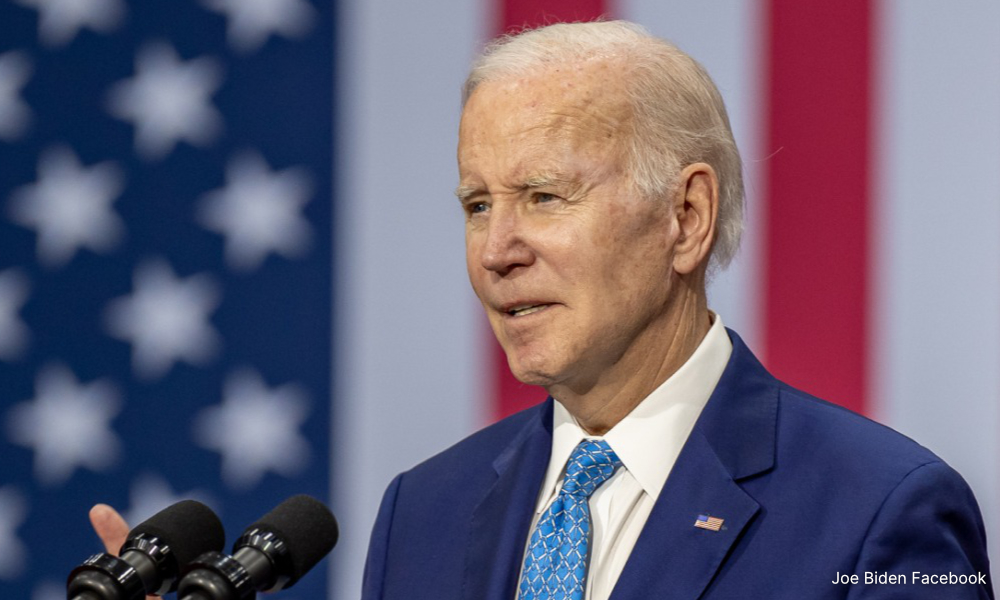
This explains why presidential or semi-presidential systems, such as the US and Taiwan, institutionalise term limits; in parliamentary systems, power turnover is already a built-in confidence mechanism.
Importing the presidential term limits into a parliamentary democracy creates a systemic mismatch, forcing a system based on collective responsibility to rely on a “timer” to trigger power transitions.
Parliamentary democracies with term limits
As noted, parliamentary democracies with term limits are global outliers. Most mature parliamentary democracies, such as the United Kingdom, Canada, Australia, New Zealand, or even Germany, do not impose statutory limits on their heads of government.
The few parliamentary nations that do, such as Thailand and Mongolia, are not considered mature democracies.
In Thailand, the military’s political influence is extraordinarily high, and the eight-year limit in the 2017 constitution was passed under a military junta specifically to curb the power of elected politicians.
Countries with both a president (acting as head of state) and a PM (head of government) also support this view.
In Poland, while the president has specific powers, including nominating judges or granting pardons, the country is functionally parliamentary, with executive responsibility resting with the PM.
Even in this framework, Poland imposes strict term limits on the president (who has less power) but none on the PM (who holds the real executive reins).
In summary, traditional parliamentary democracy contains natural checks and balances. Forcing a term limit on the PM undermines the system’s flexibility.
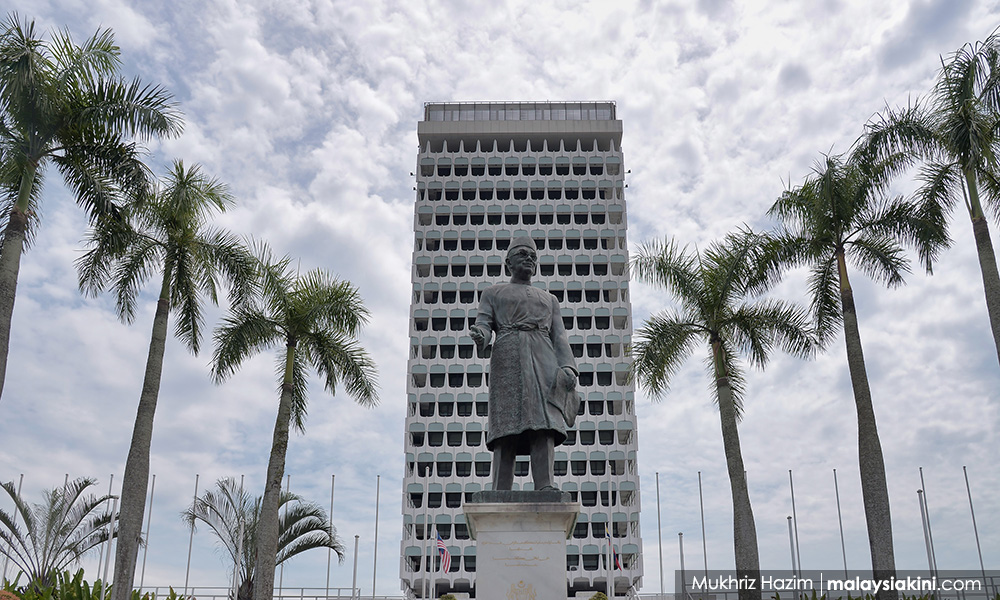
In this context, the Madani government’s proposed amendment not only violates parliamentary principles but also contains significant legal loopholes and technical issues.
Separation of responsibility and power
Firstly, the bill stipulates that after the 10-year limit, the PM and cabinet must serve as a caretaker government until a successor is chosen.
However, this “caretaker” period is not counted toward the 10-year limit, and there is no cap on how long a caretaker government can last.
Theoretically, a term-limited PM could continue to govern in a caretaker capacity until Parliament reaches its full five-year term and dissolves. While not a certainty, the possibility cannot be ignored.
More alarming is that the bill does not prevent an outgoing PM from remaining at the core of power in a different capacity, pulling strings without constitutional responsibility.
This could lead to “puppet PMs”, where a new face holds the title, but real decisions are made by the predecessor.
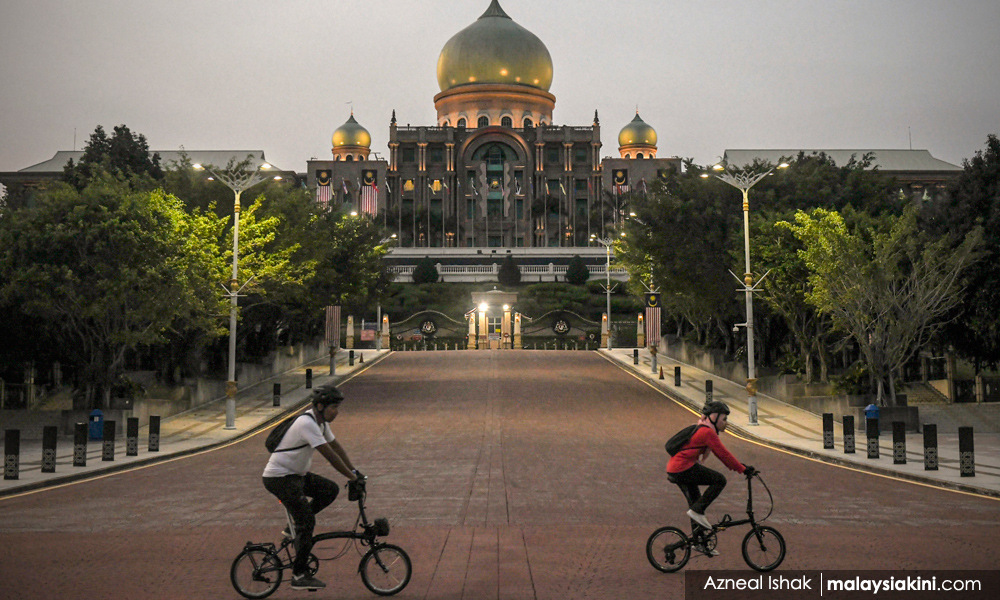
Under the principle of collective responsibility, the cabinet must be accountable to Parliament. If real power is separated from legal responsibility, the structure of political accountability becomes distorted.
Obstructing administration and triggering deadlocks
From another perspective, this “time-triggered” departure will inevitably hinder administration. Knowing exactly when a PM must leave, the cabinet may become insubordinate or complacent, turning the PM into a “lame duck” long before their departure.
Even if the PM and cabinet resign together, the continuity and efficiency of government will suffer. Replacing an entire executive team solely because of a calendar date, even when there is no crisis of confidence, and Parliament is stable, artificially creates an unnecessary governance gap.
Furthermore, a term expiration does not guarantee the ruling party has a successor ready. If internal factions are divided and cannot agree on a new candidate who commands a majority, a political deadlock arises.
In such a case, the country might be forced into a snap election or see MPs defecting to the opposition to form a new government.
A crisis of confidence that did not exist might be artificially triggered by a legal deadline. Thus, term limits may increase uncertainty rather than stability.
Are term limits effective in state of emergency?
The amendment fails to explain whether the term limit remains in effect during a state of emergency, potentially leaving a backdoor for incumbents.
Historically, Malaysia has long lived under the shadow of emergency laws, from the 1948-1960 Emergency against communists, the 1964 confrontation with Indonesia, the May 13, 1969 riots, to the 2021 Covid-19 emergency.
Notably, the 1969 emergency was only officially revoked in 2011.
This implies that for much of Malaysia’s history, the country has been under some form of emergency rule. Regulations meant to handle racial riots were even used against Bersih 2.0 organisers.
Emergencies are not a distant memory; they remain administrative tools for those in power.
We shall bear in mind that under the Malaysian constitutional framework, the authority to trigger emergency powers resides effectively with the PM and the cabinet.
Per the ruling in Teh Cheng Poh v Public Prosecutor, the Yang di-Pertuan Agong must act on the advice of the PM and cabinet regarding the proclamation of an emergency.
Muhyiddin’s 2021 emergency serves as a significant example where a proclamation ostensibly intended to curb the pandemic was used to suspend Parliament and prevent a no-confidence motion.
It must be emphasised that an emergency does not naturally suspend Parliament. Instead, the government must pass specific emergency ordinances to do so.
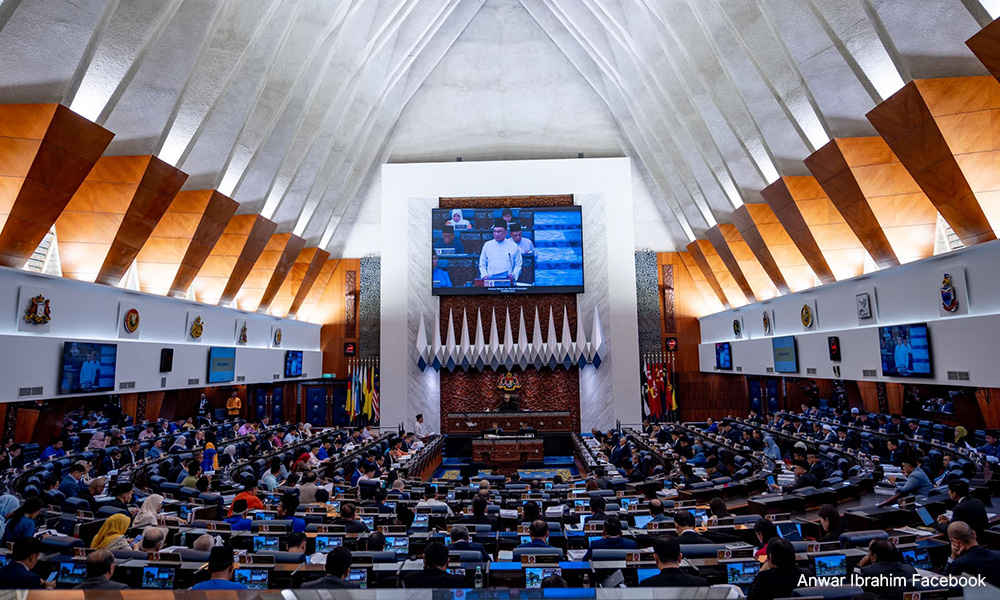
In other words, if a PM’s term is nearing its end, they could advise the proclamation of an emergency.
Except for matters regarding Islam, citizenship, and language, executive power can override almost all aspects of the Federal Constitution. Without constraints on emergency powers, a 10-year limit could become a dead letter.
If a PM uses an emergency to suspend the constitutional timeline of their tenure, such a law will not prevent the concentration of power, and may instead incentivise leaders to take radical measures to extend their political lives as they approach the deadline.
Conclusion
The pace of this constitutional agenda is clearly too rushed. From Anwar Ibrahim’s revival of the reform in January 2026 to its formal tabling on Feb 23, less than two months elapsed.
This raises questions about whether a bill that fundamentally alters Malaysia’s parliamentary democracy has been sufficiently thought through.
At its core, a term limit is a superficial reform. It is politically convenient as it does not touch the “cake” of vested interest groups or overhaul existing power structures.
However, issues like abuse of power and corruption are not directly proportional to a leader’s time in office; they stem from the unconstrained absolute power held during that time.
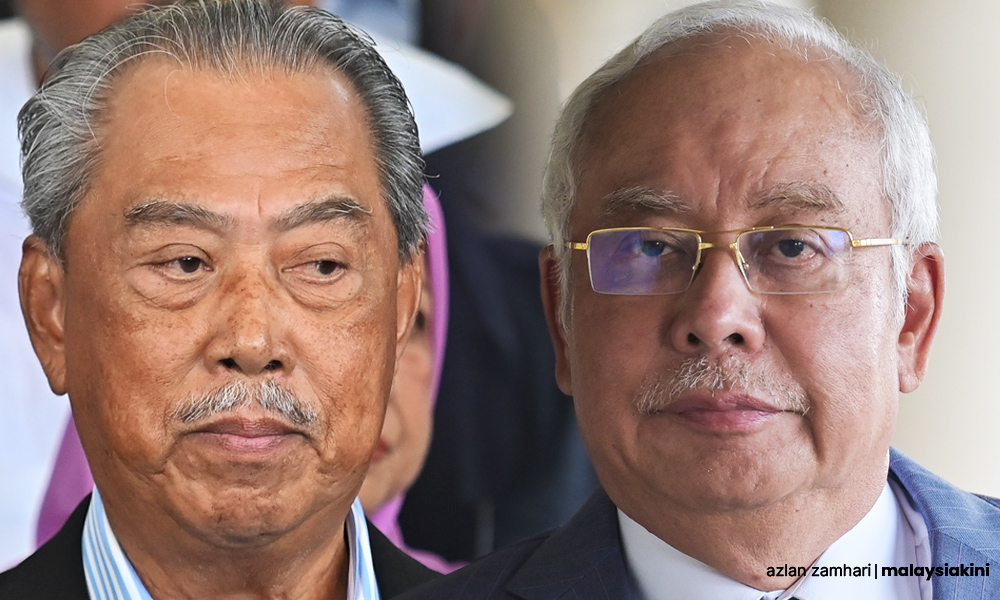
Former prime minister Najib Abdul Razak took only nine years to misappropriate billions; Muhyiddin governed for only 17 months yet faces charges related to the Jana Wibawa case.
Instead of setting a term limit, the government should show sincere reform by focusing on diluting the PM’s power. This includes:
● Prohibiting the PM from holding the finance minister portfolio.
● Subjecting the appointment of top civil servants and agency heads (judges, attorney-general, inspector-general of police, MACC chief, EC commissioners) to parliamentary oversight and approval.
● Downsizing the Prime Minister’s Department.
● Strengthening Parliamentary Special Select Committees.
The Constitution is the cornerstone of democracy and the rule of law. We urge the government to treat it with the gravity it deserves. - Mkini
LIAU PIN CHUN and CHIA JIA XUAN are Universiti Malaya law graduates who work in legal practice and public policy research.
The views expressed here are those of the author/contributor and do not necessarily represent the views of MMKtT.

No comments:
Post a Comment
Note: Only a member of this blog may post a comment.