


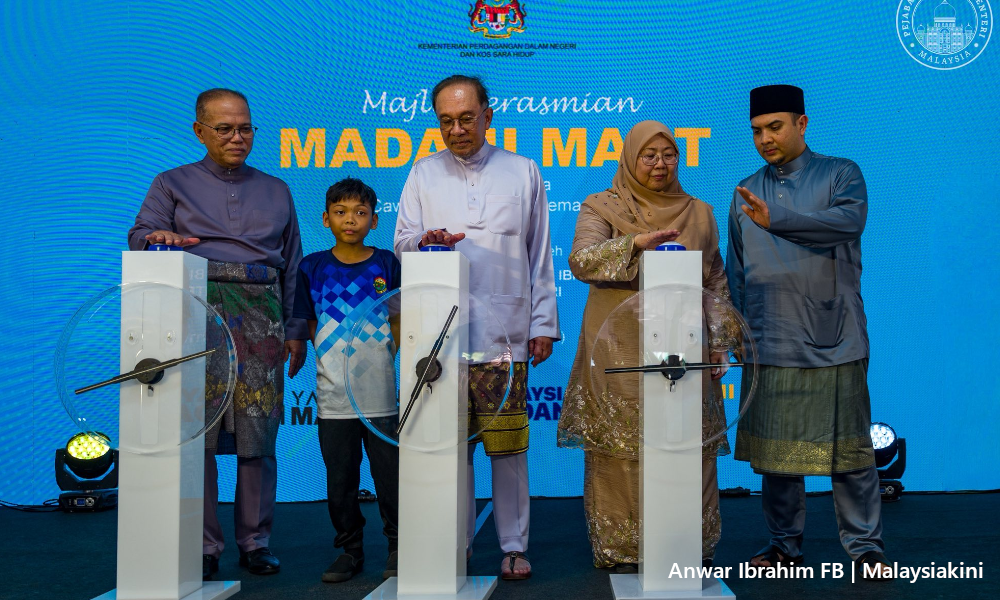
Deputy Domestic Trade and Cost of Living Minister Fuziah Salleh’s insistence that Madani Mart is not a franchise business may not be enough for the chain to escape the purview of the Franchise Act.
This is because, despite not using the franchise label, many elements in the business are similar to how the law defines franchises.
Lawyer Damian Yeo said that the law focuses on substance rather than the words used.
“Courts have repeatedly held that where an agreement is, in substance, a franchise but has not been duly registered, the agreement may be illegal, unlawful, void and unenforceable from the outset,” he wrote in response to queries from Malaysiakini.
In the case of Madani Mart, Yeo said the hallmarks of it being a franchise are: granting the right to use the Madani Mart brand; services provided included training, system management, and marketing strategy; continuous control through mandatory stock items and performance monitoring; and the requirement for licensees to pay licensing fees and royalties.

“In short, in my opinion, it falls squarely under the definition of franchise, and it can cause legal implications in the future if there is a dispute between licensor and licensee,” he added.
Explanation needed
Lawyer Farez Jinnah expressed a similar opinion, in that it is arguable that Madani Mart can be viewed as a franchise for similar reasons.
He said that while more information is needed on why Madani Mart framed itself as not a franchise, as it stands, any licence agreement may fall foul of the Franchise Act, depending on the dispute and facts laid before the court.
“The best course for the Madani Foundation to avoid controversy would be to explain its reasons for pursuing its licensing model, even though it touches on the franchise model in its own FAQ,” he added.
Farez and Yeo also opined that the fact that Madani Mart allows licensees to pick 50 percent of the inventory other than the mandatory items may not exempt it from being considered a franchise.
Under the Franchise Act, a franchise business must be registered with the Registrar of Franchises before it can sign up franchisees.
The first offence of failing to register is punishable with a fine of up to RM250,000 for a corporate body, while individuals face a fine of up to RM100,000 or up to one year in jail, or both. Subsequent offences carry heavier penalties.
The Act also specifies a minimum franchise contract duration of five years.
Non-compliance will run foul of the Act’s general punishment clause, which is a fine between RM10,000 and RM50,000 for corporations, and a fine between RM5,000 and RM25,000 or up to six months’ jail for individuals. Subsequent offences carry heftier penalties.
Loophole
Madani Mart’s website states that its initial licence agreement is typically three years and can be renewed, subject to compliance with operational standards and licensing terms.
The Franchise Act falls under the purview of the domestic trade and cost of living minister.

While the lawyers said there is a risk that Madani Mart may run afoul of the Franchise Act despite its licensing label, Yeo said there is one legal remedy.
Section 58 of the Act states that the minister in charge can, by issuing a gazette, exempt any individuals, companies, or industries from any or all provisions in the law.
In this case, the minister in charge is Fuziah’s boss, Armizan Ali.
Yeo said that exemptions do not convert a franchise into a non-franchise, but just lift any compliance requirements with the Act. - Mkini

No comments:
Post a Comment
Note: Only a member of this blog may post a comment.