


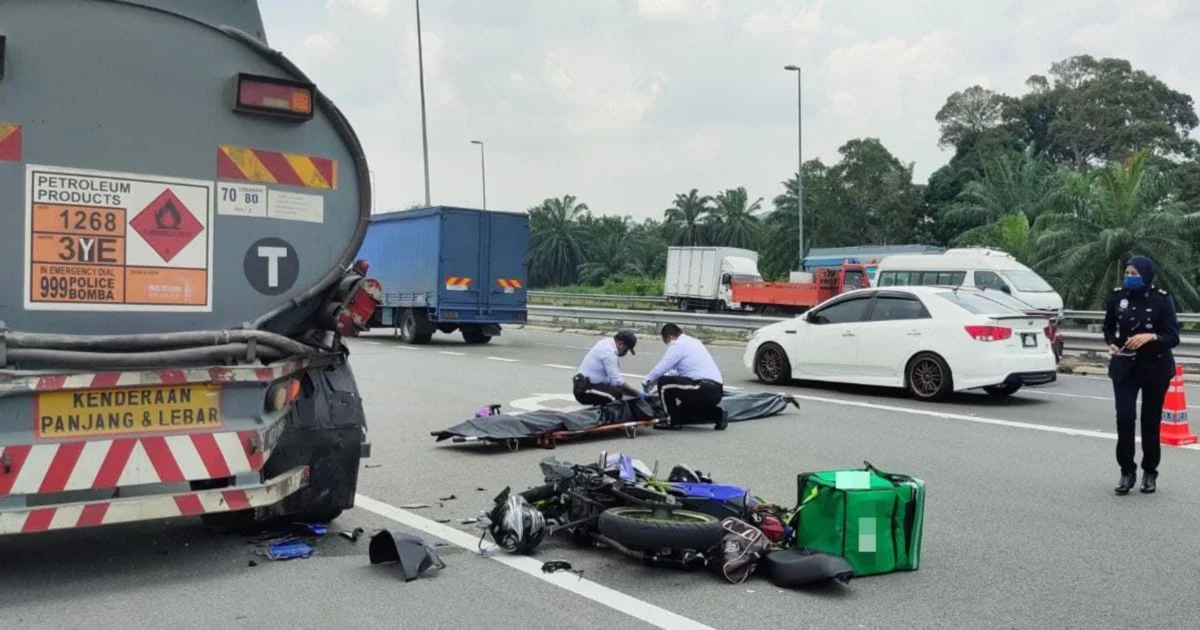
SIXTEEN thousand lives in fifteen years. Just sit with that for a second.
That’s not a number on a report. That’s a quiet national disaster happening on our highways, our kampung roads, our city streets. Every year, thousands of Malaysians walk out the door and never walk back in. Fathers. Mothers. Sons. Daughters. Futures erased in a heartbeat.
And somehow, we’ve learned to live with it.
Look at the data from the Malaysian Institute of Road Safety Research (MIROS) and the police reports. Riders make up nearly two-thirds of road deaths, year after year.
In 2025 alone, more than 4,000 motorcyclists died, which translates to more than ten peopl every single day.
And what do we do? A press statement here. A crackdown there. The usual “drive safely” reminders before Hari Raya or Chinese New Year. Then silence—until the next viral video of a tragedy wakes us up for five minutes.
Here’s the uncomfortable truth: this isn’t just about accidents anymore. It’s about culture. Enforcement. Leadership.
We all know the “Mat Rempit” image—illegal races, weaving through traffic at crazy speeds, stunts on public roads. Anyone who drives regularly has seen it. Bikes cutting lanes, jumping red lights, treating highways like their personal track.
Of course, not every rider is like that. Plenty are just trying to make a living—delivery riders, factory workers, students. They’re the victims more often than the villains.
But let’s not pretend the reckless few are harmless. They’re visible. They’re persistent. And they’re deadly.
What bothers me more is how we react. When a drunk driver kills someone, the outrage is instant.
People demand justice. The whole country talks about it. But when a reckless rider dies or kills someone? The response feels… muted. Fragmented. Almost tired. Why? Is a life worth less depending on who was holding the handlebars?
Justice shouldn’t pick sides. If reckless behaviour kills—whether it’s a car or a bike—the law should respond the same way. Not vengeance. Just firm, fair consequences under the Road Transport Act 1987. The kind that actually makes people think twice.
But then again, punishment alone won’t fix this. If it would, we’d have solved it years ago. The real problem is we keep doing things halfway.
First, enforcement comes in bursts. Roadblocks show up, make headlines, then disappear. We have AI and smart tech now—why are we still relying mostly on manpower?
Where’s the nationwide network of speed cameras, real-time tracking of racing hotspots, data-driven policing?
Second, our roads haven’t kept up. Dedicated motorcycle lanes work—they save lives—but they’re only in a few places. Bad lighting, dangerous junctions, inconsistent road design. Small mistakes turn into funerals.
Third, we’ve ignored why some young riders end up chasing adrenaline. They’re not all thrill-seekers. Some are looking for identity, belonging, an escape.
You can raid their meet-ups, but if you don’t give them alternatives—safe spaces to ride, real youth programmes, jobs—they’ll be back.
Fourth, road safety education is stuck in the past. The campaigns are forgettable. They don’t speak to what a young rider actually faces out there.
That’s why the death toll hasn’t come down. Not because we don’t know the answers. Because we haven’t treated this like the crisis it is.
Imagine ten Malaysians died every day from one disease. Would we just shrug and run the occasional awareness campaign? No. We’d declare an emergency. We’d throw everything at it.
Our roads deserve that same urgency. This isn’t about hating on riders. It’s about saving lives—including the riders themselves.
The way forward isn’t complicated:
- Use tech for continuous enforcement, not just seasonal ops
- Build proper motorcycle lanes across the country
- Apply the law consistently to reckless behaviour, whoever it comes from
- Invest in real youth programmes and social interventions
- Modernise road safety education so it actually sticks
But above all, we need political will. Sixteen thousand deaths isn’t bad luck. It’s policy failure. The blood on our roads isn’t invisible. It’s on all of us.
The only question left is whether we care enough to act—before another family gets that knock on the door.
KT Maran is a Focus Malaysia viewer.
The views expressed are solely of the author and do not necessarily reflect those of MMKtT.
- Focus Malaysia.

No comments:
Post a Comment
Note: Only a member of this blog may post a comment.