


On April 19, four undangs (chieftains) of Negeri Sembilan, through the undang of Sungai Ujung, purportedly issued a “declaration” to remove Yang di-Pertuan Besar Tuanku Muhriz Tuanku Munawir, and to appoint Tuanku Panglima Besar Tunku Nadzaruddin Tuanku Ja’afar as the new state ruler.
This purported declaration was not recognised by the menteri besar. Today, the Negeri Sembilan state legislative assembly commenced its opening ceremony but had its sitting postponed by the speaker to a date to be decided later.
News reports today indicate the four undangs had boycotted the opening ceremony and continue to insist that the current Yang di-Pertuan Besar abdicate his position.
Hence, we are witnessing a “constitutional incident”, not yet a full-blown constitutional crisis, unfolding at the intersection between constitutional law and the adat, where constitutional law should be placed in context.
To understand the full background, it requires an impartial analysis of the salient constitutional provisions, starting with Article X of the Undang-Undang Tubuh Negeri Sembilan 1959 (Negeri Sembilan state constitution).
Article X(1) addresses the “abdication” or “temporary removal” of the Yang di-Pertuan Besar “at the request of the undangs”.
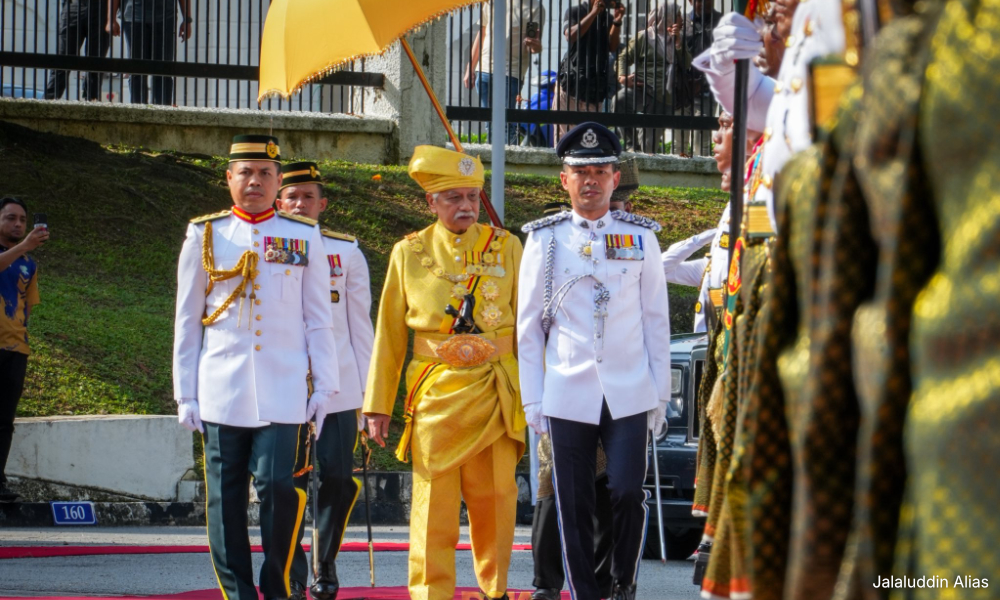
There are clear procedural and substantive requirements stated within this provision. First, the powers can only be exercised by the undangs “after full and complete enquiry” to lead to their “consideration” and “determination” of several enumerated factors:
His Highness, after his appointment as Yang di-Pertuan Besar, has developed “any great and serious defect derogatory to the qualities of a Yang di-Pertuan Besar, such as insanity, blindness, dumbness”, or
His Highness has become “possessed of any base quality” by reason of which he “would not be permitted by Hukum Syarak to be the Yang di-Pertuan Besar”, or
His Highness has done “any overt act detrimental to the sanctity, honour, and dignity of a Yang di-Pertuan Besar, or
His Highness “has deliberately disregarded the provisions of this constitution”.
Where these requirements are satisfied, the undangs “may call” upon him either “to withdraw from performing his duties for a period to be determined by the undangs” or “to abdicate and relinquish his prerogatives, rights, powers, and privileges” (Article X[2]).
In either of these two circumstances, he “shall thereupon cease” to be the Yang di-Pertuan Besar.
The state constitution then requires a “proclamation” which shall be “issued” under “the hands” of the undangs and the menteri besar as soon as possible.
This is an important proviso which links the powers of the undangs with the state authority as represented by the menteri besar. It is therefore obvious, constitutionally, that until and unless the proclamation is perfected or “issued”, the determination of the undangs will not take effect.
For completeness, under Article XI of the state constitution, in the event His Highness ceases to be the Yang di-Pertuan Besar, it shall be the duty of the undangs to choose and elect another ruler. Seen in this perspective, the entire issue is substantively a matter of constitutional law, and less on adat.
Adat within constitutional framework
Adat is, on the other hand, mentioned expressly in Articles XIV(1), XV, and XVI, but even here, there is a constitutional linkage with the position of the menteri besar, such as found in Article XVI(2) and Article XVII, namely, the menteri besar:
“May refer to the Dewan any question relating to Malay custom… including questions relating to the election, or succession to, or removal from or the vacation of office of any of the ruling chiefs referred to in Article XIV”.
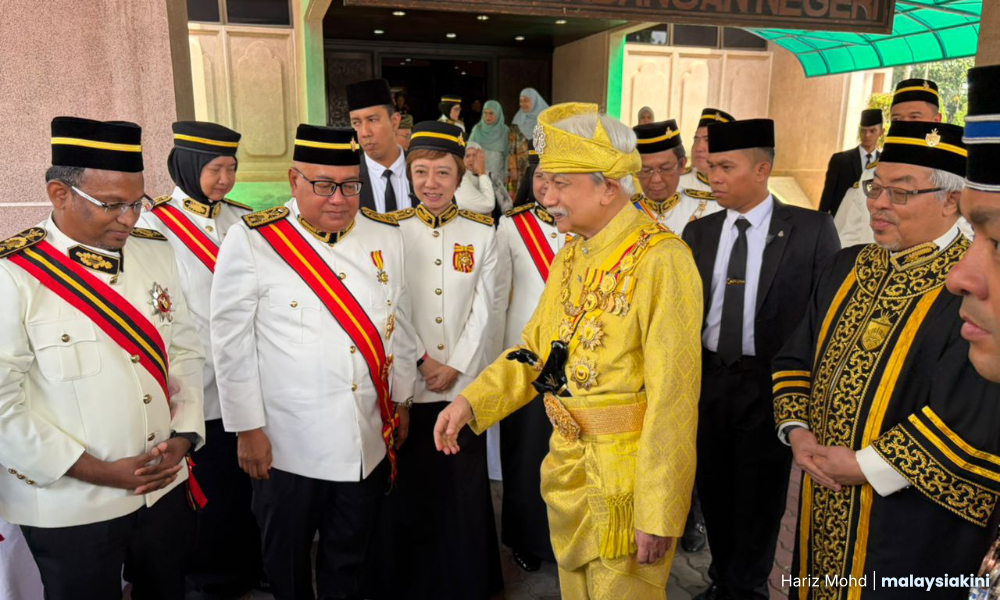
That “advice” by the Negeri Sembilan Council of the Yang di-Pertuan Besar and the Ruling Chiefs (Dewan Keadilan dan Undang) “shall be final and shall not be challenged or called in question in any court on any ground”.
The present controversy involving the removal of the undang of Sungai Ujong falls squarely within this constitutional framework. As worded, the “advice” offered is a collective decision, legally speaking, although His Highness presides at all meetings of the council (Article XIX). This is again a constitutional requirement.
As far as the actual removal of the undang of Sungai Ujong is concerned, the main decision is in accordance with “the custom of his luak (territory)” and based on this, the council provided its “advice” to accept his removal on April 17.
From publicly available information, a supporting statement was also issued on April 19 by the Telaga Undang (Sungai Ujong luak’s highest customary authority), ibu soko of Klana Hulu (division in the Sungai Ujong luak), and the waris (heirs) for the luak, that they had the power to remove the undang.
Constitutionally, the “advice” by the council is final and non-justiciable in any court by constitutional dictate.
The spillover controversy involving the purported “declaration” by the four undangs to request the removal of Tuanku Muhriz and the appointment of Tunku Nadzaruddin is, therefore, in the overall context, constitutionally suspect.
Undangs’ letter challenges legislative process
Quite apart from the locus standi of the Sungai Ujong undang (who was removed), the constitutional requirements under Article X(1) appear to have been ignored. This is important since it mandates a full right of hearing and, in the words of the state constitution, a “full and complete inquiry”.
In this context, therefore, the position taken by the menteri besar not to recognise the “declaration” is constitutionally and legally correct.
There then followed a call by the four undangs made by letter to the members of the state assembly to remove the menteri besar.
With respect, this is an extraordinary incursion into the principles of parliamentary democracy, which, if left unchecked, can only spawn a major constitutional crisis by persons who are not part of the legislative body.
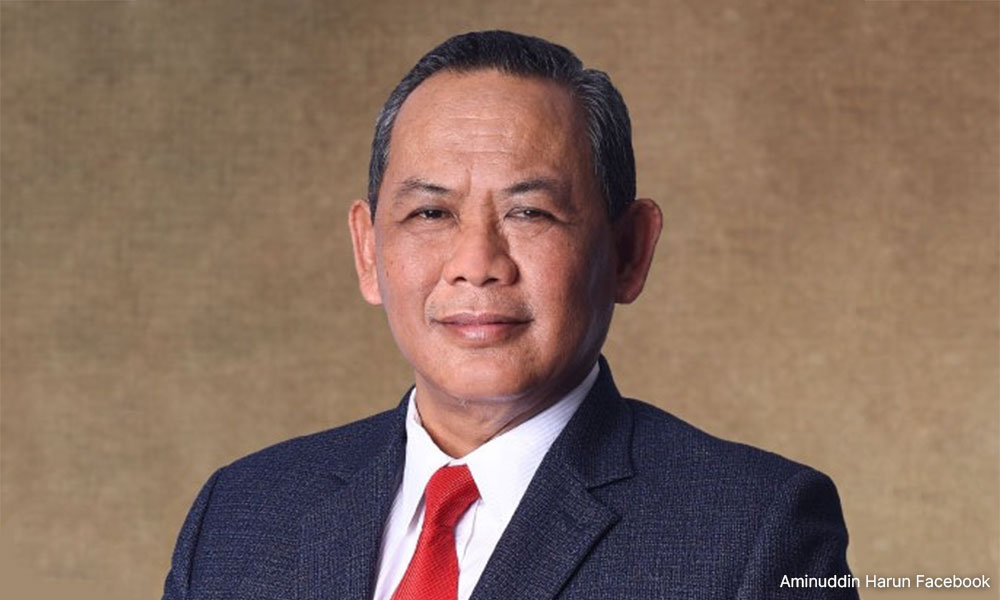
The menteri besar cannot be removed by a letter. Properly speaking, the menteri besar can only be removed upon proof of loss of confidence by a majority of the state assembly members on the floor of the House or upon the satisfaction of the ruler by other legitimate means that he has lost that confidence.
In normal circumstances, it will require, at a very minimum, a sequence of events or conduct demonstrating a loss of confidence in the government of the day. A single letter will simply not do.
Rules governing loss of confidence
What if a motion of no confidence is filed and seconded by any member of the state assembly? A strong proposition can be made that the motion will have a stamp of infirmity, being motivated by a single extraneous factor unrelated to any loss of confidence in a legal, constitutional, and political sense.
The speaker of the Negeri Sembilan state legislative assembly has broad enough powers under the Standing Orders (Peraturan-Peraturan Tetap) as the “chief officer” of the assembly (Rule II [4]) and acting in conjunction with the menteri besar as “the leader of the House” to reject such an infirm motion, should it be filed.
Although the Standing Orders of the Negeri Sembilan assembly do not expressly denote the menteri besar as the leader of the House, Rule XXXII (4) provides that in all matters not specifically provided, the speaker may follow the parliamentary practice of the Malaysian Parliament.
Further, as a general rule, the decision of the speaker on any of the Standing Rules and practices shall be final.
If any motion of no confidence is rejected by the speaker, there are currently strong case authorities for the position that a decision of the speaker (whether in the federal Parliament or a state legislative assembly) cannot be challenged in court successfully in matters within his immediate jurisdiction and control pertaining to the conduct of proceedings in the House.
Hopefully, it will not come to that, but the lesson here is valuable. A constitution is built upon a fine balance to protect and nurture a chosen form of government, in our case, parliamentary democracy.
Any attempt to disrupt that fine balance by an extraneous factor can only lead to unfortunate consequences, most of the time, unintended. - Mkini
ARIFF YUSOF is a former Dewan Rakyat speaker, former Court of Appeal judge, and a consultant with the Cheang & Ariff law firm.
The views expressed here are those of the author/contributor and do not necessarily represent the views of MMKtT.

No comments:
Post a Comment
Note: Only a member of this blog may post a comment.