


A volunteer researcher for environmental NGO Save Malaysia Stop Lynas claimed that the environmental impact assessment (EIA) of the Lynas Advanced Materials Plant (Lamp) is "fundamentally flawed" and thus, cannot be approved in its current state.
In her review of the report, Feini Tuang alleged that the EIA contained omissions, regulatory inconsistencies, and misclassifications, particularly concerning the plant’s radioactive water leach purification (WLP) residue.
Among the issues raised and submitted to the Environment Department (DOE) and shared with Malaysiakini was the absence of any assessment of relocating cracking and leaching operations to Lynas’ Kalgoorlie facility in Australia, despite this previously being a condition imposed by Putrajaya before it was later withdrawn.
"Originally, the Atomic Energy Department mandated that once Kargoorlie operated by 2024, importing radioactive lanthanide concentrate into Malaysia would be strictly banned.
"However, after this specific licence condition was quietly removed, the EIA completely exploits the regulatory reversal.
"Instead of utilising Kalgoorlie’s mixed rare earth carbonate to phase out local radioactive waste generation, the proponent retains the Malaysian cracking and leaching process and actually increases toxic lanthanide concentrate processing to 110,000 metric tonnes per year, conveniently claiming no other site alternatives exist," she said.
Tuang also disputed the classification of WLP residue as “very low-level waste”, arguing that it contains significant amounts of Thorium-232, which has a half-life of approximately 14 billion years.
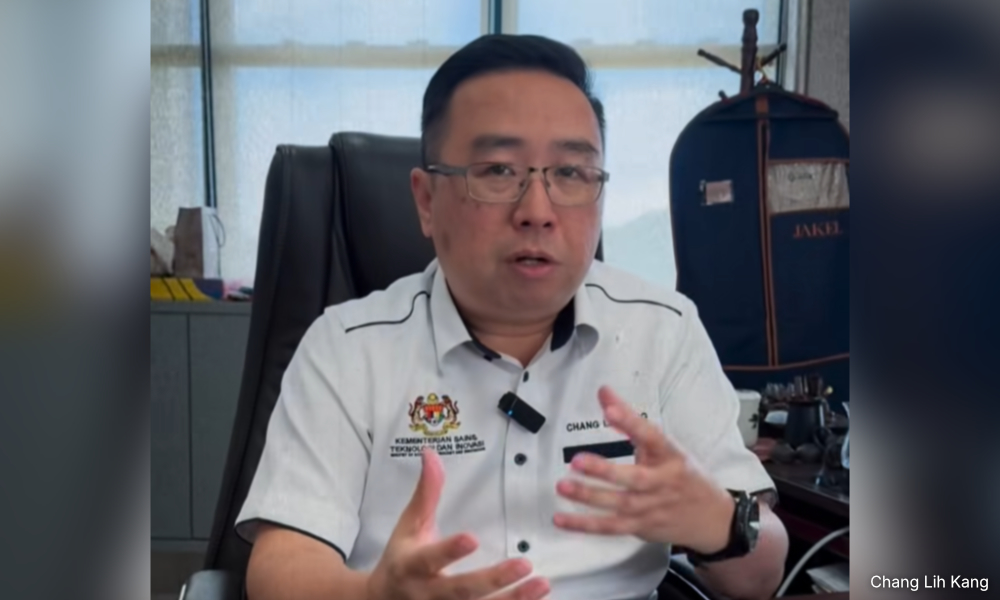
Science, Technology, and Innovation Minister Chang Lih Kang said in February that WLP contains only six Bq/g, which classifies it as “very low-level waste” as per the International Atomic Energy Agency's safety guide.
However, Tuang alleged that the classification created a “double standard”, noting that Western Australia’s Environmental Protection Authority had categorised similar waste from Lynas’ Kalgoorlie facility as “low-level waste”, which requires stricter radioactive management requirements.
"(This is) expressly not 'very low-level waste' to be returned to mine site for disposal," she added.
She argued that the alleged misclassification was being used to justify surface-level disposal methods with inadequate containment measures.
Call for WLP’s reclassification
Citing the Mineral Development Act 1994, Tuang said lanthanide concentrate and mixed rare earth carbonate are legally classified as "mineral ores", meaning the resulting residues should be regulated as mining tailings.
However, she claimed that the existing permanent disposal facility (PDF) does not comply with the Mineral and Geoscience Department's Class A structural criteria for permanent tailings containment, particularly in terms of flood and earthquake resilience.
Tuang expressed concerns that the WLP could also eat through its iron containers as it generates a highly acidic leachate with elevated levels of toxic heavy metals, including lead, zinc, and mercury, as was found in previous testing for the 2021 EIA on the plant's PDF.
Due to this, she called for WLP to be reclassified as "low-level, long-lived waste" as well as "scheduled waste".
Last month, the DOE put up the 770-page EIA report on the expansion of the Lamp's production for public display, revealing that this project will increase the generation of WLP residue by 16 percent.
The project at the plant in Gebeng, Pahang, will result in a total of 2.55 million metric tonnes of WLP by March 2031, the report said.
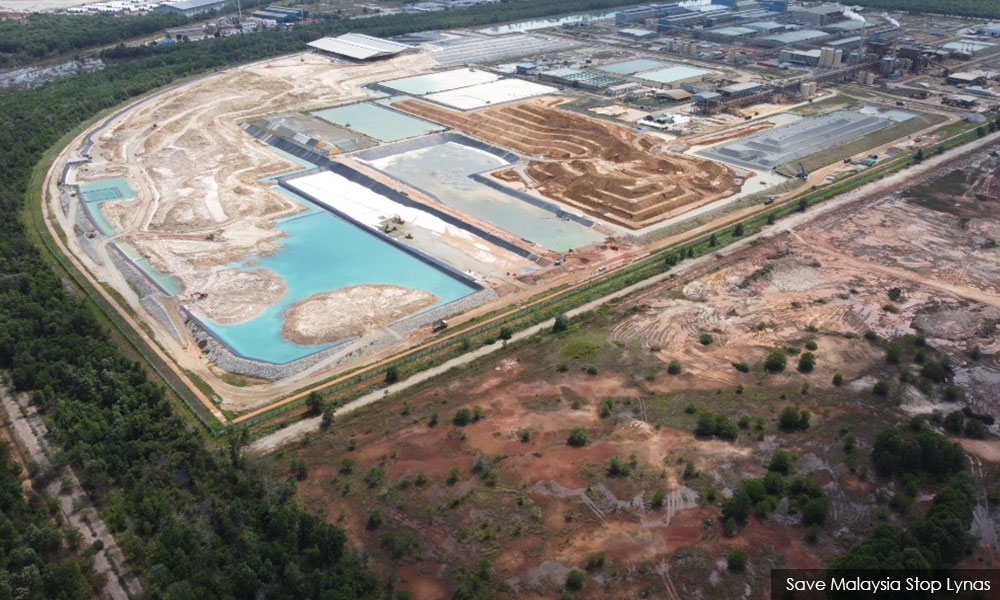
It explained that once the existing PDF reaches capacity, newly generated WLP would be stored at the on-site residue storage facilities originally designated for neutralisation underflow residue.
Commenting on this proposal, Tuang warned that the facilities were initially intended only for temporary storage and were never engineered for permanent radiological containment.
"Despite this, the EIA provides no structural integrity or degradation assessment of these ageing high-density polyethylene cell liners prior to repurposing, leaving an unmodeled risk of liner breach, groundwater seepage, and permanent localised radiological contamination," she said.
Tuang also labelled the EIA as "critically deficient" for failing to conduct a human health risk assessment or establish baseline human biomonitoring for residents and workers.
Without such studies, she argued, claims that the facility has caused minimal health impacts remain “scientifically speculative”.
She further accused the EIA of undermining transparency by withholding raw, continuous monitoring logs in favour of summarised data, which she said obstructed independent expert scrutiny.
According to Tuang, the report excluded Environmental Radiological Monitoring Programme (ERMP) data collected after March 2024 and instead relied on information from 2024 and a 2017 radiological impact assessment.
Public disclosure
Tuang further urged the DOE to reject the EIA and halt all cracking and leaching processes in Malaysia permanently.
She also called for the immediate public disclosure of all raw ERMP monitoring data, implementation of a zero-waste “circular” operating standard, and the return of 1.6 million tonnes of legacy radioactive waste to Australia.
In addition, she urged authorities to commission an independent assessment into the full extent of groundwater, soil, and public health impacts surrounding the Gebeng facility.
Malaysiakini has reached out to Lynas for comments.
Previously, a Lynas spokesperson told Malaysiakini that Lamp has been the subject of four independent scientific reviews, which found that operations are low risk, as well as compliant with regulations and international best practices.
The spokesperson said the plant operates under and adheres to strict safety and environmental management requirements, which are enforced by the appropriate regulators, adding that regular monitoring is undertaken by Lynas, independent experts, and regulators to ensure compliance.
The plant also complies with strict safety and environmental requirements under the enforcement of regulators, while Lynas itself undertakes regular monitoring.
On its website, Lynas describes its plant in Malaysia as a “state-of-the-art, environmentally responsible rare earths processing facility”.
“Environmental monitoring carried out by Lynas and regulatory authorities (air, water, ambient air) since Lynas Malaysia commenced operation in 2012 has shown there is no environmental impact of Lynas Malaysia’s operation on the public and the environment,” it said. - Mkini

No comments:
Post a Comment
Note: Only a member of this blog may post a comment.