


Economists say Thailand’s EV challenges highlight the need for Malaysia to balance affordability with investment and long-term ecosystem readiness.
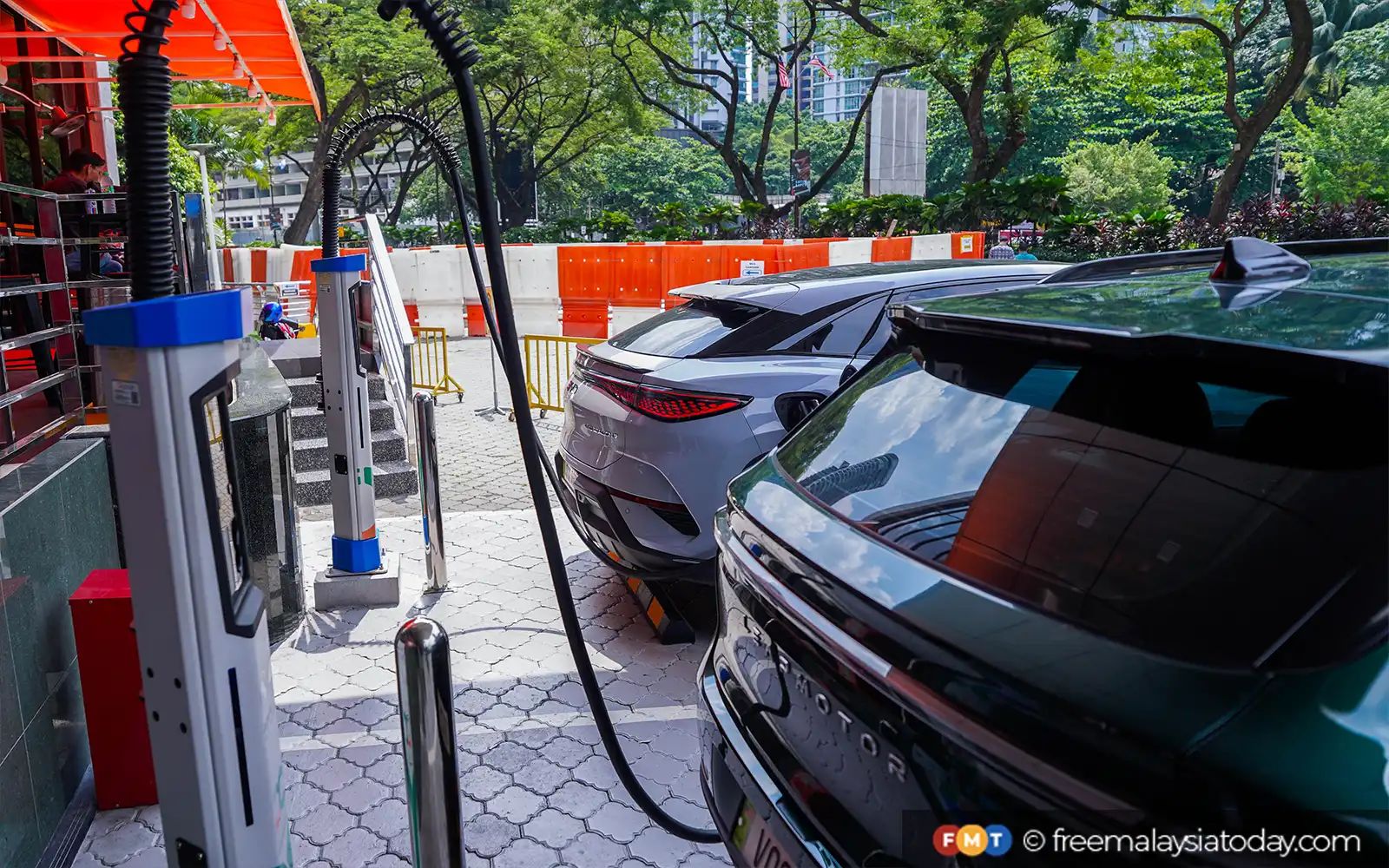
The EV is more than just a car with a battery. Behind every one of them there must be a support system that not only includes sufficient public charging stations but also adequate servicing and repair capabilities, satisfactory supply of spare parts and acceptable after-sales support.
Data from Thailand’s Office of the Consumer Protection Board and the Thailand Consumers Council shows that there have been 1,348 EV-related complaints since 2024.
The most common complaints were defects and malfunctions, while hundreds of cases were linked to service centre closures, delayed arrival of spare parts and disputes over refunds, the Bangkok Post reported.
As Malaysia pushes for higher adoption of EVs in an environment of rising oil prices and mounting anxiety over the ecological impact of carbon fuel, the Thai experience should serve as a lesson on what to look out for.
The question, according to economist Samirul Ariff Othman, is whether Malaysia can avoid the same problems by ensuring that the EV policy is not just about selling more cars but also about building the ecosystem behind them.
He told FMT that Malaysia could face similar problems if EV adoption is treated mainly as a consumer-market exercise rather than an ecosystem-building practice.
“EVs require charging infrastructure, trained technicians, reliable (supply of) spare parts, warranty enforcement, battery diagnostics, software support and after-sales capacity,” he said.
“Thailand’s experience shows that rapid EV adoption can create consumer frustration if the service ecosystem does not expand at the same pace,” Samirul added.
Data from the Malaysian Automotive Association (MAA) shows that 30,848 EVs were sold in 2025, up from just 278 in 2021. In the first quarter of 2026, a total of 14,591 new EVs were sold — a 113.7% increase year-on-year.
The brisk sales have been attributed to tax incentives, aggressive pricing and a wide array of foreign makes.
On the other hand, the support has been uneven at best. As of April, the country had 5,619 public charging bays nationwide, including 1,898 DC fast chargers, giving Malaysia a 10 to 1 ratio of EVs to charging points. However, they are concentrated in urban centres, leaving the smaller towns and rural areas barely covered.
Industry players have also previously raised concerns over battery replacement costs, repair readiness and uneven servicing support outside major cities.
The path to take
Samirul said Malaysia must avoid becoming overly dependent on imported EVs without developing sufficient local industrial capability.
“If Malaysia relies too heavily on imported EVs, the country captures the consumption value but not enough of the industrial value,” he said.
“The real economic prize is not merely having more EVs on the road. It is in developing local assembly, parts supply, battery-related services, electronics integration, software capabilities and skilled technical jobs.”
He said this was why the investment, trade and industry ministry (Miti) had increasingly emphasised localisation and stronger investment commitments from foreign automakers.
Earlier this year, Miti said conditions attached to proposed local assembly arrangements reflected a broader policy direction for new automotive investments.
The ministry said the requirements were not unique to any one company. Rather, it forms part of Malaysia’s wider industrial strategy.
Watch for pitfalls
Samirul warned that without stronger local capability development, Malaysia risked becoming merely a market for EVs instead of a serious production and industrial hub.
“Without local capability, Malaysia may end up importing the EV rather than producing part of it,” he said.
However, economist Geoffrey Williams cautioned against policies becoming overly restrictive, warning that excessive conditions could discourage foreign investment and reduce competition.
Williams said Malaysia should remain competitive in attracting EV investments while continuing to strengthen the local ecosystem.
“The EV market like any other market is driven by price and quality,” he said.
He also warned that policies perceived as overly protectionist could reduce consumer choice and slow affordability gains in the local EV market.
“The protectionist policies are bad for Malaysian consumers, cutting choice and low-cost options,” he said.
Samirul, however, maintained that localisation and supplier development remain critical to ensure that Malaysia captures long-term value from the EV transition.
“EV policy should not be a race to put more imported cars on Malaysian roads,” he said.
“It should be a strategy to build an industrial ecosystem that can support, service and eventually produce the technologies of the future,” he added. - FMT

No comments:
Post a Comment
Note: Only a member of this blog may post a comment.