


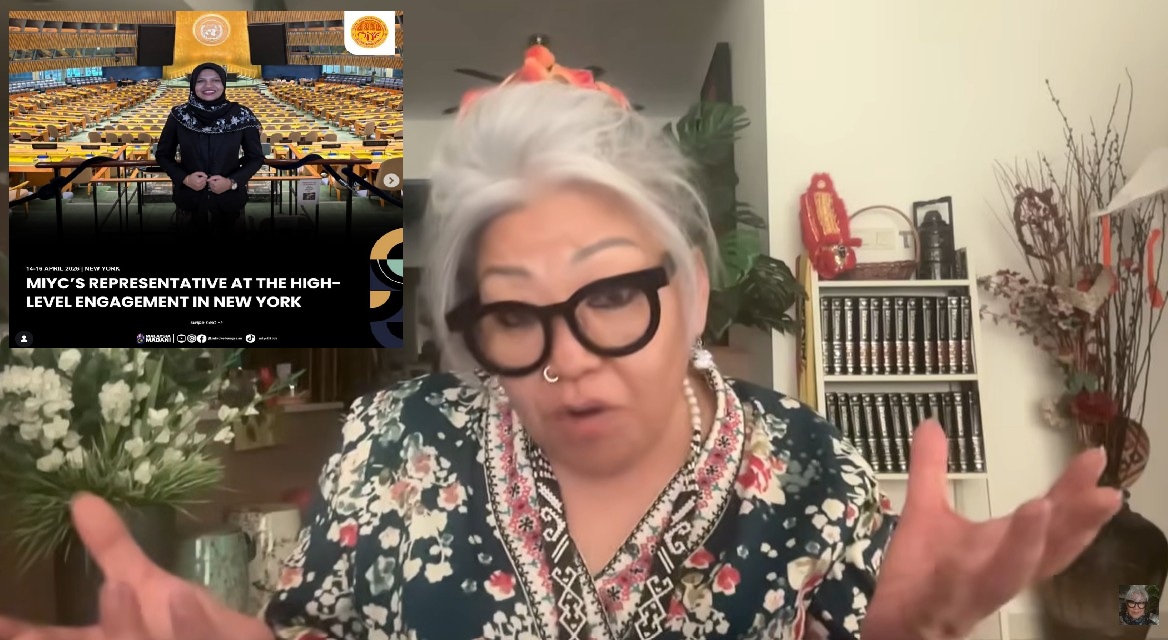
ARE the concerns and experiences of Malaysian Indian Muslims the same as that of their non-Muslim brethren?
This very question has become a hot potato as human rights activist and lawyer Siti Kasim felt that selecting Shameera Nasreen Ahamed Noordeen to represent the Malaysian Indian Youth Council (MIYC) at the recent United Nations Economic and Social Council (ECOSOC) Youth Forum 2026 in New York is “inappropriate”.
“Let’s be honest – when people mention Indian community in Malaysia, they often treat it as one single experience,” she ranted in a recent YouTube video.
But that’s not just inaccurate – it hides real differences that actually matter. Indian Muslims and non-Muslim Indians live under different systems, different expectations and different pressures.
Indian Muslims are part of the Muslim community, connected to laws and protections shaped by Article 153 of the Federal Constitution of Malaysia.
That can mean access, inclusion and advantages but also restrictions, especially under Syariah law.
On the other hand, non-Muslim Indians are fully outside that framework. Their fight is not about managing inclusion – it’s about getting equal treatment in the first place.
Editor’s Note: Shameera was among three Malaysian youths selected to participate in the UN forum themed “Asia and the Pacific | Youth Perspectives on Regional Development – Challenges, Priorities and Actions for the Sustainable Development Goals (SDGs)” which gathered more than 500 young participants from over 50 countries.
The polemic started when one commenter Vijay Pillai questioned involvement of the hijab-clad 27-year-old Master’s student in Marine Science at Universiti Sains Malaysia (USM) who is also a liaison officer at the Penang Youth Development Corporation (PYDC) in a Facebook video post featuring a recording of her speech at the forum.
“Why a Malay is representing Malaysian Indian Youth?? Also listen to her BS!!” wrote Vijay Pillai.
The comment was subsequently picked up by Siti Kasim who reacted with a one-liner “SHE’S REPRESENTING THE INDIAN YOUTH COUNCIL?? 
 ”.
”.
Heated debate
However, the stance of the Orang Asli advocate in the name of fairness and equality has put her in collision course with her own brethren who accused her of being part of Malaysia’s “growing Islamophobia” trend.
“Does just because she wears a tudung and being a Muslim exclude and marginalise her from being an Indian to represent the Indian race?” rebutted digital creator Amirul Asyraf who is also the secretary of Muslim NGO Pusat Kajian Pemikiran dan Peradaban Ummah (PEMIKIR).
Secondly, many Islamophobes and racists in the comments who are apparently Siti Kassim’s Chinese and Indian friends have seemingly belittled and denied Shamira’s identity just because she is a Muslim, including rebuking her.
I think as Muslims we have the right to defend our Muslim brothers and sisters.
In defending her stance while being accused behaving in an Islamophobic manner by Amirul and fellow detractors, Siti Kasim denied claiming that “Shamira has stopped being Indian because she’s Muslim”.
“That’s a strawman you built because you can’t handle the *actual* question which is **Does she speak for the lived realities of non-Muslim Indians in Malaysia?** That’s the issue. Not her scarf. Not her faith. Your confusion is your own doing,” jibed the Methodist Girls School (MGS) Melaka alumna.
Secondy, you’re blaming Chinese and Indian friends for being racist while you yourself are busy reducing entire communities into one convenient villain. That irony is almost impressive – if it wasn’t so embarrassing.
And this line – “as Muslims we have the right to defend our brothers and sisters” – nobody is stopping you.
But don’t dress up blind loyalty as moral superiority. Defending someone *just because they share your religion* while ignoring whether they’re actually right or representative, isn’t principled – it’s tribal.
Below are some intriguing reactions from both aides of the fence:
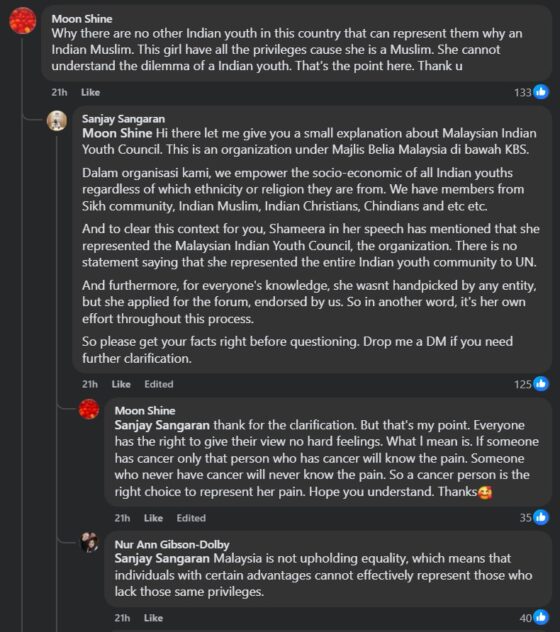
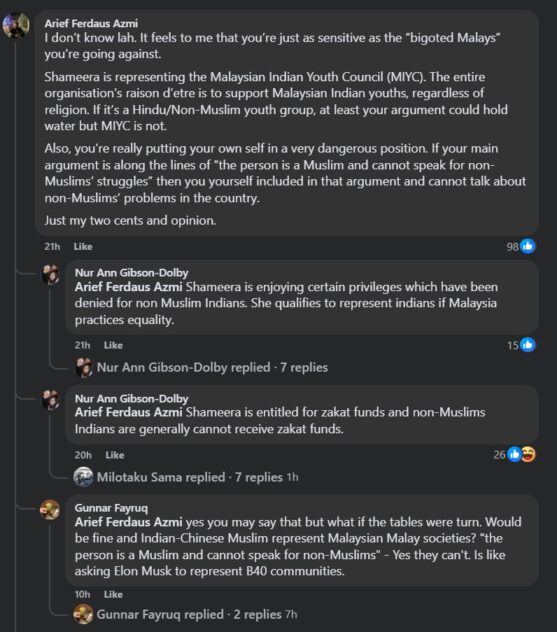
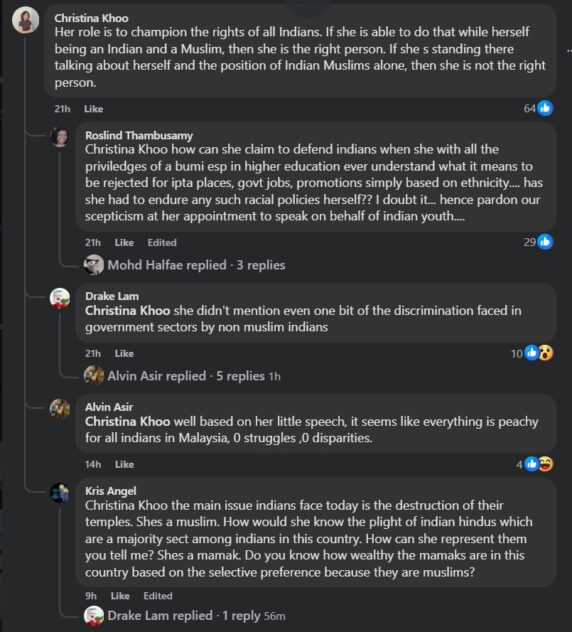
- focus malaysia

No comments:
Post a Comment
Note: Only a member of this blog may post a comment.