



MALAYSIA’S economic indicators paint an encouraging picture in 2026. GDP grew 6% year-on-year in the second quarter, beating expectations, while unemployment stood at 3% and inflation at 1.9%.
The ringgit, too, remained broadly stable against currencies of major trading partners during the quarter.
Yet these headline figures do not necessarily reflect the financial realities experienced by households across the country. This disconnect is not statistical fraud. It is the tyranny of the average.
GDP measures the market value of all final goods and services produced within a country’s borders. It is an aggregate indicator, not a distributional one.
When a foreign semiconductor plant generates billions of ringgit in exports, GDP rises, but that prosperity may not translate directly into better pay or greater purchasing power for households elsewhere.
The World Bank has highlighted the disparity between Malaysia’s economic growth and wage growth. Between 2010 and 2024, real GDP grew 82%, while real median wages increased by 43%.
Economic expansion, therefore, does not automatically translate into equally substantial improvements in household incomes.
When wage growth fails to keep pace with economic expansion, headline figures alone cannot adequately reflect people’s lived experiences.
This is not merely a Malaysian problem. It is part of a broader global debate over whether GDP remains an adequate measure of progress. GDP does not capture wealth distribution, environmental degradation or people’s broader sense of security and well-being.
In 2025, the United Nations established a High-Level Expert Group on Beyond GDP to develop a framework for measuring progress beyond economic output. Its proposed dashboard of 31 indicators covers areas including well-being, equity, sustainability and resilience.
Malaysia’s challenges, however, have their own dimensions.
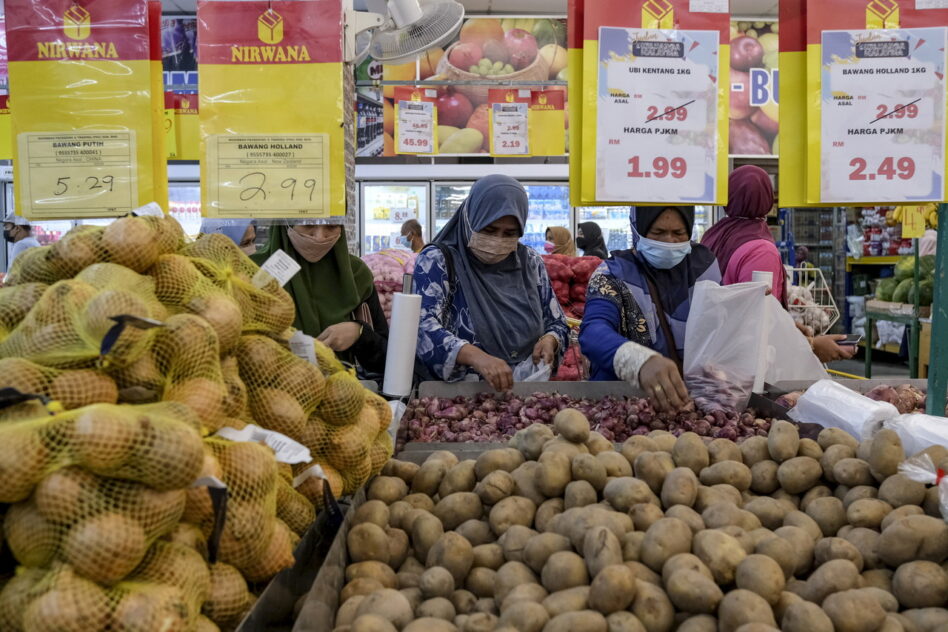
First, cumulative price shocks. Low inflation is a flow concept. It means prices are rising more slowly, not that they have returned to previous levels.
The price increases experienced in the post-pandemic years have raised the cost-of-living baseline. Even when inflation moderates, households must contend with the accumulated cost of higher prices.
Second, the vicious cycle of wages, productivity and skills. Malaysia faces structural weaknesses in its productivity and labour market that constrain wage growth. OECD findings show that 35.6% of tertiary-educated workers faced skill-related underemployment in 2025.
This points to a mismatch between the skills employers require and those available in the labour market. While high-value industries expand, many workers may remain trapped in lower-paying occupations with limited opportunities for advancement.
Without stronger productivity gains and better skills alignment, investment alone cannot guarantee broad-based improvements in wages.
So what is the remedy?
The answer is not to abandon growth, but to redefine what kind of growth is worth pursuing and ensure its benefits reach more households.
In the short term, wage reform must move beyond voluntary participation. Malaysia’s progressive wage policy is a step in the right direction, but broader wage improvements require stronger incentives, accountability and sustained implementation.
At the same time, policies addressing the cost of living must move beyond seasonal campaigns towards more consistent measures, particularly in food, housing and healthcare, which account for significant household expenditure.
In the medium term, education is a critical lever for breaking the low-skills, low-wages and low-productivity cycle. Malaysia must strengthen investment in early childhood education, where spending remains comparatively low.
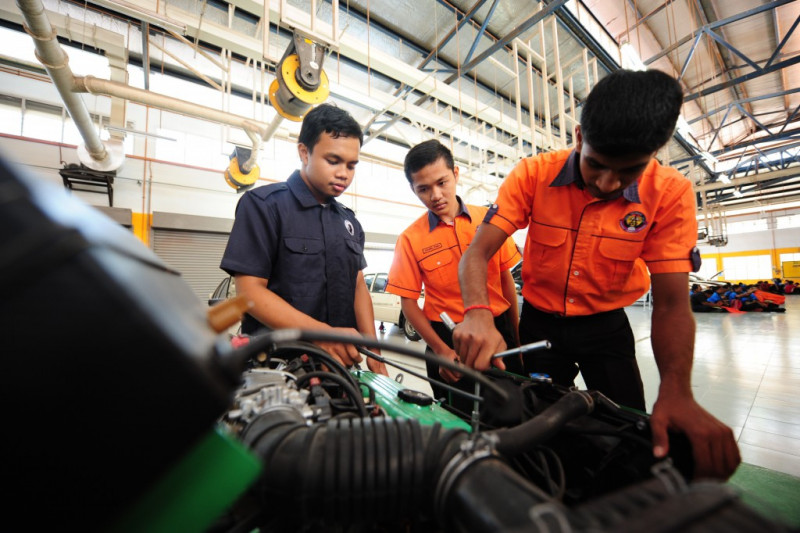
The TVET system, comprising more than 1,400 institutions, also needs better coordination, stronger industry linkages and clearer accountability to ensure training translates into employability and higher wages.
The nation also needs a new scoreboard. As long as policy success is judged primarily by GDP growth, inflation and exchange-rate performance, important gaps in household well-being may remain obscured.
Beyond-GDP frameworks advocated by the UN and OECD offer a starting point. Malaysia should integrate these indicators more directly into policy priorities, budget planning and assessments of public spending.
Ultimately, GDP growth should improve the lives of a teacher in Kelantan, a factory technician in Penang and a Grab driver in Kuala Lumpur.
When RM50 buys less each year while the nation’s GDP climbs higher, the public’s question, “Where is my share?”, is entirely rational.
Answering it cannot be done by explaining GDP’s components. It can only be done by making the numbers on the payslip catch up with the numbers on the grocery receipt.
The author, Prof Datuk Dr Ahmad Ibrahim is affiliated with the Tan Sri Omar Centre for STI Policy Studies at UCSI University and is an Adjunct Professor at the Ungku Aziz Centre for Development Studies, Universiti Malaya.
The views expressed are solely of the author and do not necessarily reflect those of MMKtT
- Focus Malaysia

No comments:
Post a Comment
Note: Only a member of this blog may post a comment.