


A geopolitical flashpoint thousands of kilometres away is rippling through Southeast Asia, exposing a familiar vulnerability: the region’s deep reliance on imported fossil fuels.
Since late February, tensions between the United States and Iran have escalated into open conflict, sending global oil markets into turmoil.
The disruption of the Strait of Hormuz, a vital artery that channels roughly 20 million barrels of oil daily to Asian economies, has tightened supply and driven prices sharply upward.
Across Asean, the effects have been swift and visible. The Philippines has declared an energy emergency, long queues have formed at fuel stations in Cambodia, and Thailand has introduced conservation measures, including work-from-home policies. Malaysia, too, is feeling the strain.
Prime Minister Anwar Ibrahim recently announced a reduction in the Budi95 fuel quota from 300 litres to 200 litres per month, effective April 1, as part of efforts to manage domestic supply, even as prices remain capped.

While some energy-exporting nations may benefit from elevated prices, much of the region faces mounting fiscal pressure as governments struggle to sustain fuel subsidies. For Malaysia, the situation is particularly delicate: balancing its role as a net energy exporter with rising domestic costs.
Yet, beneath the immediate challenges lies a deeper question: Could this crisis accelerate Malaysia’s transition to renewable energy?
A catalyst for change
For economists and energy experts, the answer may well be yes.
Malaysia University of Science and Technology academic Barjoyai Bardai saw the crisis as a stark reminder of Malaysia’s structural vulnerability.
Reliance on imported fossil fuels, he argued, places the country at both economic and strategic risk and underscores the urgency of accelerating the National Energy Transition Roadmap (NETR).
Launched in 2023, the NETR outlines Malaysia’s long-term ambition to move towards a low-carbon economy by 2050, with a target of 70 percent renewable energy in the national energy mix.
But Barjoyai believed the timeline is no longer sufficient.
He suggested bringing forward key targets by five to 10 years, including raising renewable energy capacity to 40 percent by 2035, supported by more aggressive implementation beginning this year.

Accelerating the transition, he said, would not only shield Malaysia from global oil shocks but also strengthen economic resilience and position the country as a regional clean energy leader.
Still, he cautioned that progress remains uneven.
Renewable deployment must be scaled up, grid infrastructure modernised, and market reforms accelerated to ensure the transition is both stable and sustainable, he told Bernama.
Barjoyai emphasised that the case for change is only growing stronger, as oil prices breached US$100 (RM392) per barrel in early March, bringing the volatility of fossil fuel markets into sharp focus.
“Transitioning to renewables is no longer optional,” Barjoyai noted.
“It is essential for long-term energy security.”
Momentum building - but challenges remain
Beyond policy circles, the shift is already gaining traction.
ESG data platform ESGpedia vice-president Jozsef Acabo observed that the current crisis has subtly strengthened the appeal of domestically generated energy sources such as solar and hydropower.
These alternatives, he said, offer a critical buffer against global price swings, while growing interest in corporate power purchase agreements signals rising private-sector engagement.
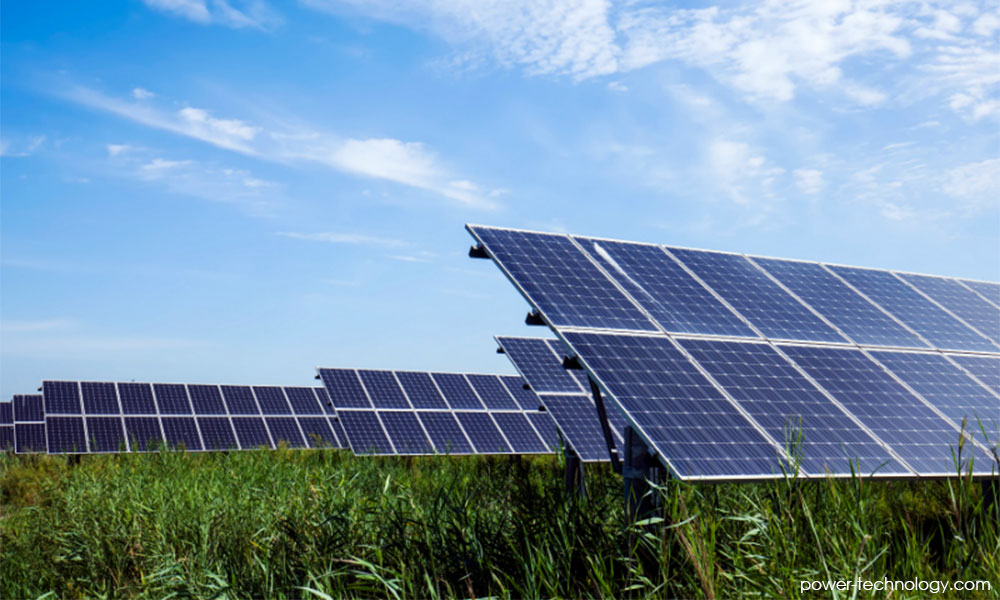
At the same time, declining technology costs are making renewable solutions increasingly viable.
Yet, structural constraints persist, he cautioned.
He said subsidy frameworks, affordability concerns, and infrastructure limitations continue to shape, and at times slow, the pace of transition.
“The direction is positive, but the acceleration will be gradual,” he added.
Electric vehicles and infrastructure gaps
The ripple effects are also evident in consumer behaviour.
Interest in electric vehicles (EVs) has surged alongside rising fuel prices, according to Malaysia Electric Vehicle Owners Club president Shahrol Azral Ibrahim Halmi.
However, he warned that infrastructure is struggling to keep pace.
Shahrol said highway charging facilities remain limited, not just in number, but in capacity. Insufficient power supply at charging stations, he warns, can lead to bottlenecks, particularly during peak travel periods such as festive seasons.
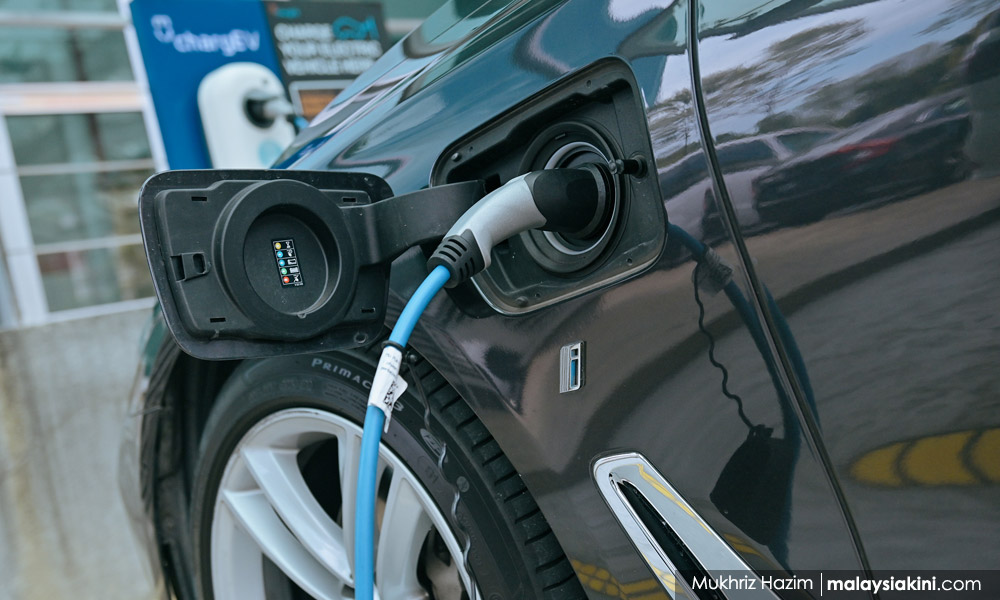
To address this, Shahrol proposed a two-pronged approach: fast-tracking the deployment of compact substations at rest areas to boost charging capacity, and developing large-scale charging hubs led by government-linked entities.
Such measures, he argued, are essential to support Malaysia’s growing EV ecosystem.
Raising the stakes
For policymakers and advocates, the current crisis underscores the need for greater ambition.
Asean Parliamentarians for Human Rights chairperson Charles Santiago believed Malaysia must go further and faster.
He called for a more aggressive renewable energy target of at least 50 percent by 2030, warning that the current goal of 35 percent leaves the country exposed to external shocks.
“The lesson from this crisis is clear,” he said.
“Energy independence is no longer a choice; it is a necessity.”
Solar energy, in particular, offers a faster and more scalable alternative compared to traditional fossil fuel development.
Charles, a former Malaysian Water Services Commission (Span) chairperson, said global investment trends appear to support this view.

He noted that in just over three weeks, an estimated US$70 billion has flowed into solar, battery storage and related technologies, signalling a shift in global energy priorities.
A defining moment
As the dust settles on the latest geopolitical upheaval, Malaysia stands at a crossroads.
The immediate challenge is to navigate rising costs and supply constraints. But the longer-term opportunity lies in rethinking the country’s energy future.
The crisis has laid bare a critical truth: dependence on fossil fuels comes with vulnerabilities that are increasingly difficult to ignore.
Whether Malaysia seizes this moment to accelerate its energy transition or remains tethered to old dependencies may well define its economic resilience in the years ahead.
- Bernama

No comments:
Post a Comment
Note: Only a member of this blog may post a comment.