


Over the past two weeks, there has been a resurgence of news reports and social media posts concerning the Dhamma Sakyamuni Caves Monastery (Dhamma Sakyamuni) in Kanthan.
We recognise that matters involving religion, heritage and the environment can evoke strong emotions and reactions.
It is therefore important that public discussion is grounded in facts and the full history of the matter, to ensure these emotions are not exploited by incomplete or misleading narratives.
Supporting nation-building
Gunung Kanthan was earmarked 63 years ago from among 45 Kinta Valley limestone clusters for cement production, while others were zoned for purposes including places of worship, tourism, mining and conservation.
The land was lawfully leased to Associated Pan Malaysia Cement (APMC) by the Perak state government, with the endorsement of the federal government.
Malaysia’s first Prime Minister, Tunku Abdul Rahman, officiated the opening of the Kanthan cement plant in 1963 for the development and economic progress of the newly formed Malaysia.

For more than six decades, Kanthan has produced a cost-effective building block for infrastructure, housing and development.
When legal action became necessary
Since 2013, APMC has sought to resolve issues involving illegal occupants on the land, including Dhamma Sakyamuni.
Most have been resolved amicably. APMC commenced legal proceedings on Jan 29, 2021 against Dhamma Sakyamuni.
There were two principal reasons, as follows:
The right to possession
The monastery is situated in compartment C within Gunung Kanthan on APMC land.
The matter went through the judicial process, and in September 2023, the Court of Appeal ruled in APMC’s favour as the rightful and legal owner of the land.
In February 2024, the Federal Court unanimously refused the monastery’s application for leave to appeal, upholding the Court of Appeal’s judgment.
We believe Malaysia, as a respected democratic country, should always uphold the sanctity of law.
Safety cannot be compromised
Limestone karst formations carry inherent geological risks, including rockfalls and structural instability. These risks require careful management, particularly where people occupy caves or areas near quarry operations.
Perak has experienced serious limestone collapses. The most devastating was the 1973 Gunung Cheroh tragedy, which claimed 42 lives.
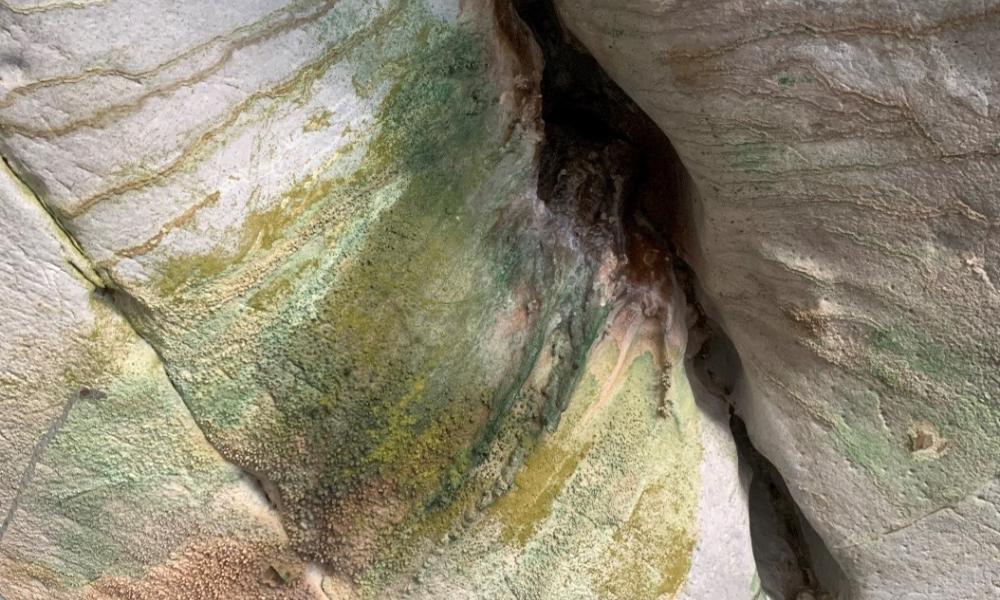
Geological assessments of Compartment C of Gunung Kanthan have identified safety concerns, including fractures and evidence of rockfalls.
While the Dhamma Sakyamuni serves a small, select number of people, unlike public cave temples such as Sam Poh Tong in Ipoh, their safety cannot be ignored when human lives are involved.
Setting the record straight
Several claims continue to be repeated publicly without the necessary context, such as that Dhamma Sakyamuni has existed at the site for more than 100 years.
This claim was raised during the legal proceedings, which were disputed and could not be established in court.
It is important to distinguish between false claims of historical religious relevance and the documented history of the monastery as an organisation.
Available official records show that the monastery was registered as a society with the Registrar of Societies only in 2007. This contradiction is glaring, to say the least.
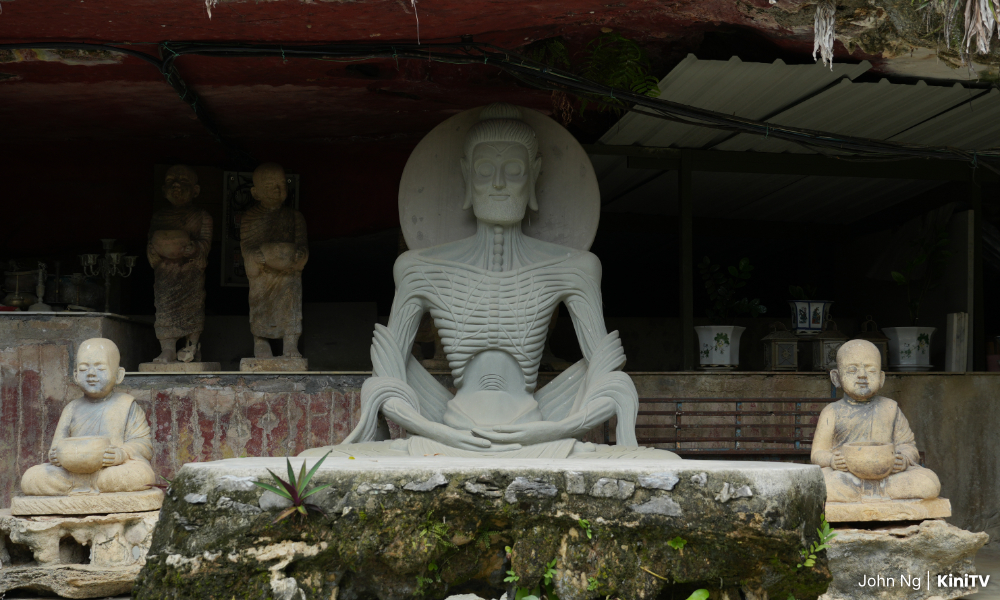
As for claims that Gunung Kanthan’s biodiversity has been disregarded, APMC has supported scientific research and biodiversity studies at Gunung Kanthan, working with experts and specialists in the field.
This research has deepened our understanding of the hill’s biodiversity and helped identify areas of significant conservation value.
Since 2014, Area D (Bukit Kanthan) has been voluntarily conserved as a geosite, guided by scientific evidence and expert recommendations.
Conservation efforts have included biodiversity surveys, species research, habitat management, plant conservation and translocation programmes to protect important natural heritage for future generations.
Our approach is to understand what should be conserved and what can be responsibly developed.
Nation needs cement
Malaysia needs cement as a cost-effective building material to build homes, schools, hospitals, and infrastructure.
Development and conservation can coexist when decisions are guided by facts, science and responsible planning.
Throughout this matter, APMC’s position has been guided by four principles: respect for the law, public safety, science-based conservation and responsible development.
The question of possession has been determined through the courts. Heritage status should be determined by the appropriate authorities based on evidence.
And conservation decisions should be guided by science and expert research. Public safety must never be compromised. - Mkini
The statement was issued by Associated Pan Malaysia Cement.
The views expressed here are those of the author/contributor and do not necessarily represent the views of MMKtT.

No comments:
Post a Comment
Note: Only a member of this blog may post a comment.