


The Coin Laundry exposes how cryptocurrency companies have empowered a shadow economy that lavishly profits from crime.
Led by the International Consortium of Investigative Journalists (ICIJ), The Coin Laundry is a groundbreaking cross-border investigation that reveals how many of these companies make money off the proceeds of scams, theft and other crimes - while those who’ve lost their savings or livelihoods are left with little hope of justice.
Over 10 months of reporting, ICIJ and 37 media partners in 35 countries gathered hundreds of cryptocurrency wallet addresses - analogous to bank account numbers - linked to known illicit activity.
Journalists collected them from scam victims, police reports, court records, sanctions lists, complaints filed with Seychelles’ financial regulator and from test transactions with crypto services, among other sources.
Reporters then disentangled tens of thousands of transactions recorded across public blockchains - the digital ledgers of crypto trades - to expose the global financial flows behind money laundering networks, cyber heists and other criminal enterprises.

Journalists interviewed dozens of scam victims across 12 countries and followed their crypto transfers to some of the world’s largest exchanges. ICIJ and its partners worked with more than two dozen blockchain analysts to review and verify the findings.
The Coin Laundry found that money launderers for drug traffickers and Southeast Asian scam centre operators, and North Korean hackers used brand-name exchanges to move their funds.
A trailblazing analysis by ICIJ revealed that as recently as July 2025, Huione Group, a Cambodian financial institution flagged by US authorities two months earlier as a “primary money laundering concern”, sent about a million dollars worth of the digital currency tether a day to accounts at Binance, the world’s largest cryptocurrency exchange.
In total, ICIJ’s review uncovered more than US$408 million flowing from Huione to customer accounts at Binance from July 2024 to July 2025.
Hundreds of millions of dollars flowed from Huione into Binance customer accounts while the company was under the supervision of two court-appointed monitors.
The monitors were part of Binance’s November 2023 plea deal for violating US anti-money laundering laws. Binance agreed to pay US$4.3 billion, one of the largest corporate penalties in US history.
The analysis found that at least US$226 million also flowed into customer accounts at OKX, another major cryptocurrency exchange, from Huione during the five months after OKX pleaded guilty in the US in February to operating an unlicensed money transmitter.
OKX agreed to pay more than US$504 million in penalties. The transfers from Huione continued after its May designation as a “primary money laundering concern”.
Unpoliced hotspot
The Coin Laundry also examined a shadowy constellation of so-called cash desks and courier services that allow people to anonymously cash out huge sums of cryptocurrency outside the view of financial regulators.
Found in Hong Kong, Toronto, London, Istanbul and other cities, they are a new and largely unpoliced hotspot for laundering money.
To uncover the use of cryptocurrency to supersize scams, ICIJ and its partners examined an alleged pyramid and Ponzi scheme that stiffed victims all over the world.
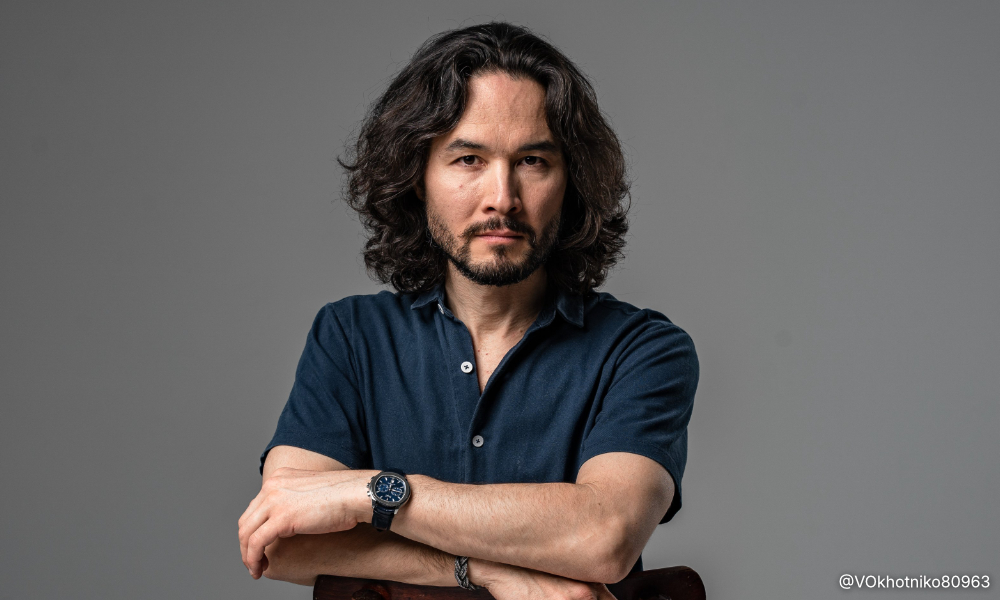
Its mastermind, Vladimir Okhotnikov, 47, is accused of using a rigged cryptocurrency investment platform to steal at least US$340 million from investors between 2020 and 2022.
US prosecutors indicted Okhotnikov in 2023 over the alleged scam, but he remains free in Dubai, United Arab Emirates, where he continues launching similar schemes, promoted with flashy celebrity-studded events, social media campaigns.
A film co-written by Okhotnikov and directed by Oscar-winning Kevin Spacey, set to be released in December.
Complex transactions
Cryptocurrency boosters say digital coins and tokens are easier to monitor than government-issued money because transactions are recorded on a blockchain.
But complex crypto transactions can be hard for authorities to act on because many pass through anonymous digital wallets. Tools like “swappers” - software that lets users automatically switch cryptocurrencies without identity checks - can also increase the difficulty of tracing.
The resources required to accurately trace transactions make the task difficult for both crypto trading platforms and law enforcement.

More than a dozen former compliance workers at major exchanges, including OKX and Binance, told ICIJ and its partner The Toronto Star that they could hardly keep pace with savvy criminals.
In theory, it’s the job of regulators around the world to make sure crypto firms are meeting their legal obligations to combat money laundering. But in practice, a patchwork of laws and fragmented enforcement efforts often mean less government oversight for an industry where the largest actors facilitated tens of trillions of dollars in trading volume last year.
An ICIJ analysis shows that authorities around the world have levied at least US$5.8 billion in fines, penalties and settlements so far against cryptocurrency trading platforms, also known as exchanges. Meanwhile, crypto-related losses for consumers and businesses are mounting.
‘Gone in the blink of an eye’
In the US alone, the FBI estimates Americans lost US$9.3 billion to crypto crimes in 2024, a 67 percent increase from 2023. That’s roughly half the amount criminal financier Bernie Madoff collected from investors in his four-decades-long Ponzi scheme.

Many of those on the cybercrime front lines say they lack the training to trace stolen cryptocurrency. And even those who do, like Alona Katz, chief of the Brooklyn District Attorney’s Office’s Virtual Currency Unit, are rarely able to recover lost funds for victims, partly because the suspected scammers are often in countries beyond their jurisdiction. Katz has had to explain this to victims.
“It’s more devastating than I can even put a word on,” she said.
“I have spoken to people in their 80s who are preparing to file bankruptcy for the first time … young adults who thought they were helping their family and emptied out the family’s common bank account.
“When you are the bearer of the bad news, that everything they have worked for their entire lives, their entire life was gone in the blink of an eye, I mean, there are no good words.”
The Coin Laundry’s deep dive into the ways criminals exploit the mechanisms and vulnerabilities of decentralised finance comes at a critical time in the global debate over how to stanch the flow of dirty money in cryptocurrency. Governments worldwide have struggled to adapt.
Consumer protection and transparency rules took effect in Europe at the end of 2024, but advocates say they don’t do enough to protect users.
In the US, President Donald Trump has overseen a rollback of enforcement actions against the crypto industry, including his October pardon of Binance founder Changpeng Zhao, who served time in federal prison after he and his company pleaded guilty to violating anti-money laundering laws. - Mkini

No comments:
Post a Comment
Note: Only a member of this blog may post a comment.