


Environmental groups Greenpeace Malaysia and Save Malaysia, Stop Lynas (SMSL) have criticised the government’s plans to renew Lynas Malaysia’s license beyond 2026.
This comes after The Straits Times reported on Nov 3 that Science, Technology, and Innovation Minister Chang Lih Kang said Putrajaya is considering renewing Lynas’ Full Operating Stage License (FOSL) in March 2026.
This reportedly comes amid the company’s recent RM600 million joint investment with JS Link to develop a super magnet manufacturing facility in Pahang.
Miffed, SMSL chairperson Tan Bun Teet reminisced about how a number of MPs opposed Lynas’ presence in Malaysia when they were in the opposition, only to become silent after attaining federal power.
“The people who used to campaign for us are now in the government.
“But now they have their own interests, they have not practised what they preached.
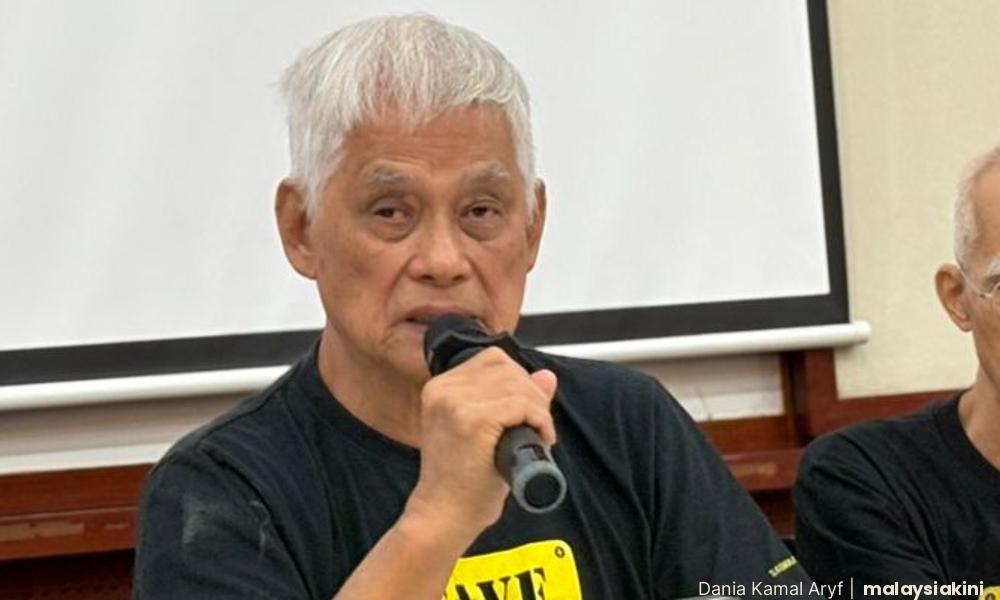
“The government has been coming up with a string of excuses these past few years. So, we are strongly calling upon the government to stick to their earlier promises,” he said at a joint press conference today in Kuala Lumpur.
From opposition to silence
In October 2018, the Pakatan Harapan government set up a committee to make recommendations on the way forward with Lynas.
Among others, it proposed that a permanent disposal facility (PDF) should be erected to store radioactive waste, or for the waste to be removed from Malaysia.
However, various parties have since criticised Lynas’ permanent disposal facility (PDF) as not meeting international regulatory standards.
Tan also pointed out that in 2018, former energy, science, technology, environment, and climate change minister Yeo Bee Yin and several other MPs had criticised the PDF.
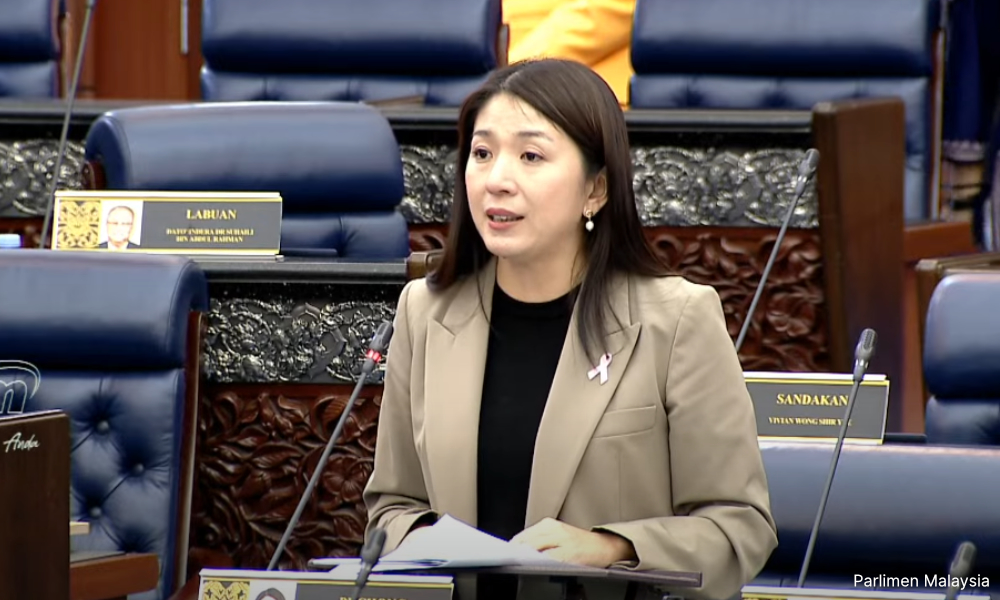
However, their criticisms had been repeatedly dismissed by the government.
He further lamented the government’s various excuses to extend Lynas’ operating licence.
Asked by a member of the audience at the press conference about what can be done, Tan replied: “The only thing you can do is to teach them a lesson through the votes.
“People should not allow politicians to get away with their talk if they don't walk the talk.”
Cracking and leaching
Meanwhile, Tan said that in 2022, Lynas and the government had committed to relocating the cracking and leaching process to a new facility in Kalgoorlie, Western Australia, by July of that year.
“This deadline was postponed to December 2022, citing concerns about global rare earth supply chains.
“However, the government later reversed its stance and extended the licence for Lynas until March 2026, abandoning the original relocation agreement,” he said.
Tan also called out the government’s hypocrisy when it appealed to the United Nations General Assembly, urging developed countries not to treat Malaysia as a dumping ground for plastic and electronic waste.
“This call will be rendered meaningless and hypocritical if Malaysia continues to allow Lynas to process and dispose of radioactive waste on its soil, contradicting the very principles advocated on the international stage,” he added.
Largest plant outside China
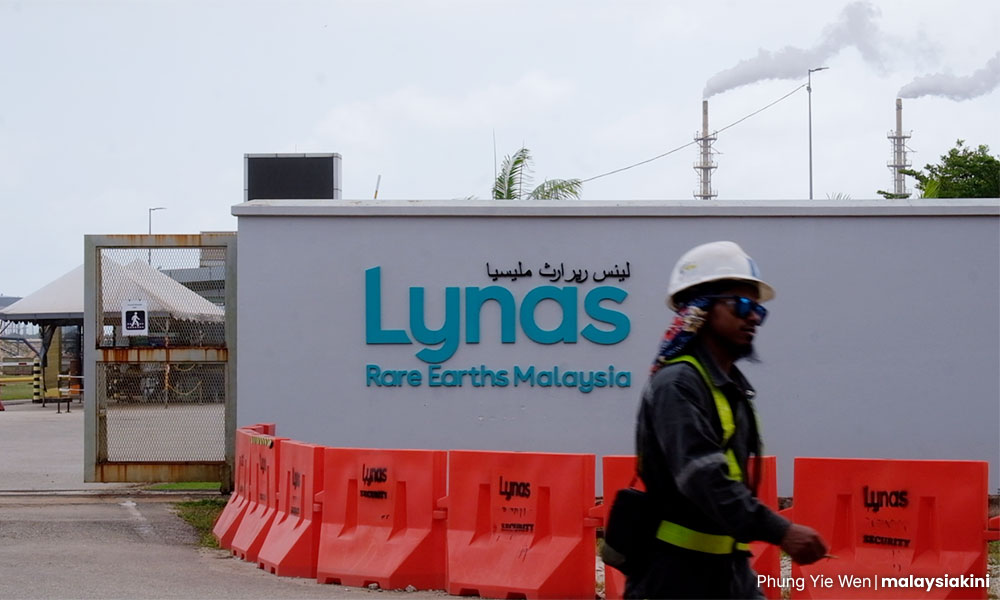
The Lynas plant in Malaysia is one of the world’s largest rare earth processing facilities outside China, and its cracking and leaching process generates a primary waste known as Water Leach Purification (WLP) residue - a radioactive by-product containing thorium with a half-life of 14 billion years.
In a joint statement, the groups said the government’s claims of being able to isolate thorium from the WLP were economically and technically impractical, and not backed by scientific evidence.
The groups also highlighted that the government had continuously shifted its narrative and avoided accountability, claiming that waste could be safely recycled, and dismissing it as “harmless enough for municipal disposal”.
According to them, the plant in Gebeng had been approved by the authorities as a municipal waste disposal plant, instead of a radioactive waste disposal facility, which would require much more stringent adherence to international regulations.
They further highlighted how similar designs for radioactive waste disposal facilities have been consistently rejected abroad, due to health and safety risks.
Limited accountability
Meanwhile, Greenpeace Malaysia campaign lead Heng Kiah Chun lamented that Lynas continues to operate with limited accountability despite years of public resistance.
“Malaysia deserves a clean, safe, and just pathway for its economy and not one built on radioactive waste and broken promises,” he added.
Last month, Chang told the Dewan Rakyat that the construction of the PDF for Lynas radioactive waste has reached 72 percent completion and is expected to be fully completed by the end of 2026.
Questioned if a health and impact assessment had been conducted on the community, the minister said the study was not deemed necessary at this stage, as there were no reports of increased health cases in the area.
Chang added that Lynas was required to adhere to the Radioactive Waste Management Plan approved by the Atomic Energy Department, which covers legal compliance, monitoring, and risk mitigation measures. - Mkini

No comments:
Post a Comment
Note: Only a member of this blog may post a comment.