


SABAH POLLS | A group of young Sabah professionals is telling its peers bluntly: get out and vote, or risk losing Sabah’s future to backroom deals.
They said this state election is a once-in-a-generation chance for young voters to drag Sabah politics in a new direction and lock in a truly local government that will defend long-promised state rights.
Leading the charge is advocate and solicitor Isaiah Majinbon, who warned that youth leaders across all parties must use their clout to stop local politicians from switching sides after polling day and dragging national parties back into government.
“The political youth leaders hold great influence in their parties. They represent the voices of at least a third or two-thirds of the party memberships.
“They need to leverage their support to ensure that when it comes to collaboration and partnership later on to form a government, they stay true to their words,” he said in a press conference held in Kota Kinabalu today.
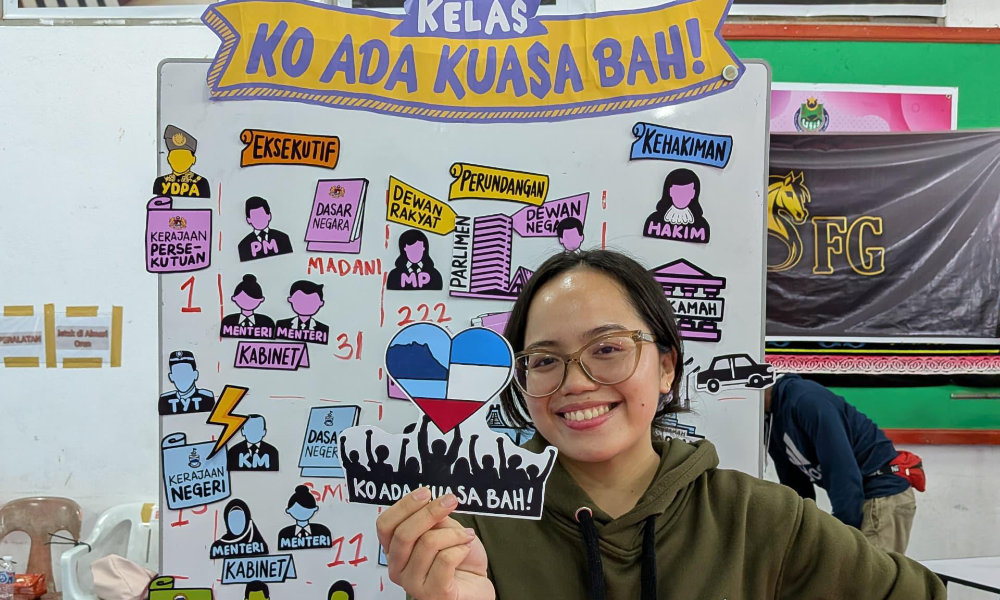
Isaiah was responding to concerns that some political groups might be tempted to play power broker if the election result produces a fragile government, trading away a Sabah first mandate for positions and influence after the election.
Sabah now has 1.78 million registered voters, including 533,920 (30 percent) aged 18 to 29.
Between 50 and 54 percent of voters are aged 18 to 39, making youth the backbone of the electorate, said the Sabah youth group.
Yet, nearly 200,000 young Sabahans are believed to be studying or working in Peninsular Malaysia and may not return home to vote, a gap the group said could decide multiple seats.
Commitment agreement
Isaiah warned that his generation would not stand by quietly if leaders abandoned the local push.
“Either they unite, or we, the young ones, will find other parties or other representatives who will follow what we say and unite with local parties only,” he said.
He added that Sabah’s turbulent political past still weakens its hand with Putrajaya on key issues, including the long-delayed 40 percent revenue entitlement.
“When we study history, we understand that Sabah’s political experience is very low.
“There is also an issue of competence that we must address here,” Isaiah said.
For him, any talks with the federal government must start from strength, not from a begging bowl.

“So, clarity on these matters must be important, so that when it comes to talking to the federal government, we will be negotiating from a position of leverage, not from a position of asking for whatever is at the wings and fences of the ruling administration,” he said.
At the event, the group unveiled the Sabah Local Coalition Commitment Agreement, a youth-driven document aimed at pushing Sabah-based parties to commit fully to a local government after the election.
The agreement calls on parties to pledge that if no party wins a simple majority, they will support the highest seat local party to form the government and reject doing deals with non-local parties that could weaken a local mandate.
It also commits parties to forming a two-thirds local government, if a single local party does secure a majority, to provide stability.
Young Sabahans’ expectations
At the constitutional level, it pressed for the reinstatement of Clause 6(7) of the Sabah Constitution to restore full chief ministerial authority over appointments, and demanded firmer control over Sabah’s onshore and offshore natural resources in line with the Malaysia Agreement 1963 (MA63) and the Federal Constitution.
Article 6(7) was a clause that required the state governor to appoint the leader of the party with the most seats as chief minister, but its abolition in May 2023 means that if no coalition wins clearly, the appointment becomes open to interpretation, leaving room for competing claims, negotiations, and potential backroom deals.
The youths presenting the document said it reflects a rising expectation among young Sabahans for clearer rules against political flip-flops and post-election alliances that dilute the will of voters.
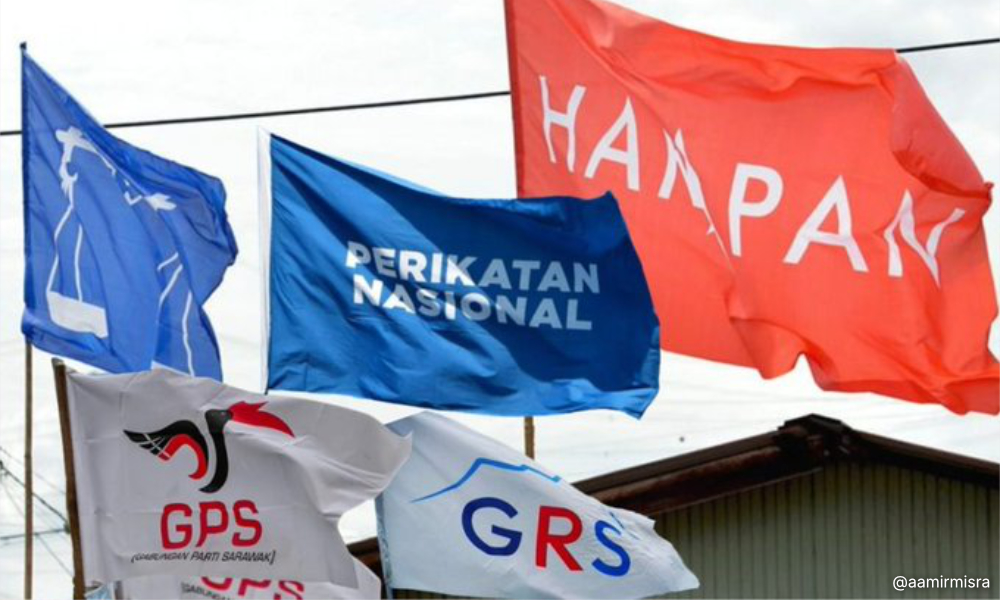
The group said young Sabahans must wake up to the sheer weight of their vote, warning that decisions made in their absence could shape the next decade of state politics.
Isaiah said the youth bloc has the numbers to decide who governs Sabah and what kind of deal the state takes to Putrajaya, but only if they show up.
“They hold great power. They need to leverage their support,” he said.
Besides Isaiah, others present were Melvin Lo Foo Wei, Mathilda Ignathia Lachchumanan, Serena Micheal, Remy Martin Gunsalam, Adrian Lee Kok Zun, Atalia Mae Jaua-Mojuntin, Adi Putra, Matthew Kulai, Karren Cassandra Ambrose, Allison Chan, and Stevell Lumbasi, along with members of several youth networks. - Mkini

No comments:
Post a Comment
Note: Only a member of this blog may post a comment.